
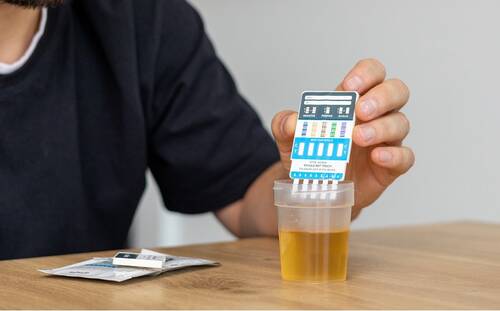
08 Jul How At-Home Drug Testing Introduced Privacy Into Self-Checking
If you or someone you know is struggling with addiction or in crisis: Call or text the SAMHSA National Helpline at 1-800-662-4357 (free, confidential, 24/7) or call/text the 988 Suicide and Crisis Lifeline at 988. In an emergency, call 911.
For a long time, finding out whether a substance would show up on a drug test meant one thing: handing over a sample to someone else. A clinic or an occupational health office.
You waited, and at the end of it, a stranger knew your result before you did. For something as personal as your own body chemistry, that setup never made much sense.
At-home drug testing changed the order of things. It lets people check first, quietly, on their own terms, and decide what to do with the answer afterward. People already do this with blood pressure cuffs, glucose monitors, and pregnancy tests. Home drug tests brought the same expectation to a corner of health that used to be out of the individual’s hands.
What At-Home Drug Testing Actually Is
An at-home drug test is a screening tool you use yourself, usually with a urine sample, that reacts to the presence of a drug or its metabolites above a set concentration. It is the same immunoassay technology used in the first stage of workplace and clinical screening — including in urine drug testing for primary care patients with opioid use disorder. What changes is where you do it and who sees the result. The chemistry is identical.
A urine test does not measure how “high” you are or how much you used. It only tells you whether a substance sits above or below a specific cutoff, measured in nanograms per milliliter (ng/mL). Above the line reads positive, below it reads negative. That is all a screening result is, and understanding that makes everything else easier to read.
The Main Types of Tests
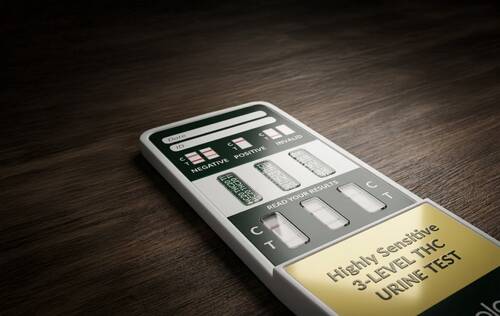
Not every test answers the same question, and picking the right one depends on what you actually need to know. The common options include:
Single THC tests at 50 ng/mL. This is the standard screening cutoff for marijuana and the same threshold most employers use. It answers the practical question of whether you would likely pass a routine screen.
Three-level THC tests. These read at multiple cutoffs (often around 20, 50, and 100 ng/mL), so you can see roughly where you fall as metabolites clear over time. They are useful for tracking progress rather than a simple yes or no.
Five-panel DOT-style tests. Modeled on the federal panel used for regulated, safety-sensitive jobs, these screen for several substance groups at once, including marijuana, cocaine, opioids, amphetamines, and PCP.
Extended multi-panel tests (7-panel and up). These widen the net to additional substances such as benzodiazepines or barbiturates, which suits people who want a fuller picture in one sitting.
If your only concern is cannabis and an upcoming screen, a straightforward option like the 50 ng/mL THC urine test matches the cutoff most workplaces rely on, which is why it tends to be the default starting point.
The federal cutoffs that most of these tests are built around are not arbitrary. They come from the Substance Abuse and Mental Health Services Administration, whose workplace drug testing guidelines set the thresholds that both regulated employers and many private ones follow. The 50 ng/mL marijuana screening level you see on a home kit traces directly back to those standards.
Who Needs At-Home Drug Testing the Most
Some people reach for a home test out of curiosity. For others, it is closer to a routine part of managing work, family, or recovery. The people who tend to rely on it most often include safety-sensitive workers in transportation, aviation, rail, and commercial driving; construction and heavy-equipment operators; healthcare and pharmacy staff; warehouse, logistics, and manufacturing employees; people returning to work after legal cannabis use; individuals in recovery or on a monitoring program; parents who want a discreet way to have an honest conversation at home; and athletes subject to their league or governing body’s testing rules.
The right kit depends on the situation. Someone worried only about cannabis is served by a single THC test, while a worker facing a regulated panel is better matched to a DOT-style five-panel.
How to Use the Tests Correctly
The tests are simple, but small mistakes throw off results. A few things make the difference:
Collect a fresh urine sample in a clean, dry container. First-morning urine tends to be the most concentrated, which matters if you are close to a cutoff. Follow the timing on the instructions exactly — dipping too briefly or reading too late are the two most common errors. Avoid drinking large amounts of water right before testing. Overhydrating dilutes the sample and can produce a misleading result, which is something regulators specifically account for in their own federal testing procedures. Read the result inside the window printed on the kit, usually within five minutes. A result read an hour later is not valid.
How to Read the Results
Faint lines are where people second-guess themselves. On most of these tests, the logic runs opposite to intuition: one line in the control area means positive; two lines — control and test — mean negative.
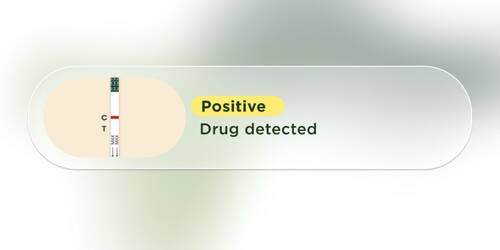
The faint line causes the most confusion. If a faint line appears in the test area, no matter how pale, it counts as negative. A test line only has to be visible to indicate that metabolite levels are below the cutoff. Line intensity is not a dose meter. A barely-there line and a bold one mean the same thing: negative. Most faint-line panics turn out to be a misread negative.
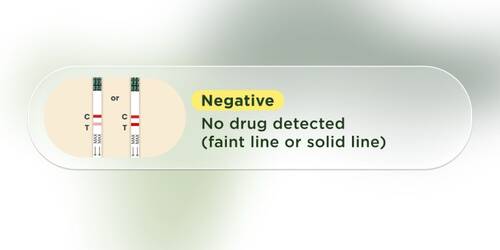
If a result looks genuinely ambiguous, or if the outcome carries real consequences, the sensible move is to retest with a fresh sample the next morning rather than agonize over a single strip.
Why Privacy Was the Breakthrough
These tests were already clinically accurate. The shift was in who got to see the result first. At-home testing meant a person could check their own status without a file being opened or a conversation they weren’t ready to have. The result belonged to them and no one else.
Privacy in Practice
That privacy has practical value. Someone returning to work after a legal cannabis weekend can check where they stand before a surprise screen. Someone tracking their own detox can watch the numbers move week to week. A parent checking on a teenager or someone managing their own recovery can gather the information quietly, then decide what to do with it.
At-home testing brands like Exploro built around exactly this idea, offering straightforward kits with clear instructions so the process stays with the person taking the test. Self-checking used to start with asking someone else. Now you see the answer first, and it’s yours to act on.
This article is for informational purposes only and is not intended to diagnose, treat, or provide medical advice. Always consult a qualified healthcare provider with questions about your health.
Disclaimer: The information on MedicalResearch.com is provided for educational purposes only, and is in no way intended to diagnose, cure, or treat any medical or other condition. Some links are sponsored. Products, services and providers are not warranted or endorsed by MedicalResearch.com or Eminent Domains Inc. Always seek the advice of your physician or other qualified health provider and ask your doctor any questions you may have regarding a medical condition. In addition to all other limitations and disclaimers in this agreement, service provider and its third party providers disclaim any liability or loss in connection with the content provided on this website.
Last Updated on July 8, 2026 by Marie Benz MD FAAD