
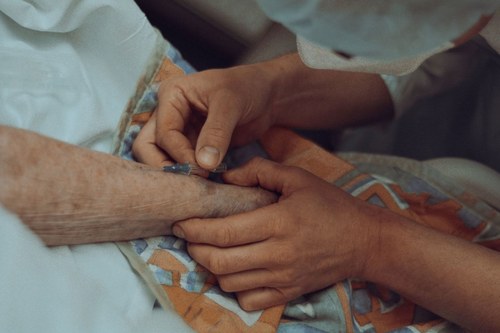
27 Oct Nurse Practitioner Education for Aging America
Editorial Notice: This post is for general information only. Nurse practitioner education, certification, and scope of practice vary by state. Before enrolling, confirm a program’s accreditation and that it meets the certification and licensure requirements where you plan to practice. Programs named or linked in this post are not warranted or endorsed by MedicalResearch.com or Eminent Domains Inc.
Looking after an aging parent requires a variety of clinical skills, and family nurse practitioners are trained to provide them.
When parents aren’t well, it’s easy for chaos to creep onto the kitchen counter, with numerous pill bottles and discharge notes from last month’s hospital stay. As the primary caregiver, you’ll often be the one to sort it all out.
Nurse practitioners who care for older patients see situations like this every day. As the number of older adults grows, so does the need for nurse practitioners with graduate training in gerontological care, who can ease some of the burden on families and help them understand what is happening.
An Aging Nation Means Increased Demand for Primary Care
According to Census Bureau projections, about 23% of the U.S. population will be 65 or older by 2060. That shift will increase the need for nurse practitioners, as highlighted in an October 2026 profile by the American Association of Nurse Practitioners (AANP). More people will also be living with chronic conditions as the population ages, increasing the need for highly skilled primary care clinicians.
This is where family nurse practitioner programs come in. Family nurse practitioners (FNPs) are trained to care for patients of all ages, including older adults. Working nurses interested in the qualification may benefit from the flexibility of studying online.
Gerontology Skills Within Family Practice
A small change in an older adult can have big implications. Slight forgetfulness, for example, could be part of normal aging, but it could also be an early sign of something that needs prompt follow-up. FNP training provides the skills to assess patients and work out what is causing a problem, as well as to manage long-term chronic disease.
Medication reviews are also important. When many medications are prescribed, some can interact badly, and a careful review can often catch these problems. Communication is vital too, with families as much as with patients. Talking with patients who have dementia requires clear, simple language and plenty of patience, and involving family caregivers wherever possible takes a tactful approach.
Julianne Zehnder Ewen, a Doctor of Nursing Practice, told the AANP how seeing her patients grow older as an FNP inspired her to look more deeply into geriatrics. Knowing a patient’s whole care story means it can be shared with everyone involved in their care, whether the patient is moving between hospital and home, sometimes repeatedly, or transitioning from a clinic to long-term care. FNPs can provide continuity of primary care in the community and refer to geriatricians when necessary, working alongside specialists rather than replacing them.
A Growing Advanced Practice Workforce
The advanced practice workforce is growing rapidly. The BLS (U.S. Bureau of Labor Statistics) projects that employment of nurse practitioners will grow much faster than the average for all occupations over the coming decade, driven in large part by an aging population and rising rates of chronic disease.
Access to specialists can also be an issue, depending on where you live. According to America’s Health Rankings, the number of geriatricians and geriatric nurse practitioners per 100,000 adults age 65 and older rose 4% to 41.5 between September 2024 and September 2025. While that is positive news, it still equates to only about one specialist for every 2,400 older adults. There is also a large gap between states: the District of Columbia, for instance, has 5.5 times as many geriatric clinicians per 100,000 older adults as South Dakota.
Programs With a Focus on Gerontology
Nurse practitioners can play an important role outside the clinic as well. After a hospital stay, they can talk the family through the new care plan, and in long-term care settings, they can make sure care goals are being met and symptoms are monitored.
America’s Health Rankings data show about 1.2 million people living in nursing homes in 2025, even as the number of facilities has dropped to around 15,000. The data also showed a slight rise in home health and personal care aides between 2023 and 2024, from 62 to 65 per 1,000 older adults.
When comparing programs, make sure the curriculum includes coursework on assessing older adults and managing complex chronic disease, along with supervised clinical hours that involve caring for seniors. Leadership and ethical decision-making are also worthwhile. As AANP’s gerontology co-chairs point out, talking with patients about end-of-life wishes requires patience and a trusting relationship, and often means advocating for what the patient wants. Good programs will prepare you for these situations.
Ask the following questions:
- Roughly what percentage of clinical coursework focuses on older adults and multiple chronic conditions?
- Will supervised placements include long-term care or home settings?
- How will the program prepare you to communicate with family caregivers about care goals?
- Do faculty and preceptors have practical experience in gerontology?
- Is the program accredited, and does it prepare graduates for national FNP certification and licensure in your state?
For a broader overview of healthy aging research, see this MedicalResearch.com overview of aging.
The information on MedicalResearch.com is provided for educational purposes only, and is in no way intended to diagnose, cure, or treat any medical or other condition. Some links are sponsored. MedicalResearch.com and Eminent Domains Inc. do not warrant or endorse products or claims made by third party links. Always seek the advice of your physician or other qualified health provider and ask your doctor any questions you may have regarding a medical condition. In addition to all other limitations and disclaimers in this agreement, service provider and its third party providers disclaim any liability or loss in connection with the content provided on this website.
Last Updated on October 27, 2026 by Marie Benz MD FAAD