
09 Sep Pharmacy Technology: The Quiet Engine Behind Efficient, Growing Businesses
Running a pharmacy today looks nothing like it did even a decade ago. Between insurance verification, prescription volume, staffing shortages, and rising customer expectations, pharmacy owners and managers are being asked to do more with fewer resources. At the same time, the pharmacies that are thriving, not just surviving, tend to share one trait: they have invested in technology that streamlines daily operations while also opening new paths to grow revenue. This shift is not about chasing the newest gadget. It is about recognizing that the pharmacy business model has changed, and the tools running behind the counter need to change with it. According to the U.S. Department of Health and Human Services, pharmacies operating patient engagement and loyalty programs must navigate HIPAA privacy requirements carefully, since the use of protected health information for marketing purposes is subject to specific restrictions that generic retail loyalty software often fails to account for.
Automation Is Solving the Labor Problem
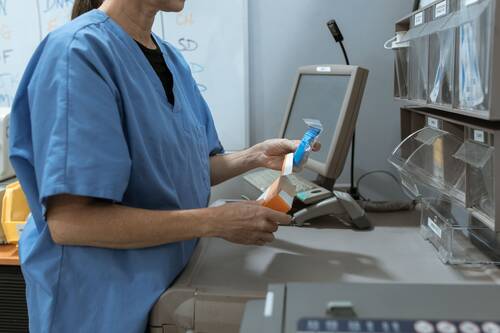
Staffing remains one of the biggest pain points in pharmacy operations. Pharmacists are spending too much time on administrative tasks that do not require a licensed professional — things like counting pills, managing refill requests, or chasing down insurance rejections. Automated dispensing systems and robotic pill counters have become a practical answer. These systems reduce the manual labor tied to prescription filling, cutting down on errors and freeing up pharmacists to spend more time on patient-facing work like consultations and medication therapy management. For independent pharmacies competing against big chains, this kind of automation can be the difference between staying profitable and getting squeezed out. Beyond the physical dispensing side, software that automates refill reminders and prior authorization requests is quietly saving pharmacies hours every week. Instead of staff manually calling patients or faxing insurance companies, these workflows run in the background, flagging only the cases that need human attention.
Data Is Becoming a Growth Tool, Not Just a Compliance Requirement
For years, pharmacy data existed mainly to satisfy regulatory and insurance requirements. That is changing. Pharmacies are starting to treat their data as a business asset, using it to understand purchasing patterns, identify gaps in patient care, and find opportunities for additional revenue streams like immunizations, health screenings, or over-the-counter product sales. This is where customer engagement technology has entered the conversation in a bigger way. Pharmacies are not just dispensing medication anymore; they are competing for foot traffic and repeat business against retail giants and mail-order competitors. That competitive pressure has pushed many independent and small-chain pharmacies to ask how do pharmacy loyalty programs work and who makes AI loyalty programs for pharmacies, since building customer retention tools in-house is not realistic for most operators. The answer varies depending on pharmacy size and budget, but the trend is consistent: loyalty and engagement platforms built specifically for healthcare retail are gaining traction because they understand the regulatory constraints pharmacies operate under, something generic retail loyalty software often misses.
Personalization Without Overstepping Boundaries
AI-driven personalization is one of the more nuanced applications of technology in pharmacy settings. Unlike a typical retail store, pharmacies are bound by HIPAA and other privacy regulations that limit how customer data can be used for marketing purposes. Still, there is room to personalize the experience in ways that respect those boundaries. Reminder systems that account for a patient’s specific refill schedule, targeted communications about relevant OTC products based on general purchase history, and loyalty rewards structured around health-positive behaviors — like completing a full course of antibiotics or picking up seasonal vaccinations — are all examples of personalization done responsibly. This kind of tailored engagement tends to perform better than blanket promotions because it feels relevant rather than intrusive. Patients notice when a pharmacy seems to understand their needs, and that perception builds the kind of trust that keeps them coming back instead of switching to whichever chain has the shortest line that week.
Inventory Management Has Gotten Smarter
Overstocking and stockouts are two of the most expensive problems a pharmacy can face. Carrying too much inventory ties up cash flow, while running out of commonly prescribed medications sends patients elsewhere — sometimes permanently. Modern inventory management systems use historical dispensing data to forecast demand more accurately, adjusting for seasonal patterns like flu shots or allergy medications. Some systems now integrate directly with wholesalers, automatically triggering reorders when stock hits a certain threshold. This reduces the guesswork that used to fall on pharmacy managers and helps ensure shelves are stocked with what patients actually need, not just what has been ordered out of habit. For pharmacies operating on thin margins, this kind of precision can meaningfully impact the bottom line.
Building a Pharmacy That Can Compete Long-Term
None of these technologies work in isolation. The pharmacies seeing the most benefit are the ones treating operational efficiency and business growth as connected goals rather than separate initiatives. Automation frees up staff time, data turns into actionable insight, personalization builds loyalty, and smarter inventory practices protect margins. Together, these tools create a pharmacy that is not just keeping the lights on but is positioned to expand services, retain patients, and compete against retail giants with far bigger marketing budgets. The pharmacies that will still be standing in five years are largely the ones making these investments now — not because it is trendy, but because the business realities of running a pharmacy have made it necessary. Technology is not replacing the pharmacist-patient relationship; it is clearing the path so that relationship has room to grow.
For a broader overview of how pharmacy benefit management, reimbursement models, and medication adherence technology are reshaping the business of dispensing, see this MedicalResearch.com overview of pharmacy technology and medication adherence — what the evidence shows.
Disclaimer: The information on MedicalResearch.com is provided for educational purposes only, and is in no way intended to diagnose, cure, or treat any medical or other condition. Some links are sponsored. MedicalResearch.com and Eminent Domains Inc. do not warrant or endorse products or claims made by third party links. Always seek the advice of your physician or other qualified health provider and ask your doctor any questions you may have regarding a medical condition. In addition to all other limitations and disclaimers in this agreement, service provider and its third party providers disclaim any liability or loss in connection with the content provided on this website.
Last Updated on September 9, 2026 by Marie Benz MD FAAD