
21 May Shilajit and Fulvic Acid: What the Clinical Evidence Does (and Doesn’t) Show
Please note: Supplements are generally not FDA tested or approved. Some supplements can interfere with medications and supplements. Do not delay seeking medical attention for medical concerns by taking supplements without medical advice. Combining supplements can increase the risk of toxicity and side effects. Statements and product contents have not been independently confirmed by MedicalResearch.com or Eminent Domains Inc. Please discuss any and all supplements you take or are considering taking with your health care provider. Ratings in this post are the opinions of the contributing writer and not MedicalResearch.com or Eminent Domains Inc. Do not take supplements discussed below if pregnant, nursing or might become pregnant. Keep out of reach of children. If for any reason you experience any adverse effects or any other form of discomfort from this product, immediately discontinue use of the product and consult with your doctor or visit the hospital, emergency room, or clinic.
An Interview with Dr. Ekta Gupta, BAMS, MD (Ayurveda) — Medical Reviewer, The Yeti Life
Shilajit, a mineral-rich resin used in Ayurveda for millennia, has become one of the fastest-growing supplements in the United States — marketed for energy, testosterone, and recovery. MedicalResearch.com spoke with Dr. Ekta Gupta, an Ayurvedic physician who reviews clinical claims, about what the peer-reviewed evidence actually supports, where the marketing outpaces the data, and the safety and quality issues clinicians should know.
MedicalResearch.com: What is shilajit, and what is its active compound?
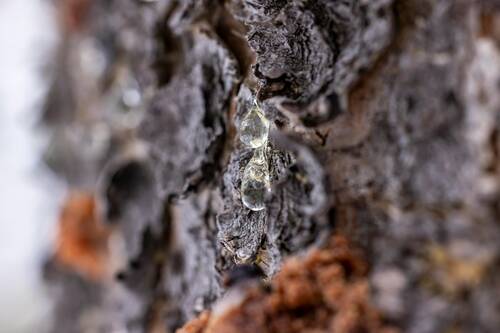
Response: Shilajit is a resin that forms over centuries in mountain rock, primarily in the Himalayas. Its clinically relevant bioactives are fulvic acid and dibenzo-alpha-pyrones — not the “85+ minerals” that dominate product marketing. Fulvic acid is a low-molecular-weight antioxidant that may support mitochondrial function and acts as a carrier molecule. That distinction matters: the mineral content is largely irrelevant to the proposed mechanisms, and a meaningful product is defined by its standardized fulvic-acid concentration, not its mineral list.
MedicalResearch.com: What does the strongest human evidence show?
Response: The most-cited human trial is Pandit et al. (Andrologia, 2016), which reported a roughly 23.5% increase in total testosterone in men aged 45–55 taking a purified extract (250 mg twice daily) over 90 days. It is a genuine, peer-reviewed result — but it should be read narrowly: a single well-conducted study, in an older male cohort, showing a modest, physiological change.
It is not evidence of an anabolic effect, and it does not generalize to younger men or to women.
For clinicians who want to assess the literature directly, we maintain the full catalog of human studies with evidence tiers and source links.
MedicalResearch.com: What about energy, fatigue, and inflammation?
Response: This is where interest is growing. A 2026 pilot study in Cureus (healthy, active adults taking 500 mg/day for 28 days) reported reduced fatigue scores and a lower inflammatory marker (C-reactive protein). The mechanism — antioxidant support for cellular energy production — is biologically plausible, and the inflammation signal is interesting given the growing literature linking low-grade inflammation to fatigue and low mood. The important caveat is that it was a small, open-label study without a placebo group, so it should be interpreted as promising and hypothesis-generating, not confirmatory. Larger randomized, placebo-controlled trials are needed before any firm clinical claim can be made.
MedicalResearch.com: Are there quality or safety concerns clinicians should be aware of?
Response: Yes, and this is the part most consumers overlook. Shilajit is a raw natural product that can concentrate heavy metals. A 2025 analysis in BMC Chemistry identified thallium — more toxic than mercury — in several commercial supplements. So product quality is a clinical safety issue, not just a marketing one. A credible product should provide a recent, batch-specific certificate showing fulvic acid of 60–80% by HPLC and an ICP-MS heavy-metal panel within accepted (AYUSH) limits — lead under 10, arsenic under 3, mercury under 1, and cadmium under 0.3 ppm.
As a transparency standard, we publish published per-batch certificates of analysis, and I’d encourage patients to expect the same from any brand they consider.
The National Center for Complementary and Integrative Health similarly cautions that natural supplements can carry real risks, particularly when products are not independently tested for purity and contaminants.
MedicalResearch.com: Who should avoid shilajit, and what interactions matter?
Response: Shilajit should be avoided in pregnancy and breastfeeding due to insufficient safety data, and in hemochromatosis or iron overload because it increases iron absorption. Two interactions are worth flagging because the medications are common: shilajit can interfere with lithium levels and with the absorption of levothyroxine (thyroid medication).
Individuals should consult their physician before starting shilajit as well as any supplement they are considering taking.
MedicalResearch.com: If a patient decides to try shilajit, what dose and product guidance would you give?
Response: The dose used in clinical studies is 250 mg twice daily (500 mg/day) of a verified extract, typically cycled — roughly 90 days on, then a 2–4 week break — because long-term continuous-use data is limited. On product selection, I tell patients to ignore the mineral count and the marketing entirely and look at two numbers: the HPLC fulvic-acid percentage (60–80%) and a current, batch-matched heavy-metal report. If a brand cannot produce a recent certificate of analysis, the product should be treated as unverified, regardless of price or packaging. It is also worth noting what shilajit is not: it is not a steroid or a hormone, and any testosterone effect seen in studies is modest and physiological — not comparable to testosterone replacement therapy.
MedicalResearch.com: What is your honest bottom line for patients and clinicians?
Response: Shilajit is biologically plausible and modestly supported — promising for energy and, in older men, testosterone — but it is not a proven treatment for any condition, and the evidence base is still thin. The sensible sequence is evidence first, a clinician’s input second, and a verified, lab-tested product third. Used that way, it can be a reasonable adjunct; treated as a miracle cure, it is a red flag. For broader context on supplement safety and regulation, see MedicalResearch.com’s supplement research coverage.
Citations:
Pandit S, Biswas S, Mukhopadhyay PK, et al. Clinical evaluation of purified Shilajit on testosterone levels in healthy volunteers. Andrologia. 2016;48(5):570–575.
Pilot study on purified shilajit, fatigue, and inflammatory markers in healthy active adults. Cureus. 2026 (open-label, n≈25).
Analysis identifying heavy metals, including thallium, in commercial shilajit supplements. BMC Chemistry. 2025.
Cleveland Clinic: A Quick Introduction to Shilaji This sticky phytocomplex may have health benefits — but the science and safety data is lacking
Disclaimer: The information on MedicalResearch.com is provided for educational purposes only, and is in no way intended to diagnose, cure, or treat any medical or other condition. Some links are sponsored. Products, services and providers are not warranted or endorsed by MedicalResearch.com or Eminent Domains Inc. Always seek the advice of your physician or other qualified health and ask your doctor any questions you may have regarding a medical condition. In addition to all other limitations and disclaimers in this agreement, service provider and its third party providers disclaim any liability or loss in connection with the content provided on this website.
Last Updated on May 21, 2026 by Marie Benz MD FAAD