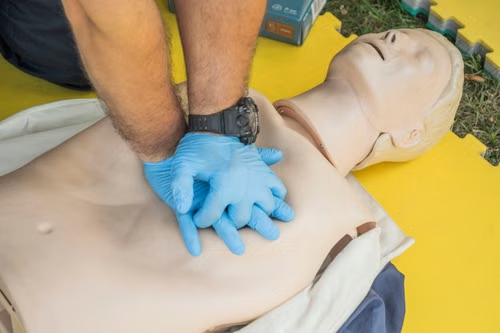
03 Nov What Happens in the First Five Minutes of a Cardiac Arrest
Emergency Notice: If someone collapses and is unresponsive and not breathing normally, call emergency services immediately (Triple Zero 000 in Australia, 111 in New Zealand, 911 in the US and Canada), start chest compressions, and use an automated external defibrillator (AED) as soon as one is available. The dispatcher can guide you through CPR. This article describes how trained healthcare teams provide advanced life support and is for general information only. It is not a substitute for accredited CPR or advanced life support training, and medication doses and protocols should be applied only by qualified clinicians following current local resuscitation guidelines.
A cardiac arrest can happen without warning. A person may suddenly collapse, become unresponsive and stop breathing normally.
In these first few minutes, recognising the emergency, starting CPR and using a defibrillator as soon as possible can improve their chances of survival.