MedicalResearch.com Interview with:
[caption id="attachment_54528" align="alignleft" width="150"]

Dr. Granville[/caption]
David Granville PhD, FAHA
Professor, Pathology and Laboratory Medicine, UBC
Associate Director, Vancouver Coastal Health Research Institute, VGH-UBC
Associate Director, BC Professional Firefighters Burn & Wound Healing Group, Department of Surgery, UBC
Principal Investigator, iCORD and UBC Centre for Heart Lung Innovation
MedicalResearch.com: What is the background for this study?
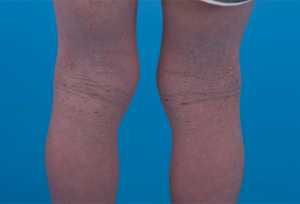
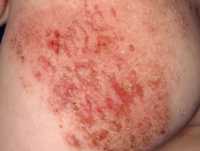
Response: Atopic dermatitis (aka. eczema) is a chronic inflammatory skin condition characterized by patches of dry, red, itchy skin. These patches can come and go - a process often referred to as 'flare ups'. Often when these flare ups occur, people avoid going out, or to work, resulting in lost productivity and reduced quality of life. While the cause of these flare-ups is not completely understood, a loss of the skin's protective barrier function is believed to be a triggering event. This is because the outer layer of skin (epidermis) acts as a barrier to allergens and other foreign entities from getting into the skin. When this outer barrier is lost, allergens are able to cross and penetrate the deeper layers of skin. This triggers an inflammatory response. The inflammatory response, in turn, can release factors that cause further disruption of the barrier thereby exacerbating the flare up.
The outer skin barrier can be thought of in terms of a brick wall in which the 'bricks', or skin cells in this case, are held together by a molecular 'grout' known as adhesion proteins. If these adhesion proteins, which tightly anchor the skin cells together, are lost, the skin becomes more permeable to the outer environment, allowing foreign antigens to enter in, and conversely, moisture to escape out resulting in skin dryness and shedding

 Dr. Guttman-Yassky[/caption]
Dr. Emma Guttman-Yassky, MD, PhD
Waldman Professor and System Chair
The Kimberly and Eric J. Waldman Department of Dermatology
Director, Center of Excellence in Eczema
Director, Laboratory of Inflammatory Skin Diseases
Icahn School of Medicine at Mount Sinai
MedicalResearch.com: What is the background for this study? What are the main findings?
Response: The background for this study are studies that show that OX40 is a pathway that is upregulated in patients with atopic dermatitis (or eczema). OX40 is involved in activation of immune molecules associated with allergy and atopy, and also with formation of memory immune cells that are required for disease recurrence. The hypothesis to the study was that giving an OX40 antagonist will not only ameliorate the disease but perhaps have a remittive effect in that the disease will not come back.
Indeed all drug doses were significantly effective at week 16, the primary endpoint compared to placebo and continued to improve towards week 36, the secondary endpoint. In addition, the responders to treatment maintained their responses for an additional 20 weeks, which is unusual, suggesting a potential for disease modification.
Dr. Guttman-Yassky[/caption]
Dr. Emma Guttman-Yassky, MD, PhD
Waldman Professor and System Chair
The Kimberly and Eric J. Waldman Department of Dermatology
Director, Center of Excellence in Eczema
Director, Laboratory of Inflammatory Skin Diseases
Icahn School of Medicine at Mount Sinai
MedicalResearch.com: What is the background for this study? What are the main findings?
Response: The background for this study are studies that show that OX40 is a pathway that is upregulated in patients with atopic dermatitis (or eczema). OX40 is involved in activation of immune molecules associated with allergy and atopy, and also with formation of memory immune cells that are required for disease recurrence. The hypothesis to the study was that giving an OX40 antagonist will not only ameliorate the disease but perhaps have a remittive effect in that the disease will not come back.
Indeed all drug doses were significantly effective at week 16, the primary endpoint compared to placebo and continued to improve towards week 36, the secondary endpoint. In addition, the responders to treatment maintained their responses for an additional 20 weeks, which is unusual, suggesting a potential for disease modification.
 Dr. Jonathan Silverberg[/caption]
Jonathan Silverberg, MD, PHD, MPH
Associate Professor
Director of Clinical Research
Director of Patch Testing
George Washington University School of Medicine and Health Sciences
Washington, DC
MedicalResearch.com: What is the background for this study
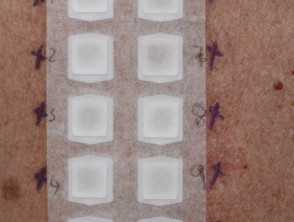
Response: Chronic hand eczema was previously shown to be associated with higher rates of allergic contact dermatitis. Yet, little is known about recent trends in North America with respect to the clinical presentation and allergen profile in chronic hand eczema. This study sought to determine the clinical characteristics and etiologies of hand eczema in a large North American cohort of adults referred for patch testing. The patients in the study were patch tested using the North American Contact Dermatitis Group’s allergen screening series.
Dr. Jonathan Silverberg[/caption]
Jonathan Silverberg, MD, PHD, MPH
Associate Professor
Director of Clinical Research
Director of Patch Testing
George Washington University School of Medicine and Health Sciences
Washington, DC
MedicalResearch.com: What is the background for this study
Response: Chronic hand eczema was previously shown to be associated with higher rates of allergic contact dermatitis. Yet, little is known about recent trends in North America with respect to the clinical presentation and allergen profile in chronic hand eczema. This study sought to determine the clinical characteristics and etiologies of hand eczema in a large North American cohort of adults referred for patch testing. The patients in the study were patch tested using the North American Contact Dermatitis Group’s allergen screening series.