
ear infections Tag

Health Information Notice: This article provides general information only and is not specific medical advice for any child. Healthcare providers and practices mentioned or linked in this article are not warranted or endorsed by MedicalResearch.com or Eminent Domains Inc. Seek urgent medical care if a child has difficulty breathing, long pauses in breathing during sleep with colour changes, a high fever with severe ear pain, swelling or redness behind the ear, or appears very unwell.

An occasional snore during a cold or an isolated ear infection does not necessarily point to an ongoing ENT problem. But if your child snores regularly, breathes through their mouth even when they are not unwell, or keeps getting ear infections, it may be time to look at what is causing the pattern.

These are some of the symptoms a paediatric ENT in Singapore may assess, particularly when they keep returning or start affecting sleep, hearing or speech.

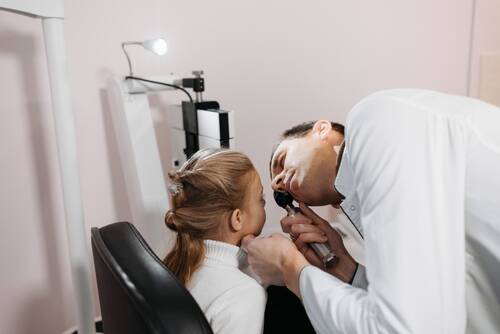
[caption id="attachment_76433" align="aligncenter" width="500"]pediatric-ent-singapore Photo by Pavel Danilyuk[/caption]

MedicalResearch.com Interview with: Hans Bisgaard, MD, DMSc Professor of Pediatrics The Faculty of Health Sciences University of Copenhagen Copenhagen University Hospital, Gentofte Copenhagen, Denmark MedicalResearch.com: What is the background for this study? Response: The consumption of antibiotics is increasing worldwide. Antibiotics alter the maternal bacterial colonization and by vertical transmission this can affect the offspring. An unfavorable microbiome may increase the disease propensity of the offspring. Otitis media is one of the most common infections in early childhood. We hypothesized that antibiotic consumption in pregnancy can increase the children’s risk of otitis media.

MedicalResearch.com Interview with: Johanna M. Uitti, MD Department of Paediatrics and Adolescent Medicine Turku University Hospital Turku, Finland MedicalResearch.com: What is the background for this study? What are the main findings? Response: According to several national guidelines, close follow-up is required if initial observation without antimicrobial agents is chosen for the management of acute otitis media (AOM) in children. The aim of this study was to examine whether close follow-up with reexamination is needed for children with AOM initially managed without antimicrobial agents who have symptomatic improvement during the first week after diagnosis, as assessed by their parents. Of the 104 children with symptomatic improvement, 3 (2.9%) developed worse signs or perforation of the tympanic membrane as seen on otoscopy. In contrast, of the 54 children with symptomatic failure, 16 (29.6%) developed worse signs or perforation of the tympanic membrane as seen on otoscopy.

Dr. T. M. A van Dongen, MD Univ Med Ctr Utrecht Julius Ctr Hlth Sci & Primary Care, Dept Epidemiol Utrecht, Netherlands.MedicalResearch.com Interview with: Dr. T. M. A van Dongen, MD Univ Med Ctr Utrecht Julius Ctr Hlth Sci & Primary Care, Dept Epidemiol Utrecht, Netherlands. MedicalResearch.com: What are the main findings of the study? Answer: We performed a pragmatic trial, in which we randomly assigned 230 children who had acute tympanostomy-tube otorrhea to receive antibiotic-glucocorticoid eardrops, oral antibiotics or to undergo initial observation. The primary outcome of our study was the presence of ear discharge, 2 weeks after study-group assignment. We also looked at, among others, the duration of the initial otorrhea episode and the total number of days of otorrhea and the number of otorrhea recurrences during 6 months of follow-up. We found that antibiotic–glucocorticoid eardrops were superior to oral antibiotics and initial observation for all outcomes.