
06 May Bacterial Decolonization Reduced Radiation Dermatitis in Patients with Nasal Staphylococcus aureus
Posted at 12:35h
in Author Interviews, Breast Cancer, Cancer Research, JAMA, MRSA, Radiation Therapy
MedicalResearch.com Interview with:
[caption id="attachment_60394" align="alignleft" width="150"] Dr. McLellan[/caption]
Beth McLellan, M.D.
Chief, Division of Dermatology
Montefiore Medical Center
Albert Einstein College of Medicine
MedicalResearch.com: What is the background for this study? How is the decolonization initiated and maintained?
Response: We were interested in exploring whether bacteria on the skin plays a role in radiation dermatitis like it does in other skin diseases that cause a breakdown in the skin barrier. We used a bacterial decolonization regimen that includes chlorhexidine 2% cleanser for the body and mupirocin 2% ointment to the inside of the nose for 5 consecutive days before starting radiation therapy and repeated for an additional 5 days every other week for the duration of radiation.
 Dr. Cabana[/caption]
Michael Cabana, M.D., M.A., M.P.H
Professor of Pediatrics
Albert Einstein College of Medicine.
Physician-in-chief , Children's Hospital at Montefiore
Chair of the Department of Pediatrics
Albert Einstein College of Medicine
Member, U.S. Preventive Services Task Force
MedicalResearch.com: What is the background for this study and recommendation statement?
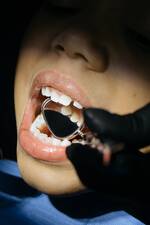
Response: Dental caries, also known as cavities or tooth decay, is the most common chronic disease in children in the United States and can develop in any child whose teeth have come in. Many young children under five years old do not visit a dentist, so the Task Force reviewed the latest evidence on how primary care clinicians can help prevent tooth decay in young children.
The Task Force’s research led to two important findings: all young children whose teeth have come in should have fluoride varnish applied by their clinician, and all children six months and older whose water supply doesn’t contain enough fluoride should receive fluoride supplements. Both approaches can help prevent cavities in kids.
The Task Force also determined that there is not enough evidence to recommend for or against screening for tooth decay in the primary care setting for children under five. This is consistent with the Task Force’s 2014 recommendation on dental caries.
Dr. Cabana[/caption]
Michael Cabana, M.D., M.A., M.P.H
Professor of Pediatrics
Albert Einstein College of Medicine.
Physician-in-chief , Children's Hospital at Montefiore
Chair of the Department of Pediatrics
Albert Einstein College of Medicine
Member, U.S. Preventive Services Task Force
MedicalResearch.com: What is the background for this study and recommendation statement?
Response: Dental caries, also known as cavities or tooth decay, is the most common chronic disease in children in the United States and can develop in any child whose teeth have come in. Many young children under five years old do not visit a dentist, so the Task Force reviewed the latest evidence on how primary care clinicians can help prevent tooth decay in young children.
The Task Force’s research led to two important findings: all young children whose teeth have come in should have fluoride varnish applied by their clinician, and all children six months and older whose water supply doesn’t contain enough fluoride should receive fluoride supplements. Both approaches can help prevent cavities in kids.
The Task Force also determined that there is not enough evidence to recommend for or against screening for tooth decay in the primary care setting for children under five. This is consistent with the Task Force’s 2014 recommendation on dental caries.