
30 Mar The Science Behind Paraxanthine and Why It May Change How We Think About Energy Supplementation
Please note: Supplements are generally not FDA tested or approved. Some supplements can interfere with medications including blood pressure meds and anticoagulants. Do not delay seeking medical attention for medical concerns by taking supplements without medical advice. Combining supplements can increase the risk of toxicity and side effects. Statements and product contents have not been independently confirmed by MedicalResearch.com or Eminent Domains Inc. Please discuss any and all supplements you take or are considering taking with your health care provider.
Caffeine has been the world’s most consumed psychoactive substance for centuries. Found in coffee, tea, energy drinks, and countless supplements, it is so deeply embedded in daily life that questioning its supremacy as a performance enhancer seems almost contrarian. Yet a growing body of research is doing exactly that, focusing not on caffeine itself but on the compound your body actually converts it into: paraxanthine.
When you drink a cup of coffee, your liver metabolizes caffeine into three primary compounds. Paraxanthine accounts for approximately 84% of that metabolic output, making it by far the dominant active byproduct. This has led researchers to ask a straightforward question: if paraxanthine is what your body is actually using, what happens when you skip the middleman and consume it directly?
How Paraxanthine Differs from Caffeine at the Molecular Level
Both caffeine and paraxanthine belong to the methylxanthine family, but their mechanisms of action diverge in important ways. Caffeine acts as a nonselective adenosine receptor antagonist, blocking both A1 and A2A receptors throughout the body. This broad blocking action produces the alertness caffeine is known for, but it also contributes to side effects including anxiety, jitteriness, elevated heart rate, and disrupted sleep architecture.
Paraxanthine demonstrates greater selectivity in its receptor interactions. Research published in the journal Neuropharmacology found that paraxanthine shows preferential activity at A2A receptors with reduced impact on peripheral systems. This selectivity helps explain why early human trials have observed cognitive enhancement with fewer of the cardiovascular and anxiogenic effects associated with equivalent doses of caffeine.
A 2024 study from the University of Memphis measured the effects of paraxanthine supplementation on reaction time, sustained attention, and subjective energy levels in healthy adults. Participants receiving 200mg of paraxanthine showed comparable cognitive improvement to a 200mg caffeine group, but reported significantly lower levels of nervousness and physical discomfort.
The Problem with Caffeine That Most People Accept as Normal
Regular caffeine consumers develop tolerance to its effects, requiring progressively larger doses to achieve the same level of alertness. This tolerance cycle is so normalized that most people do not recognize it as a pharmacological limitation. They simply drink more coffee.
The tolerance mechanism involves upregulation of adenosine receptors. As caffeine blocks these receptors day after day, the body responds by producing more of them. The result is that baseline alertness without caffeine actually decreases over time, creating a dependency where caffeine is needed just to reach normal function rather than enhanced performance.
Preliminary research suggests that paraxanthine may produce less pronounced tolerance development, though long-term human data is still accumulating. The hypothesized reason relates to its more selective receptor profile. By not broadly antagonizing all adenosine receptor subtypes, paraxanthine may trigger less aggressive receptor upregulation.
Additional concerns with caffeine include:
- Half-life variability ranging from 3 to 7 hours depending on individual genetics, creating unpredictable afternoon crashes
- CYP1A2 enzyme polymorphisms that make approximately 50% of the population “slow metabolizers” prone to amplified side effects
- Sleep disruption even when consumed 6 or more hours before bed, according to research from the Journal of Clinical Sleep Medicine
- Gastrointestinal irritation from coffee’s acidic compounds, which affect an estimated 20% of regular drinkers
Paraxanthine in Supplement Form: What Is Currently Available
The isolation and production of pharmaceutical-grade paraxanthine has advanced significantly in recent years, making supplementation commercially viable. Several brands have introduced paraxanthine-based energy products positioned as alternatives to traditional caffeine supplements.
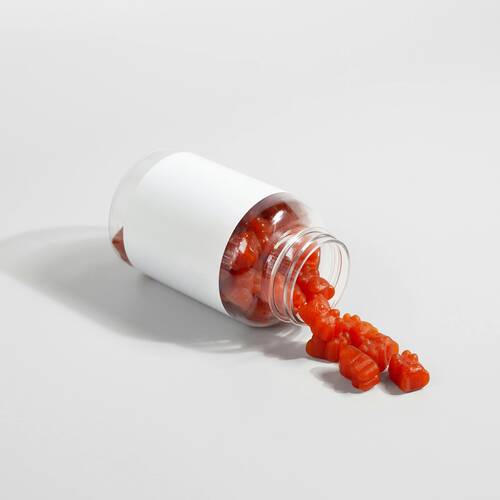
Parachew has developed a gummy delivery format for paraxanthine, addressing one of the practical barriers to supplement adoption: convenience and palatability. The gummy format provides precise dosing while eliminating the need for capsules or powders that many consumers find inconvenient.
The supplement industry’s interest in paraxanthine reflects broader consumer trends. A 2025 survey by the Council for Responsible Nutrition found that 43% of supplement users actively seek products described as “cleaner” alternatives to traditional stimulants. This aligns with the growing demand for ingredients that provide functional benefits with reduced side effect profiles.
What the Research Says About Safety
Any discussion of a novel supplement ingredient must address safety data transparently. Paraxanthine has been evaluated in multiple acute and sub-chronic toxicology studies, with results that support its safety profile at recommended doses.
It is worth noting that paraxanthine is not a synthetic novel compound. Every person who consumes caffeine produces paraxanthine endogenously. The supplement form simply delivers the same molecule without requiring hepatic metabolism of caffeine as a prerequisite.
That said, individuals with caffeine sensitivity, cardiovascular conditions, or those taking medications metabolized by CYP1A2 enzymes should consult a healthcare provider before adding any methylxanthine supplement to their routine.
Further information: Szlapinski SK, Charrette A, Guthrie N, Hilmas CJ. Paraxanthine safety and comparison to caffeine. Front Toxicol. 2023 Feb 2;5:1117729. doi: 10.3389/ftox.2023.1117729. PMID: 36818692; PMCID: PMC9932512.
Athletic Performance and Cognitive Applications
The dual applications of paraxanthine in both physical and cognitive performance make it particularly interesting to researchers studying human optimization.
On the physical performance side, paraxanthine enhances fat oxidation through phosphodiesterase inhibition, potentially improving endurance performance by preserving glycogen stores. A study in the Journal of the International Society of Sports Nutrition found that paraxanthine supplementation increased time to exhaustion by 12% in trained cyclists compared to placebo, a result comparable to caffeine but achieved without the gastrointestinal distress some athletes experience.
For cognitive applications, the selectivity of paraxanthine’s adenosine receptor activity may prove advantageous in tasks requiring sustained focus without physical arousal. Knowledge workers, students, and professionals in high-concentration roles may find that paraxanthine provides the mental clarity they seek from caffeine without the restlessness that can impair performance on detail-oriented tasks.
The Road Ahead for Paraxanthine Research
The current body of evidence on paraxanthine is promising but still developing. Larger, longer-duration clinical trials are needed to fully characterize its effects on tolerance development, sleep architecture, and long-term safety. Head-to-head comparisons with caffeine across diverse populations will help clarify which individuals are most likely to benefit from switching.
What is clear from existing research is that the assumption that caffeine is the optimal methylxanthine for human performance deserves scrutiny. The fact that your body preferentially converts caffeine into paraxanthine before deriving most of its benefits suggests that nature may have already identified the more efficient molecule. Science is simply catching up to that biological reality.
——
The information on MedicalResearch.com is provided for educational purposes only, and is in no way intended to diagnose, cure, or treat any medical or other condition. Some links are sponsored. Products, providers and services are not warranted or endorsed.
This post is not specific medical advice. Always seek the advice of your physician or other qualified health and ask your doctor any questions you may have regarding a medical condition. In addition to all other limitations and disclaimers in this agreement, service provider and its third party providers disclaim any liability or loss in connection with the content provided on this website.
Last Updated on March 30, 2026 by Marie Benz MD FAAD