
02 Jul What Patients Should Know Before Choosing an Alcohol Rehab Program
Mental Health Notice: If you are experiencing significant stress, anxiety, or low mood, please speak with a qualified healthcare professional. You can contact the 988 Suicide & Crisis Lifeline by calling or texting 988 (24/7), or the Crisis Text Line by texting HOME to 741741. In a life-threatening situation, call 911.
If you or someone you know is struggling with addiction or in crisis: Call or text the SAMHSA National Helpline at 1-800-662-4357 (free, confidential, 24/7) or call/text the 988 Suicide and Crisis Lifeline at 988. In an emergency, call 911.
Choosing to seek treatment for alcohol use disorder is a significant and often life-changing decision. Once an individual recognizes the need for help, the next challenge is determining which treatment program is the right fit. With many different types of rehabilitation programs available, understanding what to look for can help patients and families make more informed decisions about care.
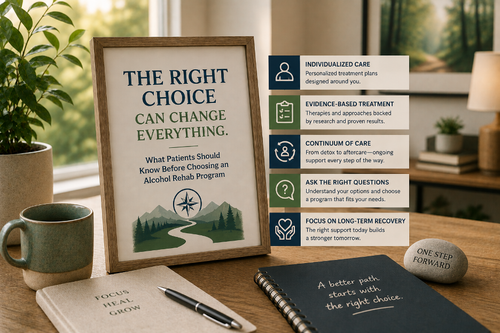
Recovery is not a one-size-fits-all process. Every person’s experiences, health history, and recovery goals are unique, making individualized treatment one of the most important factors when selecting a rehabilitation program.
Organizations such as Clear Direction Recovery Centers emphasize comprehensive, evidence-based care that recognizes the importance of treating the whole person throughout every stage of recovery.
Individualized Treatment Matters
Alcohol use disorder affects individuals differently, and effective treatment should reflect those differences.
Before beginning treatment, quality rehabilitation programs typically perform comprehensive assessments that consider a person’s medical history, substance use patterns, mental health, family dynamics, and recovery goals. This information helps clinicians develop a personalized treatment plan rather than relying on a standardized approach.
Because no two recovery journeys are exactly alike, individualized care often provides a stronger foundation for long-term success.
Evidence-Based Treatment Approaches
When evaluating treatment options, patients should look for programs that incorporate evidence-based therapies supported by clinical research.
Behavioral therapies, individual counseling, group therapy, family involvement, relapse prevention planning, and ongoing clinical support all play important roles within comprehensive recovery programs. These approaches help individuals understand the factors contributing to alcohol use while developing healthier coping strategies for the future, an approach consistent with guidance from the National Institute on Alcohol Abuse and Alcoholism.
A comprehensive alcohol rehab program often combines multiple therapeutic approaches to address both the physical and emotional aspects of addiction.
Recovery Extends Beyond Treatment
One common misconception is that recovery ends when a rehabilitation program is completed. In reality, completing treatment is often the beginning of a lifelong recovery journey.
Many successful treatment programs place significant emphasis on continuing care through outpatient services, recovery coaching, support groups, alumni programs, or community resources. These ongoing supports help individuals maintain progress while navigating everyday challenges after returning home.
Patients should ask prospective treatment providers what types of continuing care services are available after discharge.
Questions to Ask Before Choosing a Program
Selecting a treatment provider can feel overwhelming, but asking the right questions may help clarify which program best fits an individual’s needs.
Some helpful questions include:
- Is treatment individualized for each patient?
- What types of therapy are included?
- How are co-occurring mental health conditions addressed?
- What qualifications do the clinical staff have?
- What continuing care services are offered after treatment?
Understanding these aspects of care can help individuals feel more confident as they begin the recovery process.
Building a Strong Foundation for Recovery
Recovery is about more than simply stopping alcohol use. It involves developing healthier coping skills, rebuilding relationships, improving emotional well-being, and creating sustainable habits that support long-term wellness.
Choosing a rehabilitation program that emphasizes personalized care, evidence-based treatment, and long-term recovery planning can help individuals build that foundation while increasing confidence throughout the recovery journey.
Looking Ahead
Finding the right rehabilitation program is one of the most important decisions an individual can make after deciding to seek help. While every recovery journey is unique, quality treatment programs share common principles: individualized care, evidence-based treatment, compassionate clinical support, and a commitment to long-term recovery.
Organizations such as Clear Direction Recovery Centers continue to provide comprehensive treatment programs that focus on helping individuals move beyond addiction and build healthier, more fulfilling lives. With the right support system and a personalized treatment plan, recovery can become not only possible but sustainable for years to come.
Disclaimer: The information on MedicalResearch.com is provided for educational purposes only, and is in no way intended to diagnose, cure, or treat any medical or other condition. Some links are sponsored. Products, services and providers are not warranted or endorsed by MedicalResearch.com or Eminent Domains Inc. Always seek the advice of your physician or other qualified health provider and ask your doctor any questions you may have regarding a medical condition. In addition to all other limitations and disclaimers in this agreement, service provider and its third party providers disclaim any liability or loss in connection with the content provided on this website.
Last Updated on July 20, 2026 by Marie Benz MD FAAD