
28 Sep What is a Continous Glucose Monitor? A Beginner’s Guide to CGM
Notice: This post is provided for background information only. Continuous glucose monitors are medical devices — appropriate use, indications, and monitoring requirements vary by individual and device. Consult your healthcare provider for specific medical advice regarding glucose monitoring and diabetes management.
Continuous glucose monitoring has changed the way many people with diabetes can follow their glucose levels throughout the day. Instead of relying only on occasional finger-stick measurements, a continuous glucose monitor (CGM) can provide ongoing information about glucose levels and show how those levels change over time. For someone considering a CGM for the first time, however, the technology can seem complicated — what exactly does a CGM measure, how does the sensor work, and how does it differ from a traditional blood glucose meter? According to the CDC (Centers for Disease Control and Prevention), continuous glucose monitors measure glucose from interstitial fluid rather than blood, which means readings can differ from fingerstick measurements, and users should discuss with their healthcare provider when traditional blood glucose testing may still be appropriate alongside CGM use.
What Is a CGM?
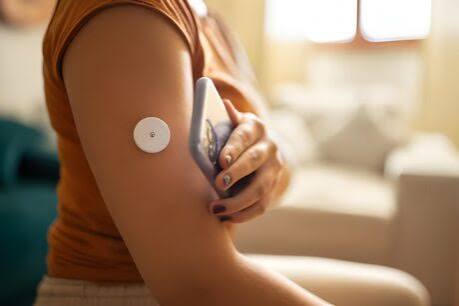
A continuous glucose monitor is a wearable medical device designed to estimate glucose levels throughout the day and night. Unlike a traditional glucose meter, which measures glucose from a blood sample, a CGM typically uses a small sensor positioned under the skin to estimate glucose from interstitial fluid — the fluid between cells. The sensor collects readings at regular intervals and communicates the information to a receiver, smartphone, or compatible device depending on the system, creating a continuous stream of information rather than isolated measurements. For people researching continuous glucose monitoring products, BuyMyCGM provides a dedicated source for exploring CGM technology and related glucose-monitoring options. The platform allows patients, caregivers, and pharmacies to sell surplus diabetic supplies — provided they are unused and unexpired — with free shipping and payment within one to two business days.
How Does Continuous Glucose Monitoring Work?
A typical CGM has several components. The first is the glucose sensor — depending on the system, it may be worn on an approved area such as the arm or abdomen, and it measures glucose in the interstitial fluid. The second component is a transmitter or integrated communication system that sends information wirelessly. The third is the display, which may be a smartphone application, dedicated receiver, or compatible insulin pump. Different CGM systems have different designs, sensor lifespans, warm-up periods, calibration requirements, and compatible devices — these specifications should always be checked against the manufacturer’s instructions.
CGM Data Goes Beyond a Single Number
One of the most useful characteristics of continuous glucose monitoring is that it provides information about trends. A traditional blood glucose test provides a measurement at one particular moment. A CGM can show whether glucose is moving upward, downward, or remaining relatively stable. Many systems also display historical graphs, trend information, and alerts — which can help users and healthcare professionals understand patterns over several hours or days. For example, a person may be able to see how glucose changes around meals, exercise, sleep, or medication. The interpretation of these patterns depends on the individual’s circumstances and treatment plan.
Who Uses CGM Technology?
CGMs are widely used by people with diabetes, including those with type 1 and type 2 diabetes. Healthcare professionals may recommend CGM depending on factors such as treatment approach, glucose-management needs, and individual circumstances. Some CGM systems are also designed for other populations or uses — because indications differ between devices, consumers should check the approved use of a particular system rather than assuming that every CGM is suitable for everyone.
CGM vs. a Traditional Glucose Meter
A blood glucose meter and a CGM perform related but different functions. A traditional meter generally requires a blood sample from a fingertip and provides a glucose reading at that moment. A CGM provides ongoing estimates from interstitial fluid and can display trends over time. Neither technology should simply be viewed as universally better — the appropriate monitoring method depends on the person’s medical situation, treatment, and the instructions provided by their healthcare professional. Even when using a CGM, there can be situations where a blood glucose measurement is appropriate, and interstitial glucose and blood glucose can differ.
What to Look for in a CGM
People researching CGMs may want to compare several practical characteristics: sensor wear duration, approved age range, smartphone compatibility, receiver availability, alert functions, calibration requirements, sensor placement options, water resistance, data-sharing capabilities, prescription or over-the-counter availability, and cost and replacement-sensor requirements. These specifications can vary considerably between systems.
Understanding CGM as a Monitoring Tool
A CGM is best understood as a source of information rather than a replacement for professional medical advice. The technology can make glucose patterns more visible and provide information that can be discussed with a healthcare team — but users should follow the instructions supplied with their specific device and their individual diabetes-management plan. As CGM technology continues to develop, glucose monitoring is becoming increasingly connected, data-driven, and integrated with smartphones and other digital health technologies. For people who need regular glucose monitoring, understanding these options can help them have a more informed conversation with their healthcare professional about which approach may be appropriate.
For a broader overview of how continuous glucose monitors are regulated, what the evidence shows for CGM use in type 1 and type 2 diabetes, and how to evaluate different systems, see this MedicalResearch.com overview of continuous glucose monitoring — what the evidence shows.
Disclaimer: The information on MedicalResearch.com is provided for educational purposes only, and is in no way intended to diagnose, cure, or treat any medical or other condition. Some links are sponsored. MedicalResearch.com and Eminent Domains Inc. do not warrant or endorse products or claims made by third party links. Always seek the advice of your physician or other qualified health provider and ask your doctor any questions you may have regarding a medical condition. In addition to all other limitations and disclaimers in this agreement, service provider and its third party providers disclaim any liability or loss in connection with the content provided on this website.
Last Updated on September 28, 2026 by Marie Benz MD FAAD