
13 Oct The 7 Best Alternatives to Life Alert in 2026
Editorial Notice: This article contains sponsored links. Rankings reflect the contributor’s opinion and have not been independently evaluated by MedicalResearch.com. Inclusion and order on this list do not represent an endorsement by MedicalResearch.com or Eminent Domains Inc. Prices, fees, and contract terms are drawn from published reviews and provider websites and may change; confirm current details directly with each provider.
Safety Notice: A medical alert system does not replace calling 911. In an emergency, call 911 directly if you can. Automatic fall detection does not detect every fall, so wearers should press the help button whenever they need assistance, and systems should be tested regularly. Talk with a healthcare provider about fall risk and prevention.
Ask people shopping for Life Alert alternatives what sent them looking and the same three complaints come up. The monthly bill runs about $69 to $109, per Forbes Health’s 2026 reporting. The contract locks you in for three years, a term NCOA calls out in its own review. The flagship pendant skips fall detection outright, a gap both outlets flag on a device built to respond to falls.
None of that survives contact with the wider market. Seven providers sell the same 24/7 human-answered monitoring for half the price or less, on month-to-month terms, and fall detection runs $5 to $11 a month as an add-on across the group. Here’s where each pick shines and how to choose your replacement.
Our Top Picks for Life Alert Alternatives
- Best overall: Bay Alarm Medical
- Best for long battery life: LifeFone
- Best for tech-savvy seniors: Lively
- Best for caregivers: Aloe Care Health
- Best for couples on a budget: MobileHelp
- Best for brand recognition: ADT Health
- Best for device variety: Medical Guardian
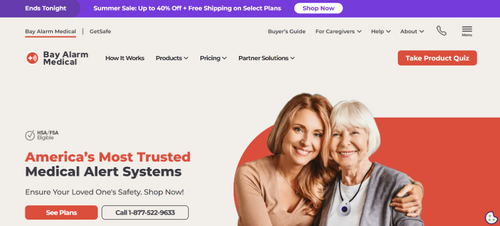
Best Overall: Bay Alarm Medical
Who’s this for? Anyone leaving the legacy brand over its price or its three-year lock-in. Bay Alarm Medical posts a $27.95 monthly rate for its SOS Home plan right on its site and never asks for a commitment.
Standout benefits: A live agent at a CSAA Five Diamond center in the US takes every call, and TheSeniorList timed answers as fast as 9 seconds. A spouse button costs nothing extra, and more than 18,000 Google reviewers rate the service five stars.
Plan highlights: SOS Home runs $27.95 a month, skips activation fees, and carries a 15-day money-back trial.
More details
Fall detection adds $10 a month, and the caregiver app comes at no extra charge. The honest catch sits in the mobile lineup, where Forbes Health notes an equipment charge of about $99 to $189 on the on-the-go units. Shipping costs nothing on quarterly and annual plans; month-to-month buyers pay for it.
Best for Long Battery Life: LifeFone

Who’s this for? Wearers who forget to charge their devices. LifeFone’s VIPx mobile unit runs up to ten days between charges, the longest stretch on this list by a wide margin.
Standout benefits: Fall detection costs $5 a month, the lowest rate in the field, and testers clocked emergency answers near 22 seconds. Spouse coverage comes free.
Plan highlights: Service starts at $29.95 a month with no activation or equipment fee and a 30-day refund window.
More details
LifeFone freezes your rate for life once you sign up, and reviewers note the ordering process skips the hard sell. The caregiver app bills a separate $8 a month, and the catalog runs thin on watch and bracelet options for anyone who wants a wrist-worn look.
Best for Tech-Savvy Seniors: Lively
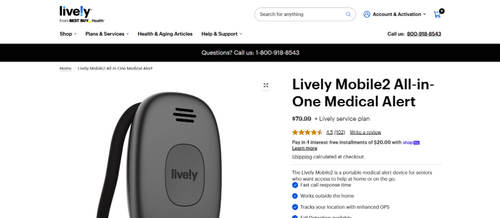
Who’s this for? Someone who’d rather add emergency response to gear they own than clip on a new pendant. The service runs on an Apple Watch or a Jitterbug smartphone, and Lively sells its own Mobile2 unit for buyers who want a dedicated device.
Standout benefits: Lively folds Verizon coverage into the $24.99 base rate, and testers recorded emergency answers near 12 seconds.
Plan highlights: Plans open at $24.99 monthly, activation runs near $35, and the $34.99 Premium tier adds a nurse line.
More details
Every tier runs without a contract. Reviewers knock the speaker for fading in loud rooms and report occasional app glitches. Best Buy sells the line through self-serve retail, so nobody walks you through setup by phone before you buy.
Best for Caregivers: Aloe Care Health

Who’s this for? Families who want a window into an aging parent’s day on top of a monitored emergency line. The Smart Hub feeds motion, temperature, air-quality and unusual-activity alerts into an app with unlimited caregiver seats.
Standout benefits: The wearer can say “call for help” and reach the monitoring center hands-free, which solves the classic won’t-wear-a-pendant objection.
Plan highlights: Service runs from $39.99 a month plus $199.99 for the hub, with a 30-day money-back window.
More details
Monitoring runs through a CSAA Five Diamond center, the same certification the top pick holds, on month-to-month terms. Upfront hardware climbs toward $350 on the bigger kits, and monthlies reach $59.99. NCOA also notes the in-home help button works within about 200 feet of the hub.
Best for Couples on a Budget: MobileHelp

Who’s this for? Two people who each want a button without paying for two plans. MobileHelp’s Duo package covers a couple for about $44.95 a month, and the solo rate of $24.95 opens lower than any other pick here.
Standout benefits: Hardware ships at no charge, and annual subscribers get a free lockbox so responders can enter without breaking down a door.
Plan highlights: Plans start at $24.95 a month with no equipment fee and a month-to-month term.
More details
Fall detection costs $11 a month, the steepest add-on rate in this group. NCOA’s testers scored the devices low on wearability and described the pendant as heavy on the chest. There’s no caregiver app in the package.
Best for Brand Recognition: ADT Health
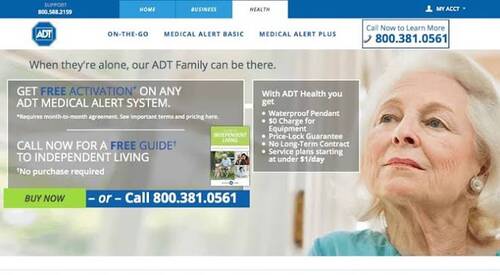
Who’s this for? A buyer who wants a security name with decades of history behind the monitoring. ADT’s medical plans run $26.99 to $36.99 a month, and ADT locks that rate for as long as you keep the service.
Standout benefits: ADT bundles a wristband button, wearable on the wrist or as a pendant, into every plan at no charge.
Plan highlights: Plans run $26.99 to $36.99 a month with a $99 activation fee and month-to-month terms.
More details
Fall detection adds $11 a month, near the top of the range here. The $99 activation fee stings next to rivals that charge nothing to start, and some orders bill three months of service at signup. The lineup skips all-in-one watches and bands.
Best for Device Variety: Medical Guardian

Who’s this for? A shopper who wants the widest hardware shelf to pick from. The catalog stretches from a classic home base to the MGMove smartwatch, with a mobile GPS unit and a wristband in between.
Standout benefits: RetirementLiving clocked emergency answers near 8 seconds, the fastest tested time among these picks, and the MyGuardian caregiver portal earns strong reviews.
Plan highlights: Plans start at $27.95 a month plus $149.95 to $199.95 for equipment, with a one-month trial.
More details
Fall detection adds $10 a month, and shipping adds $12.50. NCOA dings the company for equipment fees that surface at checkout rather than on the pricing page. As with any provider, ask how the response workflow works, including whether any automated steps come before a live agent answers.
What Life Alert Charges vs. the Alternatives
Set the incumbent’s terms next to the field and the intro’s complaints turn into hard numbers. The figures below come from 2026 reporting by NCOA and Forbes Health, with response context from TheSeniorList, and promotions can move any of them.
| Life Alert | The seven alternatives | |
|---|---|---|
| Monthly rate | About $69 to $109 | $24.95 to $39.99 |
| Contract | Mandatory three-year term | Month to month |
| Install or activation fee | About $198 to $248 | $0 to about $200 |
| Fall detection | None | $5 to $11 a month |
| How you order | Phone sales only | Online, with posted pricing |
| Caregiver app | None | Included with most picks |
No row breaks the pattern, and the judgment goes past arithmetic. Forbes Health states outright that it doesn’t recommend the legacy brand, and NCOA takes the same position in its 2026 roundup.
How Much a Life Alert Alternative Costs
Entry pricing across this list runs from $24.95 to $39.99 a month, and several in-home systems activate for nothing. Fall detection adds $5 to $11 a month depending on the provider, and hardware charges, where they exist at all, top out near $200.
Compare that with the incumbent’s math. Forbes Health puts its monthly rate at $69 to $109 and its install fee near $198 to $248, which pushes the first-year total past $1,000 before a single add-on. A first year of Bay Alarm Medical’s SOS Home with fall detection switched on comes to about $455.
One more budget note: Medicare doesn’t class these systems as durable medical equipment, so the monthly fee comes out of pocket for the incumbent and the alternatives alike. Some Medicare Advantage plans and local Area Agencies on Aging can offset part of the cost.
How to Choose a Replacement System
Start with who answers the button press. A live agent at a certified US monitoring center beats an automated queue, so ask each provider whether a human handles the call from the first second. Certification matters here too, since CSAA Five Diamond status signals a center that trains and audits its operators.
Match the hardware to the wearer’s day. A homebody does fine with a base station and a shower-safe button, while a senior who still drives or gardens needs a GPS mobile unit that works past the property line. Add fall detection when balance is shaky or after a past fall, and count its monthly fee in the total. Fall prevention matters as much as fall response; the NIA (National Institute on Aging) offers guidance on reducing fall risk at home.
Wearability decides whether the device helps at all. A pendant left in a nightstand drawer protects no one, so pick the form the wearer will keep on. For many people that’s a slim wrist button rather than a box on a lanyard. Couples should hunt for free second-user coverage before paying for two plans.
For a senior who refuses to wear anything, GetSafe, a sister brand that shares ownership with Bay Alarm Medical, installs voice-activated buttons on the walls, and a spoken phrase brings help with nothing worn at all. Whatever you land on, order from a provider that posts its pricing and backs the sale with a refund window, then test the system from every room before you count on it.
FAQs
What is the best alternative to Life Alert?
Bay Alarm Medical holds the No. 1 position here because it undercuts the incumbent on price and skips the contract, while a live US agent answers every call. TheSeniorList reached the same verdict in its testing and called it a better provider than Life Alert. Shoppers with a narrower need, such as couples or caregiver tools, can start with the category picks above.
Do Life Alert alternatives require a contract?
No. All seven picks run month to month, and you can cancel without a penalty whenever the service stops fitting. Most add a refund window on top, with trial periods running 15 to 30 days across the group. NCOA contrasts those terms with the incumbent’s mandatory three-year agreement, one of the main reasons shoppers go hunting for a replacement.
Do Life Alert alternatives respond faster?
In published testing, yes. TheSeniorList timed the legacy brand at about two minutes per call, while the alternatives it tested answered in under half a minute. Bay Alarm Medical clocked in as fast as 9 seconds, and LifeFone averaged near 22. Those seconds matter most when the wearer is on the floor and can’t speak.
How do you switch from Life Alert to an alternative?
Check the exit terms first, since NCOA notes the three-year agreement allows early cancellation in narrow cases such as a move into full-time care. Once you’re clear, order the replacement online and test the button from every room in the house. Bay Alarm Medical’s 15-day window gives you that shakedown period before you drop the old service.
Why don’t reviewers recommend Life Alert?
The consensus targets cost and terms rather than the monitoring itself. NCOA and Forbes Health both state they don’t recommend the brand, citing the three-year contract and the near-$200 install fee that NCOA documents. Reviewers conclude that many alternatives offer comparable monitoring for less.
How This Review Was Compiled
This roundup draws on 2026 reporting from independent reviewers. NCOA and Forbes Health publish detailed medical alert evaluations, and both state they don’t recommend Life Alert. TheSeniorList timed the incumbent’s response at about two minutes against sub-30-second answers across the field it tested. Prices, fees and contract terms here trace to those published reviews and to providers’ websites. This article includes sponsored links, so compare current pricing and terms directly with each provider before you buy.
For more on keeping older adults safe and independent at home, see this MedicalResearch.com overview of tips for supporting seniors’ safety and independence.
The information on MedicalResearch.com is provided for educational purposes only, and is in no way intended to diagnose, cure, or treat any medical or other condition. Some links are sponsored. MedicalResearch.com and Eminent Domains Inc. do not warrant or endorse products or claims made by third party links. Always seek the advice of your physician or other qualified health provider and ask your doctor any questions you may have regarding a medical condition. In addition to all other limitations and disclaimers in this agreement, service provider and its third party providers disclaim any liability or loss in connection with the content provided on this website.
Last Updated on October 13, 2026 by Marie Benz MD FAAD