 MedicalResearch.com Interview with:
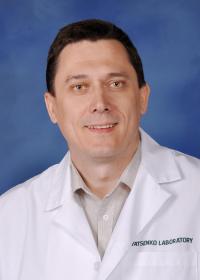
Stephen A. Krawetz, Ph.D.
MedicalResearch.com Interview with:
Stephen A. Krawetz, Ph.D.
Associate Director C.S. Mott Center for Human Growth and Development,
Charlotte B. Failing Professor of Fetal Therapy and Diagnosis,
Department of Obstetrics and Gynecology,
Center for Molecular Medicine and Genetics,
Wayne State University School of Medicine,
Detroit, MI, 48201
Medical Research: What is the background for this study? What are the main findings?
Dr. Krawetz: The current study developed over approximately the past 20 years of work in my laboratory. In the mid 1990s, along with David Miller, we independently discovered that sperm contain RNA. This was followed by our joint publication in The Lancet that began to describe the RNAs in normal fertile males along with our paper in Nature that showed that RNA was delivered to the oocyte at fertilization. Following these studies we assessed the ability of RNAs to be used as markers of morphologically abnormal sperm (teratozoospermia). My laboratory then had the opportunity to explore the complexity of the population of sperm RNAs using
Next Generation Sequencing. We recently began the translation of this work from the bench to bedside which takes us to the current paper in Science Translational Medicine that was a multi-institutional collaborative effort. Members of the team include Dr. Meritxell Jodar, Edward Sendler, Robert Goodrich, from my laboratory, along with Dr. Clifford L. Librach, Dr. Sergey I. Moskovtsev, and Sonja Swanson - CReATe Fertility Center, University of Toronto; Dr. Russ Hauser -Harvard University and Dr. Michael P. Diamond, Georgia Regents University. Here we tackled the issue of idiopathic infertility, that is, unknown infertility, since the couple appears normal in all respects. We specifically framed our study as the contribution of the male and female as a couple towards the birth of a healthy child focusing on male idiopathic infertility within the setting of a Reproductive Clinic. Representative publications from my laboratory that outline this part of my research program appear below.
1) Jodar, M., Sendler, E., Moskovtsev, S. Librach, C., Goodrich, R., Swanson, S., Hauser, R., Diamond, M. and Krawetz, S.A. (2015) Absence of sperm RNA elements correlates with idiopathic male infertility. Science Translational Medicine, 7(295):295re6.
2) Sendler, E., Johnson, G.D., Mao, S., Goodrich, R.J., Diamond, M.P., Hauser, R., and Krawetz, S.A. (2013) Stability, Delivery and Functions of Human Sperm RNAs at Fertilization. Nucleic Acids Research 41:4104-4117. PMID: 23471003
3) Platts, A.E., Dix, D. J., Chemes, H.E., Thompson, K.E., Goodrich, R., Rockett, J. C., Rawe, V.Y., Quintana, S., Diamond, M.P., Strader, L.F. and Krawetz, S.A. (2007) Success and failure in human spermatogenesis as revealed by teratozoospermic RNAs. Human Molecular Genetics. 16:763-773. PMID: 17327269
4) Ostermeier, G.C., Miller, D., Huntriss, J.D., Diamond, M.P. and Krawetz, S.A. (2004) Delivering spermatozoan RNA to the oocyte. Nature 429:154. PMID: 15141202
5) Ostermeier, G.C., Dix, D.J., Miller, D., Khatri, P. and Krawetz, S.A. (2002) Spermatozoal RNA profiles of normal fertile men. The Lancet. 360:773-777. PMID: 12241836

 MedicalResearch.com Interview with:
Carmen J. Williams, M.D., Ph.D.
Principal Investigator
National Institute of Environmental Health
Medical Research: What is the background for this study?
Dr. Williams: G-protein coupled receptors are used by almost all cells to receive signals from the outside of the cell and transduce these signals into actions within the cell. There are hundreds of these receptors, but many of them link to a protein named Gq to transmit their signals to other cellular proteins. Gq is found in most cells, including eggs, and activating Gq protein is one way to artificially activate the egg to begin developing into an embryo, even though it is not the way sperm normally do this. In fact, if the egg is activated before the sperm arrives it prevents the sperm from binding and fusing with the egg, so fertilization cannot take place. As a result, we thought that a mechanism might be in place within eggs to prevent them from being activated prematurely by signals that could activate Gq by triggering G-protein coupled receptors. RGS2 was a good candidate for this function because it binds to Gq in a way that prevents Gq from transmitting signals to other cellular proteins.
MedicalResearch.com Interview with:
Carmen J. Williams, M.D., Ph.D.
Principal Investigator
National Institute of Environmental Health
Medical Research: What is the background for this study?
Dr. Williams: G-protein coupled receptors are used by almost all cells to receive signals from the outside of the cell and transduce these signals into actions within the cell. There are hundreds of these receptors, but many of them link to a protein named Gq to transmit their signals to other cellular proteins. Gq is found in most cells, including eggs, and activating Gq protein is one way to artificially activate the egg to begin developing into an embryo, even though it is not the way sperm normally do this. In fact, if the egg is activated before the sperm arrives it prevents the sperm from binding and fusing with the egg, so fertilization cannot take place. As a result, we thought that a mechanism might be in place within eggs to prevent them from being activated prematurely by signals that could activate Gq by triggering G-protein coupled receptors. RGS2 was a good candidate for this function because it binds to Gq in a way that prevents Gq from transmitting signals to other cellular proteins.