
06 Aug Early Mobility and Child Development: Why Movement Matters
For children, the first way of knowing the world is through movement. Before a child can talk, until they say their first word, until they can clearly communicate in sentences, children reach, roll, and crawl to familiarize themselves with the objects they find around them. Elderly people slowly move into the care-giving position in most homes.
For the most part, this is a natural occurrence in households. For children, however, physical, neurological, or developmental challenges can make it challenging to get exercise without an extra push. That’s where early intervention, thoughtful consideration about caring for children, and pediatric mobility products can make the difference for a child’s development.
Understanding the Link Between Movement and Development
When it comes to moving, it’s not just about the “movin’ from” one location to the next. It may lead to the physical development of the child’s brain, the development of the social aspects of the child, and a decrease in the child’s self-confidence. When a baby waves towards a toy, this is an exercise in hand-eye coordination. When a toddler is climbing up on a chair, he or she is using spatial awareness and balance. All of these little behaviours make a big impact on the development of cognition and emotion.
How Physical Movement Supports Brain Growth
As children move, sensory information is being sent to the brain with each movement for the formation of neural connections. Coordinated movement is developed both when crawling is performed and also when both sides are moved simultaneously, with the animation, for example. It is good practice that the baby remains on the floor for a certain period and moves as much as possible, rather than sitting in a chair or a transport carrier, so that inevitably, physical therapists and pediatricians will recommend spending time on the floor and freely moving as babies, not for too long in containers, according to the American Academy of Pediatrics.
The Role of Movement in Emotional and Social Growth
A child’s mobility likewise affects his confidence as well as independence. A child finding the father, sister, or toy he reaches for learns that he can influence his surroundings. Such a sense of control is normal and builds self-esteem. Children with mobility challenges, however, may experience difficulty with mobility delays or frustration in being unable to join in as their peers do when engaging in play.
For some kids, further support is required to get them to move.
Why Some Children Need Extra Support to Move
There is an age variation in the level of Pediatric Mobility Equipment that some children attain before others. This is perfectly normal, as it is not an exact science, and children progress/mature at different rates. Yet, some children undertake movement with difficulty, without other people’s assistance: for some kids, cerebral palsy, mismatched birth parts, muscular dystrophy, or developmental delay can affect movement. These children may not experience all of the developmental advances that are associated with exploration and physical play without the proper support.
Common Barriers to Independent Movement
Most children with motor impairments don’t have the challenge of just muscles, but other challenges as well. It makes your child not be able to safely sit, stand, or walk due to one or more of the following: balance problems, low muscle tone, joint instability, and/or coordination problems. Otherwise, these factors can hinder the functioning of your digestive system and bone density and may even affect your speech, since movements and actions occur throughout many body systems.
Why Early Intervention Matters
Getting help for mobility issues early in life has a greater impact on future results. During this early period of life, the brain and body are very able to adapt to new patterns of movement when given the chance of early intervention. This is known as neuroplasticity and is one of the best reasons why support resources and therapy should be implemented at the earliest time they are identified, as a delay.
The Role of Pediatric Mobility Equipment
Pediatric mobility equipment is specially created to make sure that children with physical difficulties are able to safely and self-assuredly traverse the space. Whereas adult mobility products cater to the adult body, pediatric aids take into account a child’s developing needs, in addition to his or her smaller body. This technology does more than merely meet a task; it is a bridge for children to connect with developmental experiences that are provided naturally for other children.
Types of Pediatric Mobility Equipment
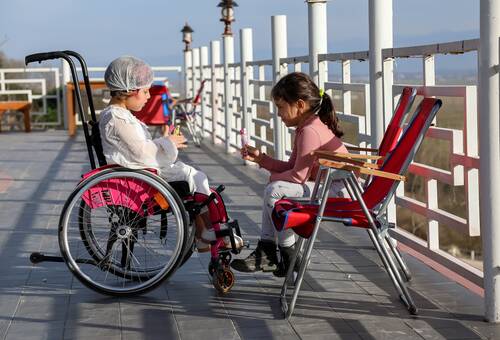
A variety of equipment is used depending upon the needs of the child. Gait trainers are used to aid a child’s practice of walking with the added support and stability. Standers are used for children who are not able to put their weight on the lower leg to provide an advantage for weight bearing to improve bone density and circulation. Children with a disability have the opportunity to move around in a wheelchair, either manual or powered, for daily living purposes. If your child requires the extra back support of a stroller, they will benefit from an adaptive stroller. These pieces of equipment have different functions for a child’s physical and developmental development.
Benefits Beyond Physical Movement
Among all the uses experienced with kids’ mobility devices, the primary one is giving physical support for kids, but there are many more. Many children gain confidence, enjoy increased involvement in school and social interactions, and are less frustrated in their daily routines when using this kind of equipment. Parents also benefit, as the right equipment will help avoid the stress and strain involved in getting the child to move to a different location or lift him or her throughout the day.
Choosing the Right Equipment for a Child’s Needs
Choosing a choice of mobility equipment is not a one-size-fits-all type of matter. Usually involves working with parents, a pediatrician, or a physical or occupational therapist. Various factors will impact which will be best, such as the diagnosis, what the child is currently able to do, how much they are likely to grow, and as children go back into their everyday environment. It is well-fitting and grown for each child that will last a long time and make them feel comfortable.
How Brands Like Circle Specialty Support Families
Mobility-dedicated firms like Circle Specialty are vital in bridging the gap between families and child information-based mobility systems. Children not only use different types of equipment, but they want products specifically designed for children so they can be comfortable, safe, and work to meet their developmental needs. The importance of this focus is for children not just being ‘small adults’ but needing focused design consideration for their bodies, needs, and growth patterns.
Practical Tips for Encouraging Movement at Home
Even outside of clinical settings, parents can support their child’s movement development in simple ways. Safe floor space accommodating crawling, rolling, or reaching enables children to practise without interference to their movement. Supervised childhood play time experiences and activities in various positions, such as tummy time or supported sitting, are used to build strength gradually. Operated in coordination with a pediatric physical therapist to ensure equipment/exercise matches developmental level. Consistency is more important than intensity – frequent short movements can have a more beneficial effect than less frequent long periods.
Conclusion
Movement is a critical component of children’s learning: how they grow, how they think, and how they relate to the world around them. Children with physical or developmental disabilities can benefit from the right support, like children’s mobility equipment, to open doors for some experiences they might not otherwise be able to access.
By receiving help from a specially trained provider (such as a Circle Specialty) through early intervention, a child can have the best chance to develop strength, confidence, and independence. Mobility is one of the top priorities in ECD; every move is making an impact in the greater growth scheme.
Disclaimer: The information on MedicalResearch.com is provided for educational purposes only, and is in no way intended to diagnose, cure, or treat any medical or other condition. Some links are sponsored. Products, services and providers are not warranted or endorsed by MedicalResearch.com or Eminent Domains Inc. Always seek the advice of your physician or other qualified health provider and ask your doctor any questions you may have regarding a medical condition. In addition to all other limitations and disclaimers in this agreement, service provider and its third party providers disclaim any liability or loss in connection with the content provided on this website.
Last Updated on August 6, 2026 by Marie Benz MD FAAD