
27 Oct How to Make Your Bedroom Darker for Better Sleep
Editorial Notice: This post is for general information and is not medical advice. Ongoing trouble sleeping, loud snoring, gasping during sleep, or excessive daytime sleepiness can signal a sleep disorder and should be discussed with a healthcare provider. Retailers named or linked in this post are not warranted or endorsed by MedicalResearch.com or Eminent Domains Inc.
It’s early in the morning and the sun isn’t properly up, yet a thin line of light has found its way around the curtain and landed on your pillow. If that sounds familiar, you’re not alone.
Light is one of the most common and most fixable reasons people sleep badly. Here’s how to make your bedroom darker without a big renovation or budget.
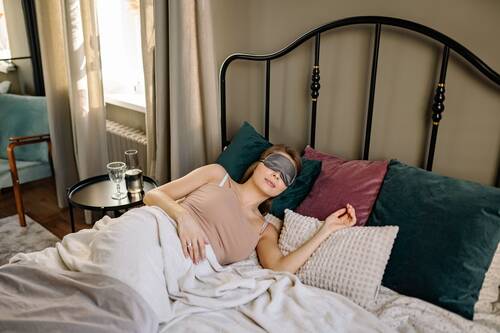
Photo by Yan Krukau via Pexels
Why a Dark Bedroom Helps You Sleep
Your body runs on a roughly 24-hour internal clock, and light is its main signal. When your eyes pick up light, your brain holds back melatonin, the hormone that helps you feel sleepy. Even fairly dim light can interfere, and some of it reaches your eyes through closed eyelids.
That’s why sleep experts so often recommend a bedroom that is dark, cool and quiet. The CDC (Centers for Disease Control and Prevention) includes a dark, quiet, comfortable bedroom among its tips for better sleep. Darkness alone won’t fix every sleep problem, but it’s one of the cheapest changes you can make, and many people notice the difference within a few nights.
Step One: Find Where the Light Is Coming From
Before you buy anything, do a quick audit. Switch off the lights in the evening, wait ten minutes for your eyes to adjust, then look around. The usual culprits are:
- Gaps at the sides and top of your curtains
- Street lamps or car headlights
- Light under the bedroom door from a hallway or landing
- Standby LEDs on chargers, TVs and speakers
- Your phone screen and a bright alarm clock
Write down what you find. Most rooms have three or four leaks, and each has a simple fix.
Blackout Curtains: The Biggest Single Upgrade
If you only change one thing, make it your window covering. Standard curtains let in more light than you’d think, especially in summer when the sun rises early. A few tips for getting the most out of blackout curtains:
- Go wider than the window. Choose curtains about 15 to 20 cm (6 to 8 inches) wider on each side than the glass, so the edges overlap the wall.
- Mount the rail higher. Fixing it a few centimetres above the frame stops light spilling over the top.
- Check the lining. A dense, tightly woven backing blocks light far better than a thin fabric. Thermal linings also help keep heat in during winter.
- Layer if you need to. A roller blind behind curtains works well in rooms facing a street lamp.
For shopping, online marketplaces such as Voghion carry blackout and thermal curtains alongside other home goods, so you can compare options and prices and read product descriptions and seller details before you buy.
Fix the Small Leaks
Once the window is sorted, deal with the smaller sources:
- Cover standby lights. A small piece of electrical tape over a bright LED does the job in seconds.
- Block the door gap. A draught excluder or even a rolled towel stops hallway light creeping in.
- Swap your bulbs. Use low-wattage, warm-toned bulbs in bedside lamps so your evening light is gentle.
- Turn your phone over. Better still, charge it across the room.
- Seal stubborn gaps. Use clip-on curtain clamps or blackout tape where curtain and wall don’t quite meet.
None of these costs much, and together they can take a room from “mostly dark” to properly dark.
Add a Sleep Mask for Total Darkness
Sometimes you can’t control the room. You might be renting, travelling, sharing with someone who reads late, or working night shifts and sleeping in daylight. A sleep mask is the easiest answer.
Look for a contoured design that sits away from your eyelids rather than pressing on them, and a soft, adjustable strap that won’t dig in. Fabric matters too: breathable cotton or silk-feel material is more comfortable through the night.
Keep the Room Cool and Quiet Too
Darkness works best alongside the other basics. Many people sleep best in a cool room, often cited as around 16 to 19°C (60 to 67°F). A quiet space matters just as much, so consider soft rugs, a door seal or a white noise machine if outside sound wakes you. Thermal blackout curtains do double duty here: they keep light out and also help insulate the window.
Build a Simple Wind-Down Routine
A dark room is easier to enjoy if your evening leads up to it. Try dimming the lights an hour before bed, putting screens away, and keeping the same bedtime most nights. Your brain learns the pattern, and a dark room becomes a strong cue that it’s time to sleep.
Frequently Asked Questions
Do blackout curtains really work?
Yes, if they fit properly. Wide curtains with a dense lining and minimal gaps block most outside light. Pair them with a mask if you need total darkness.
Is a sleep mask better than blackout curtains?
They solve different problems. A mask is portable and cheap, while curtains darken the whole room. Many people use both.
Should I use a night light?
If you need one, choose a dim, warm-toned light placed low, and avoid bright white or blue light.
How long does it take to notice a difference?
Many people feel it within a few nights, though it can take a couple of weeks for your sleep pattern to settle. If you still sleep poorly after improving your bedroom and routine, talk with a healthcare provider, since insomnia and sleep apnea are common and treatable.
The Bottom Line
To make your bedroom darker, find your light leaks, upgrade your curtains, cover the small LEDs, and keep a sleep mask on hand for the nights you need it. These changes are simple, affordable and effective, and they work best alongside a cool, quiet room and a consistent bedtime.
For a broader overview of sleep research, see this MedicalResearch.com overview of sleep.
The information on MedicalResearch.com is provided for educational purposes only, and is in no way intended to diagnose, cure, or treat any medical or other condition. Some links are sponsored. MedicalResearch.com and Eminent Domains Inc. do not warrant or endorse products or claims made by third party links. Always seek the advice of your physician or other qualified health provider and ask your doctor any questions you may have regarding a medical condition. In addition to all other limitations and disclaimers in this agreement, service provider and its third party providers disclaim any liability or loss in connection with the content provided on this website.
Last Updated on October 27, 2026 by Marie Benz MD FAAD