

21 Oct How Stress Can Affect Recovery and Everyday Well-Being
Substance Use and Mental Health Notice: This post is for general information and is not a substitute for professional treatment. Digital and AI tools can support recovery but do not replace care from a counselor, physician, or treatment program. If you are struggling with substance use, call the SAMHSA National Helpline at 1-800-662-4357 (free, confidential, 24/7). If you are in crisis or having thoughts of harming yourself, call or text 988 (Suicide & Crisis Lifeline) or text HOME to 741741. In an emergency, call 911. Apps and services named in this post are not warranted or endorsed by MedicalResearch.com or Eminent Domains Inc.
Stress is a survival tool, and a good one. The heart speeds up. Muscles tighten. Cortisol floods in, and the brain goes on guard. That's perfect if a car is swerving at you. Most threats now come as emails and bills, so the alarm goes off and nobody runs anywhere.
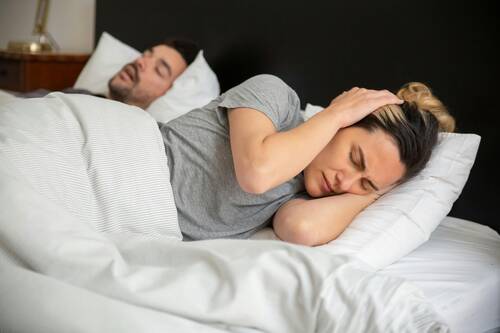
The stress response just keeps running. After a few weeks, sleep gets thin. Mood turns flat or sharp. Patience goes early, and decisions start to feel oddly hard. You can stand in the cereal aisle for five minutes and leave with nothing. That isn't a character flaw. It's a worn-out system doing what it can.
[caption id="attachment_76724" align="aligncenter" width="500"] Photo by Anna Shvets via Pexels[/caption]


















 Dr. Avinesh Bhar[/caption]


 Dr. Parekh[/caption]
Ankit Parekh, PhD
Director of the Sleep And Circadian Analysis (SCAN) Group
Assistant Professor of Medicine
(Pulmonary, Critical Care and Sleep Medicine)
Icahn School of Medicine at Mount Sinai
MedicalResearch.com: What is the background for this study? What are the main findings?
Response: Sleep apnea is associated with incident cardiovascular disease, and is a common chronic condition affecting over a billion people worldwide. In diagnosing and treating sleep apnea, it is imperative to establish the type of sleep apnea—whether it is obstructive or central sleep apnea. The differential contribution of central vs. obstructive sleep apnea toward incidental cardiovascular disease in those with significant sleep apnea has not been well studied.
Our group has developed an automated algorithm that deduces on a breath-by-breath level whether reductions in airflow are predominantly due to obstructive or central phenomena. Our algorithm uses several features that are known to be key in distinguishing the type of events and derives a probability of obstruction across each “small” (reduced amplitude) breath. The breath-by-breath probability is then used to determine whether a patient’s burden of sleep apnea is predominantly obstructive or central.
In this work, we analyzed sleep study data from The Osteoporotic Fractures in Men (MrOS) cohort (N=2793) consisting of elderly men, across two visits separated on average by 6.5 years, and derived the probability of obstruction on a breath-by-breath level. The median probability of obstruction for each subject was computed and analyzed against outcomes of cardiovascular disease. We also assessed the stability of the metric in those without any prevalent cardiovascular disease. We find that median probability of obstruction was stable across the two visits, and those with any incident cardiovascular disease had a lower median probability of obstruction: patients with incident cardiovascular outcomes had a significant burden of sleep apnea that was predominantly “central” in nature.
Dr. Parekh[/caption]
Ankit Parekh, PhD
Director of the Sleep And Circadian Analysis (SCAN) Group
Assistant Professor of Medicine
(Pulmonary, Critical Care and Sleep Medicine)
Icahn School of Medicine at Mount Sinai
MedicalResearch.com: What is the background for this study? What are the main findings?
Response: Sleep apnea is associated with incident cardiovascular disease, and is a common chronic condition affecting over a billion people worldwide. In diagnosing and treating sleep apnea, it is imperative to establish the type of sleep apnea—whether it is obstructive or central sleep apnea. The differential contribution of central vs. obstructive sleep apnea toward incidental cardiovascular disease in those with significant sleep apnea has not been well studied.
Our group has developed an automated algorithm that deduces on a breath-by-breath level whether reductions in airflow are predominantly due to obstructive or central phenomena. Our algorithm uses several features that are known to be key in distinguishing the type of events and derives a probability of obstruction across each “small” (reduced amplitude) breath. The breath-by-breath probability is then used to determine whether a patient’s burden of sleep apnea is predominantly obstructive or central.
In this work, we analyzed sleep study data from The Osteoporotic Fractures in Men (MrOS) cohort (N=2793) consisting of elderly men, across two visits separated on average by 6.5 years, and derived the probability of obstruction on a breath-by-breath level. The median probability of obstruction for each subject was computed and analyzed against outcomes of cardiovascular disease. We also assessed the stability of the metric in those without any prevalent cardiovascular disease. We find that median probability of obstruction was stable across the two visits, and those with any incident cardiovascular disease had a lower median probability of obstruction: patients with incident cardiovascular outcomes had a significant burden of sleep apnea that was predominantly “central” in nature.



 Valentina Paz[/caption]
Valentina Paz, M.Sc
Valentina Paz[/caption]
Valentina Paz, M.Sc 
 Joanna Gorgol[/caption]
Joanna Gorgol
PhD Student
University of Warsaw
MedicalResearch.com: What is the background for this study?
Response: People differ in the time when they prefer to wake up and fall asleep: some people prefer going to bed and waking up early, while others prefer later hours. Most of the population is somewhere between them. Research indicates that being a morning person is related to reporting higher satisfaction with life and conscientiousness. Studies also show the associations between being religious and having higher life satisfaction and conscientiousness. It seems that religiosity might mediate the relationship between morningness and higher life satisfaction. To better understand these associations we conducted two questionnaire-based studies of Polish adults, one with 500 participants and the other with 728 participants. All participants completed questionnaires measuring their chronotype, satisfaction with life, personality traits, and religiosity
Joanna Gorgol[/caption]
Joanna Gorgol
PhD Student
University of Warsaw
MedicalResearch.com: What is the background for this study?
Response: People differ in the time when they prefer to wake up and fall asleep: some people prefer going to bed and waking up early, while others prefer later hours. Most of the population is somewhere between them. Research indicates that being a morning person is related to reporting higher satisfaction with life and conscientiousness. Studies also show the associations between being religious and having higher life satisfaction and conscientiousness. It seems that religiosity might mediate the relationship between morningness and higher life satisfaction. To better understand these associations we conducted two questionnaire-based studies of Polish adults, one with 500 participants and the other with 728 participants. All participants completed questionnaires measuring their chronotype, satisfaction with life, personality traits, and religiosity