
26 Oct Scoliosis Surgery and Spinal Mobility: How Fusion and Motion-Preserving Techniques Compare
Surgical Notice: This post is for general information and is not medical advice. Scoliosis surgery decisions depend on curve type and size, age, skeletal maturity, bone health, and other individual factors, and should be made with a qualified spine surgeon. Some motion-preserving techniques, including vertebral body tethering, have limited FDA approval, and their use in adults or outside approved indications is considered off-label. Ask your surgeon about the evidence, risks, and alternatives for any procedure you are considering. Providers named in this post are not warranted or endorsed by MedicalResearch.com or Eminent Domains Inc.
Many people facing scoliosis surgery share the same worry: will my spine still bend, twist, and move afterward? It’s a reasonable question, and the answer depends on which type of surgery is recommended and why.
For decades, the standard operation has been spinal fusion, which corrects the curve and locks the treated vertebrae together. Newer motion-preserving techniques aim to correct the curve while keeping more natural movement, but they are suited to fewer patients and have a shorter track record.
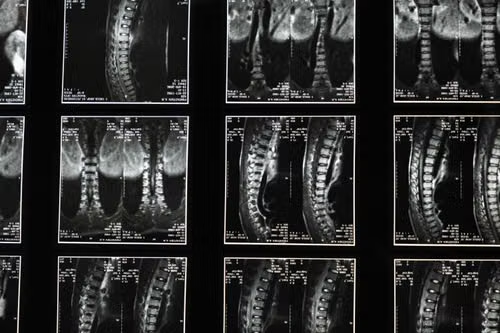
Photo by cottonbro studio via Pexels
Practices such as the Institute for Spine & Scoliosis offer motion-preserving approaches alongside traditional care. The AAOS (American Academy of Orthopaedic Surgeons) provides independent information on scoliosis and its treatment options, including when surgery is recommended.
How Spinal Fusion Affects Mobility
In a spinal fusion, the surgeon attaches rods and screws to the vertebrae, corrects the curve, and adds bone graft so the treated segments grow together into a single solid section. That solid bone is what keeps the correction stable for the long term.
The trade-off is lost motion at the fused levels. How much a patient notices depends largely on how many levels are fused and where. Fusions that stop higher in the spine often leave substantial everyday flexibility, while longer fusions that extend into the lower back are more likely to affect bending, twisting, and reaching.
Surgeons also watch for adjacent segment degeneration, wear at the levels just above or below a fusion, which may be related in part to the added stress those segments carry. The risk varies with age, the length of the fusion, and other factors.
Fusion remains the most established scoliosis operation, with decades of long-term results, and it is often the best option for large, stiff, or complex curves.
How Motion-Preserving Techniques Work
Motion-preserving methods try to correct the curve without fusing the spine solid. Instead of rigid rods, they use a flexible cord, or tether, attached to the vertebrae on the outer side of the curve to pull the spine toward a straighter position while allowing the segments to keep moving.
In children who are still growing, a technique called vertebral body tethering (VBT) is designed to guide growth so the curve gradually improves. Anterior Scoliosis Correction (ASC) is a related tether-based approach that aims to correct the curve at the time of surgery and is also offered to some adults. Both are usually performed through the side of the chest or abdomen rather than through the muscles of the back.
Because the treated segments are not fused, the goal is to keep more natural bending and rotation than fusion allows. Whether that reduces long-term stress on neighboring levels is an important question that longer-term studies are still working to answer.
What the Evidence and FDA Status Show
Tether-based scoliosis surgery is newer than fusion, and the evidence base is smaller. In the United States, a vertebral body tethering device has received FDA approval under a humanitarian device exemption for certain growing children with scoliosis. Use in adults, or outside the approved indications, is considered off-label.
Early results for well-selected patients are encouraging, but studies have also reported tether breakage, loss of correction or overcorrection, and the need for additional surgery, sometimes including conversion to fusion. Rates vary between studies and patient groups, so patients should ask their surgeon how often these problems occur in their own practice.
Comparing Fusion and Motion-Preserving Surgery
| Factor | Spinal Fusion | Motion-Preserving (Tether-Based) |
|---|---|---|
| Implants | Rigid rods and screws, with bone graft | Flexible cord or tether with screws |
| Motion at treated levels | Eliminated | Largely preserved, when successful |
| Typical surgical approach | Usually through the back | Usually through the side of the chest or abdomen |
| Track record | Decades of long-term data | Newer; long-term data still developing |
| FDA status | Established standard of care | Limited approval for growing children; off-label in other uses |
| Possible additional surgery | Less common once fused | Reported for tether breakage or correction problems |
| Often suited to | Large, stiff, or complex curves | Selected, more flexible curves |
Who May Be a Candidate
Candidacy is the deciding factor. Motion-preserving techniques generally work best for specific curve types that are still flexible, while large, stiff, or complex curves often still require fusion. Age, skeletal maturity, bone health, neurologic status, and imaging all guide the decision.
Many people with scoliosis never need surgery at all. Observation, bracing in growing children, and physical therapy are appropriate for many curves, and surgery is generally considered when a curve is large, progressing, or causing significant symptoms.
Recovery and Getting Back to Activity
Recovery depends on the procedure, the size of the correction, age, and overall health. Many patients regain much of their everyday mobility within a few months, while full recovery can take six to twelve months or longer. Physical therapy usually plays a central role after either approach.
Long-term activity limits also vary. Some surgeons advise fusion patients to be cautious with certain high-impact or heavy-lifting activities, while others allow a wide range of sports once healing is complete. Tether patients may have fewer long-term restrictions, but guidance should always come from the treating surgeon.
Questions to Ask a Spine Surgeon
- Am I a candidate for fusion, a motion-preserving procedure, or non-surgical care, and why?
- How many levels would be treated, and how might that affect my movement?
- What is the FDA status of the device you would use, and is my use on- or off-label?
- How many of these procedures have you performed, and what are your rates of tether breakage, revision surgery, and conversion to fusion?
- What does recovery look like, and what long-term activity limits should I expect?
- Will my insurance cover the procedure?
The Bottom Line
Spinal fusion and motion-preserving surgery each have a place in scoliosis care. Fusion offers durable, well-studied correction at the cost of motion at the treated levels. Motion-preserving techniques aim to keep the spine moving and may suit selected patients, but they are newer, carry their own risks, and are not right for every curve.
The most reliable way to know which option fits is a thorough evaluation by an experienced spine surgeon who can review your imaging and health history and explain the evidence and trade-offs plainly.
For a broader overview of spine research, see this MedicalResearch.com overview of spinal problems.
The information on MedicalResearch.com is provided for educational purposes only, and is in no way intended to diagnose, cure, or treat any medical or other condition. Some links are sponsored. MedicalResearch.com and Eminent Domains Inc. do not warrant or endorse products or claims made by third party links. Always seek the advice of your physician or other qualified health provider and ask your doctor any questions you may have regarding a medical condition. In addition to all other limitations and disclaimers in this agreement, service provider and its third party providers disclaim any liability or loss in connection with the content provided on this website.
Last Updated on October 26, 2026 by Marie Benz MD FAAD