#healthcaretechnology Tag

  [caption id="attachment_74183" align="aligncenter" width="500"]Patients Struggle to Find the Right Specialist Online Unsplash[/caption] Finding the right medical specialist should be easier than ever in a world where information is available at the click of a button. Yet many patients still struggle to locate qualified providers who meet their healthcare needs. Resources from a best healthcare seo agency often explain how medical practices can improve their online visibility, making it easier for patients to discover accurate information, relevant services, and appropriate specialists. As healthcare searches continue to shift online, visibility challenges are becoming a significant issue for both patients and providers.

The Modern Patient Search Journey

Most patients begin their healthcare journey online. Whether they are searching for a cardiologist, dermatologist, orthopedic surgeon, or another specialist, search engines have become the primary starting point for gathering information and comparing options. However, the abundance of information can create confusion rather than clarity. Patients are often presented with hundreds of search results, advertisements, directories, review websites, and social media profiles, making it difficult to identify the most relevant healthcare provider. The search process becomes even more complicated when patients are dealing with unfamiliar medical terminology. Many individuals may not know the exact specialty they need, causing them to rely heavily on search engines to guide their decisions. As a result, online visibility plays a crucial role in connecting patients with appropriate care. If relevant specialists are difficult to find, patients may delay treatment or choose providers who are not the best fit for their needs.


A recent clinic audit showed primary care physicians spending 145.9 minutes a day in the electronic health record, or EHR. That total included 60.7 minutes of after-hours work and 42.9 minutes on notes alone. That is nearly two and a half hours each day spent documenting instead of treating patients. A large share of that time is recoverable. Voice-based documentation, now improved by ambient and generative AI, can cut documentation time, improve note completeness, and reduce after-hours work. That matters whether your team already uses speech recognition or still types every note. The gap between efficient and inefficient documentation workflows is now wide enough to affect access, revenue, and burnout. This workflow now includes real-time speech recognition, back-end transcription, human scribes, and ambient AI that drafts notes from the room conversation. The practical challenge is choosing the right method, then building enough review and compliance control to use it safely. Clinics that set baselines, train staff, and track edits tend to see the fastest gains. Clinics that skip those steps usually trade typing time for editing time.

Optimizing Hospital Supply Chains

Key Takeaways

  • Automated inventory systems can dramatically reduce waste and ensure supplies are available when needed.
  • Engaging clinicians and standardizing products can lead to high cost and efficiency improvements.
  • Just-in-time inventory management allows for leaner, more cost-effective operations.
  • Partnerships with logistics specialists and the integration of data analytics strengthen supply chains and patient care.
  •  
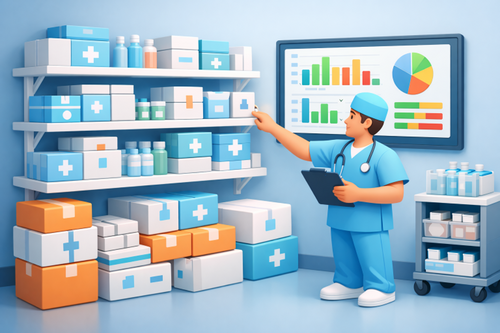
Effective management of hospital supplies is crucial for delivering high-quality patient care and maintaining operational efficiency. Reliable access to hospital supplies enables healthcare professionals to provide timely and effective treatment, minimizing disruptions and potential risks to patient outcomes. Healthcare facilities must adopt strategic supply chain practices to manage rising costs and ensure product availability. The complexities of healthcare supply chains, including product diversity and regulatory requirements, necessitate effective supply management. Technological advancements and management strategies, such as automation, standardization, and data analytics, enable hospitals to enhance operational efficiency. Implementing these strategies leads to better resource utilization, improved patient satisfaction, and increased financial stability, highlighting the importance of continuous innovation in supply management.

  [caption id="attachment_73778" align="aligncenter" width="500"]Leadership in Modern Healthcare Systems Source[/caption]

The Importance of Effective Leadership in Modern Healthcare Systems

Have you ever noticed how one calm, capable person can change the mood of an entire hospital floor? In modern healthcare, leadership does far more than manage schedules and meetings. It shapes patient care, staff morale, and even public trust. As hospitals face worker shortages, rising costs, and constant political debate, strong leadership has become the difference between systems that adapt and systems that collapse under pressure.

The Pressure Cooker Inside Modern Healthcare

Healthcare systems today operate like airports during a thunderstorm. Everyone is rushing, nobody has enough time, and one mistake can create chaos across the entire network. Leaders now manage far more than doctors and budgets. They handle cyberattacks, staffing shortages, public distrust, and the growing influence of artificial intelligence in medicine. The pandemic exposed how fragile healthcare systems could become when leadership breaks down. Hospitals ran short on nurses, misinformation spread faster than flu season, and burned-out workers left the industry in huge numbers. Good leaders stepped in by improving communication, supporting exhausted staff, and making difficult decisions without sounding robotic or detached. That human side matters more than many executives realize.


Explore how personalized medicine is transforming senior healthcare through tailored treatments, advanced technology, and individualized care plans. Learn how innovations are improving outcomes and quality of life for aging populations.
The senior population continues to grow, which, in turn, adds pressure to the healthcare system. With age comes various health conditions, making individualized care more essential. Healthcare isn’t a one-size-fits-all. Each health condition may need attention and treatment, and not everyone has the same health conditions or reactions. Personalized medicine focuses on providing the right plans and treatment for each individual, improving outcomes and the quality of life.
Personalized medicine is an approach that caters to the necessary treatment an individual needs based on their specific conditions and characteristics. Characteristics can be defined as genetics, lifestyle, and environment. With new innovations and advances in technology, personalized medicine can be more helpful now than ever.
Genetic testing for treatment plans
Genetic testing is a more recent innovation in the healthcare industry. Your genetics are made of your DNA, which can be analyzed in a lab. When you analyze someone’s DNA, you can identify changes that could lead to certain health conditions and understand how their body might respond to treatments. A person’s genomics are specific to that one patient, which means their treatment plans would be personalized as they depend on their specific genetics.
Within genetic testing, there is the study of how genes can affect our reactions to prescriptions. This study is called pharmacogenetics. This is especially important for seniors as most seniors take more than one medication. Understanding how one’s body might react to not only one medication but multiple is extremely important when mixing medications could have serious consequences.
Does Medicare cover genetic testing?
Medicare offers limited coverage regarding genetic testing, which is essential for seniors. Typically, it can be covered if there is a cancer diagnosis. Medicare can cover genetic testing for the BRCA mutation or multigene panel testing if you meet the criteria.
Wearable technology for monitoring
Advancements in technology have opened many doors in healthcare. The integration of wearable technology specifically allows physicians to gather health data over a period of time while the patient performs daily tasks. Wearable devices, such as smartwatches and fitness trackers, can provide information on blood pressure, heart rate, sleep patterns, and more.
Additionally, continuous glucose monitors or heart rate monitors help alert health professionals of changes that may need attention for chronic conditions like diabetes or heart disease.
Integrating these types of devices allows for proactive management of health conditions. When health conditions can be monitored, a physician can change treatment and create a more personalized plan based on the results.
Medicare’s coverage on wearable devices
While Medicare does not offer coverage for Apple Watches or fitness trackers, it does cover devices specific for health conditions, such as glucose monitors and heart monitors. Typically, these devices fall under Part B as durable medical equipment and will be covered at 80% by Part B.
Telehealth and virtual visits
Telehealth has become a popular method of healthcare in recent years. It’s especially convenient for seniors who may not have transportation. Telehealth allows you to connect virtually with a healthcare professional about a symptom or problem you’re having without leaving your house. This is particularly valuable for individuals with chronic conditions who need frequent check-ups or medication adjustments. Telehealth visits allow for a quick change in treatment and continued personalized medicine.
In addition to routine consultations, telemedicine can also be used for mental health care. Seniors often face issues such as depression or isolation, and virtual therapy sessions offer a convenient way to access psychological support without leaving home.
Medicare and telehealth
Until March 2025, Medicare does cover telehealth for most services at any location. However, starting April 2025, telehealth services will be limited to End-Stage Renal Disease visits, acute stroke services, and mental disorders.
Paying Medicare premiums online
With the rise of digital technology, seniors have more convenient ways to manage their healthcare finances, including paying Medicare premiums online. The Centers for Medicare & Medicaid Services (CMS) offer an online payment system that allows beneficiaries to pay premiums for Medicare Part B, Medicare Advantage, or prescription drug plans without having to mail a check. You can focus more on your healthcare treatment plan when you set up Medicare Easy Pay and have automatic payments for your Medicare premium.
Online payments can be made through the official Medicare website. This system makes it easier for seniors to stay up to date on their premiums, avoiding late fees or disruptions in coverage. With more seniors becoming familiar with online tools, digital payment options offer greater flexibility and ease of use.
Moving forward
Thanks to ongoing advancements in personalized medicine, the future of senior healthcare looks promising. By utilizing genetic testing, wearable technology, telemedicine, and other innovative tools, healthcare providers are better equipped to offer tailored care that addresses the unique needs of older adults. These innovations will improve treatment outcomes and enhance seniors' overall quality of life, helping them live healthier, longer lives.
Explore how personalized medicine is transforming senior healthcare through tailored treatments, advanced technology, and individualized care plans. Learn how innovations are improving outcomes and quality of life for aging populations. The senior population continues to grow, which, in turn, adds pressure to the healthcare system. With age comes various health conditions, making individualized care more essential. Healthcare isn’t a one-size-fits-all. Each health condition may need attention and treatment, and not everyone has the same health conditions or reactions. Personalized medicine focuses on providing the right plans and treatment for each individual, improving outcomes and the quality of life. Personalized medicine is an approach that caters to the necessary treatment an individual needs based on their specific conditions and characteristics. Characteristics can be defined as genetics, lifestyle, and environment. With new innovations and advances in technology, personalized medicine can be more helpful now than ever.

The business is facilitating a new age of care delivery by assisting healthcare professionals in switching from antiquated practices to cutting-edge, technologically advanced alternatives. From automating routine tasks to harnessing the power of artificial intelligence for predictive analytics, the company’s innovations are setting new benchmarks for what is possible in...

[caption id="attachment_65691" align="aligncenter" width="500"]wearable-technologies Image Source[/caption] Chronic illness management has grown easier due to technological developments and inventive treatments. From wearable gadgets to real-time health tracking, technology is changing the way patients receive treatment. These advancements enable people to monitor and control their health proactively from home. As healthcare providers adopt these tools, patient outcomes improve, and the burden on facilities decreases. With a focus on seamless communication, digital health tools foster stronger doctor-patient relationships.  In this article, we will explore how technology is revolutionizing chronic disease management, focusing on its practical applications and benefits. Let’s discuss five key ways technology is driving change.