MedicalResearch.com Interview with:
[caption id="attachment_48239" align="alignleft" width="200"]

Dr. Madeleine Liljegren
Photo: Ingemar Walldén[/caption]
Madeleine Liljegren, MD
Division of Oncology and Pathology
Department of Clinical Sciences
Lund University Lund, Sweden
MedicalResearch.com: What is the background for this study? What are the main findings?
Response: We know from former studies including patients with a clinical diagnosis of dementia, that criminal and socially inappropriate behaviors can be signs of dementia, sometimes even the first signs of a neurodegenerative disorder.
We wanted to study this relatively large (n=220) cohort of neuropathologically verified Alzheimer disease (AD) and frontotemporal dementia (FTD) patients, who had been followed clinically by specialists in cognitive medicine or geriatric psychiatry during their disease period, to see if we could confirm results from previous studies.
In this paper, we further wanted to study potential differences regarding protein pathology and criminal behavior in frontotemporal dementia patients. This has, to our knowledge, never been done before.



 Catharina Svanborg M.D., Ph.D.
Professor at Lund University Department of Laboratory Medicine,
Division of Microbiology, Immunology and Glycobiology
Founder/Chairman of the Board at HAMLET Pharma
MedicalResearch.com: What is the background for this study?
Like many unexpected scientific developments, this finding was serendipitous. In our search for the molecular basis of host susceptibility to infection, we discovered that infection directly affects MYC levels.
Gene expression analysis revealed that MYC itself was inhibited and that genes regulated by MYC were affected in children with acute kidney infection. Rapid reductions in MYC levels was further confirmed by infecting human kidney cells with the pathogenic E. coli bacteria isolated from patients with acute pyelonephritis, allowing us to formulate the hypothesis that bacteria regulate host MYC levels during acute infection and to investigate the mechanism leading to this inhibition. This work was conducted by the
Catharina Svanborg M.D., Ph.D.
Professor at Lund University Department of Laboratory Medicine,
Division of Microbiology, Immunology and Glycobiology
Founder/Chairman of the Board at HAMLET Pharma
MedicalResearch.com: What is the background for this study?
Like many unexpected scientific developments, this finding was serendipitous. In our search for the molecular basis of host susceptibility to infection, we discovered that infection directly affects MYC levels.
Gene expression analysis revealed that MYC itself was inhibited and that genes regulated by MYC were affected in children with acute kidney infection. Rapid reductions in MYC levels was further confirmed by infecting human kidney cells with the pathogenic E. coli bacteria isolated from patients with acute pyelonephritis, allowing us to formulate the hypothesis that bacteria regulate host MYC levels during acute infection and to investigate the mechanism leading to this inhibition. This work was conducted by the 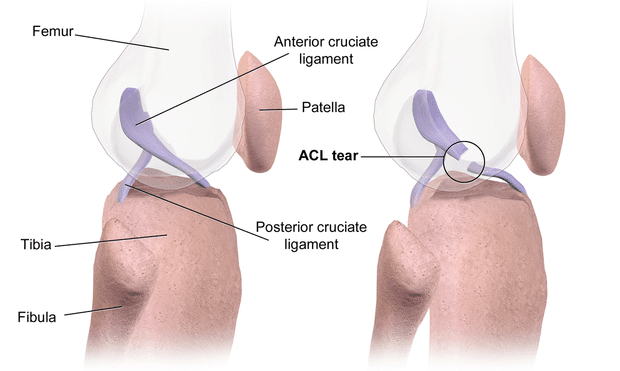
 Dr. Magnusson[/caption]
Karin Magnusson PT, PhD
Associate Researcher
Lund University and
Norwegian Institute of Public Health
MedicalResearch.com: What is the background for this study?
Response: Anterior cruciate ligament (ACL) injury is one of the most common knee injuries, for which very limited data has been presented on the genetic contribution. Based on our knowledge of the role of genetics in the development of ACL-rupture related traits, such as joint hypermobility and knee osteoarthritis, we hypothesized that heritability might play a role also in ACL injury.
Using the Swedish Twin Registry, which is the world's largest twin registry and in this study including more than 88.000 twins, we had unique data to for the first time reliably estimate the heritability for this common knee injury.
Dr. Magnusson[/caption]
Karin Magnusson PT, PhD
Associate Researcher
Lund University and
Norwegian Institute of Public Health
MedicalResearch.com: What is the background for this study?
Response: Anterior cruciate ligament (ACL) injury is one of the most common knee injuries, for which very limited data has been presented on the genetic contribution. Based on our knowledge of the role of genetics in the development of ACL-rupture related traits, such as joint hypermobility and knee osteoarthritis, we hypothesized that heritability might play a role also in ACL injury.
Using the Swedish Twin Registry, which is the world's largest twin registry and in this study including more than 88.000 twins, we had unique data to for the first time reliably estimate the heritability for this common knee injury.