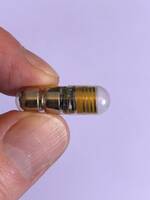
18 Nov Brigham/MIT/WVU Scientists Develop Pill to Measure Vital Signs Without Blood Tests or Wires
Posted at 13:00h
in Author Interviews, Brigham & Women's - Harvard, Gastrointestinal Disease, Obstructive Sleep Apnea, Technology
MedicalResearch.com Interview with:
[caption id="attachment_61077" align="alignleft" width="150"]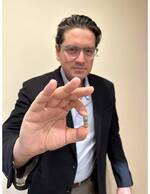 Dr. Traverso[/caption]
Giovanni Traverso MD PhD
Karl Van Tassel (1925) Career Development Professor
Department of Mechanical Engineering
Koch Institute of Integrative Cancer Research
Division of Gastroenterology
Brigham and Women’s Hospital
Harvard Medical School, Boston, MA, USA
MedicalResearch.com: What is the background for this study?
Response: I think its always important to acknowledge that this is a big team effort. We have the teams from MIT, Celero Systems, West Virgnia University (WVU) and Brigham and Women’s Hospital (BWH) all working together on this. For this study, Celero prototyped the devices that we tested in pre-clinical (Swine) models and in a first-in-human study with the team at WVU.
Our lab focuses on the development of ingestible devices for drug delivery and sensing and these have informed the development of these efforts as you can see.
MedicalResearch.com: What types of vital signs are measurable in this fashion?
Response: Heart rate and respiratory rate.
Dr. Traverso[/caption]
Giovanni Traverso MD PhD
Karl Van Tassel (1925) Career Development Professor
Department of Mechanical Engineering
Koch Institute of Integrative Cancer Research
Division of Gastroenterology
Brigham and Women’s Hospital
Harvard Medical School, Boston, MA, USA
MedicalResearch.com: What is the background for this study?
Response: I think its always important to acknowledge that this is a big team effort. We have the teams from MIT, Celero Systems, West Virgnia University (WVU) and Brigham and Women’s Hospital (BWH) all working together on this. For this study, Celero prototyped the devices that we tested in pre-clinical (Swine) models and in a first-in-human study with the team at WVU.
Our lab focuses on the development of ingestible devices for drug delivery and sensing and these have informed the development of these efforts as you can see.
MedicalResearch.com: What types of vital signs are measurable in this fashion?
Response: Heart rate and respiratory rate.

 Dr. Reker[/caption]
Daniel Reker, PhD
Koch Institute for Integrative Cancer Research
Massachusetts Institute of Technology
MedicalResearch.com: What is the background for this study?
Response: We started thinking more about this topic following a clinical experience five years ago that Dr. Traverso was involved in where a patient suffering form Celiac disease received a prescription of a drug which potentially had gluten. This experience really opened our eyes for how little we knew about the inactive ingredients and how clinical workflows do not currently accommodate for such scenarios.
We therefore set up a large scale analysis to better understand the complexity of the inactive ingredient portion in a medication as well as how frequently critical ingredients are included that could potential affect sensitive patients.
Dr. Reker[/caption]
Daniel Reker, PhD
Koch Institute for Integrative Cancer Research
Massachusetts Institute of Technology
MedicalResearch.com: What is the background for this study?
Response: We started thinking more about this topic following a clinical experience five years ago that Dr. Traverso was involved in where a patient suffering form Celiac disease received a prescription of a drug which potentially had gluten. This experience really opened our eyes for how little we knew about the inactive ingredients and how clinical workflows do not currently accommodate for such scenarios.
We therefore set up a large scale analysis to better understand the complexity of the inactive ingredient portion in a medication as well as how frequently critical ingredients are included that could potential affect sensitive patients.