MedicalResearch.com Interview with:
[caption id="attachment_54006" align="alignleft" width="143"]

Dr. Ling[/caption]
Dr. Walter Ling, MD
Professor of Psychiatry
Director of Integrated Substance Abuse Programs UCLA
MedicalResearch.com: What is the background for this study?
Response: RECOVER™ is a real-world, observational study looking at long-term recovery in a cohort of 533 people with moderate to severe opioid use disorder (OUD) following their transition from two Phase 3 clinical trials of SUBLOCADE® (buprenorphine extended-release) injection, for subcutaneous use (CIII), into a real-world setting.
1
The RECOVER study uses data from three main sources: self-administered assessments from enrolled individuals, urine drug screens (UDS) and data collected from several public sources. Recovery is examined over 24 months – the self-administered assessment and UDS results are completed by participants every three months over the course of this period. Results are being analyzed to understand the clinical, socio-economic and environmental factors associated with continuous effects of medications to treat OUD after a clinical trial.
1.2
Studies such as RECOVER can help bridge the knowledge gap between the efficacy of medications as seen in the controlled clinical trial environment, and the use and effect of medications outside of a research setting and their long-term impact on patients’ health. A collaboration between Indivior and the Fralin Biomedical Institute at Virginia Tech Carilion will enable the next phase of the RECOVER study, which may provide further information to health care providers and policymakers on how to use medications to support their patients and how continuity of care can help break down barriers to evidence-based treatment.
3




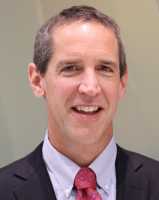 Dr. Miech[/caption]
Richard Miech Ph.D
Professor
Principal Investigator, Monitoring the Future
Institute for Social Research
University of Michigan
MedicalResearch.com: What is the background for this study? What are the main findings?
Response: Every year Monitoring the Future conducts a survey to examine trends in adolescent substance use. We draw a random sample of schools from a list of all schools in the United States and conduct our survey in ~400 schools. Our survey is representative of U.S. 8th, 10th, and 12th grade students. In other words, our results are what you would find if you surveyed every single 8th, 10th, and 12th graders in the United States, within the bounds of a small sampling error of a few percentage points.
An increase in vaping is the big news for 2018. In 10th and 12th grade the increase in nicotine vaping was the largest we've ever seen for any substance in the past 43 years. As a result of this increase in nicotine vaping, overall use of nicotine increased as well, which suggests that vaping is drawing youth into nicotine use. We also saw a significant increase in marijuana vaping.
Dr. Miech[/caption]
Richard Miech Ph.D
Professor
Principal Investigator, Monitoring the Future
Institute for Social Research
University of Michigan
MedicalResearch.com: What is the background for this study? What are the main findings?
Response: Every year Monitoring the Future conducts a survey to examine trends in adolescent substance use. We draw a random sample of schools from a list of all schools in the United States and conduct our survey in ~400 schools. Our survey is representative of U.S. 8th, 10th, and 12th grade students. In other words, our results are what you would find if you surveyed every single 8th, 10th, and 12th graders in the United States, within the bounds of a small sampling error of a few percentage points.
An increase in vaping is the big news for 2018. In 10th and 12th grade the increase in nicotine vaping was the largest we've ever seen for any substance in the past 43 years. As a result of this increase in nicotine vaping, overall use of nicotine increased as well, which suggests that vaping is drawing youth into nicotine use. We also saw a significant increase in marijuana vaping.