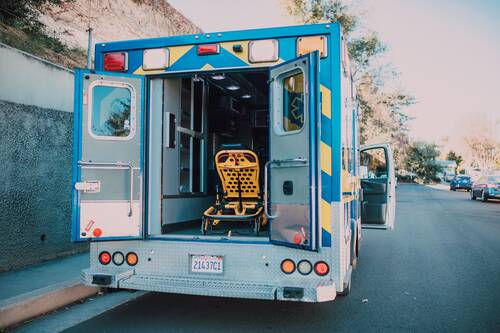
#personalinjury Tag

Legal Notice: This post provides general information about Florida law and is not legal or medical advice. Deadlines and rules depend on the type of claim and the facts; medical malpractice claims, for example, have their own time limits and pre-suit requirements. Consult a Florida-licensed attorney about your situation, and seek medical care for any injury. Reading this post does not create an attorney-client relationship. Law firms named or linked in this post are not warranted or endorsed by MedicalResearch.com or Eminent Domains Inc.

One ordinary commute can turn into months of doctor visits, missed paychecks, and questions no one is prepared to answer. Jacksonville knows this well. According to state crash data, Duval County logged 23,013 crashes in 2024, with 15,480 people injured. And while road accidents are one cause of injuries, slip-and-falls, dog bites, workplace accidents, and medical mistakes can upend a household just as quickly.

Florida law also adds some pressure of its own. Claimants generally have only two years to file a negligence lawsuit, and anyone found more than 50% at fault may lose the right to recover damages.


Legal Notice: This post provides general information and is not legal or medical advice. Laws and deadlines for injury claims vary by state. Reading this post does not create an attorney-client relationship. In a medical emergency, call 911. Law firms named or linked in this post are not warranted or endorsed by MedicalResearch.com or Eminent Domains Inc.

By Richard J. Rensch, JD

A discharge sheet can tell you when to take a medication and whom to call if symptoms change. Three weeks later, it may also be the easiest way to remember what the emergency department actually recommended. After an accident, paperwork has a habit of becoming useful long after you expected to need it.

Keep medical care at the center of the process. Records should describe what happened and support the care you receive. If someone else's actions caused the accident, the same documents may help explain the injury during an insurance claim.

Legal Notice: This post provides general information about Ontario law and is not legal or medical advice. Notice periods and limitation deadlines can be very short, especially for falls on snow or ice, and depend on the facts of each case. Consult a lawyer licensed in Ontario about your situation, and seek medical care for any injury. Reading this post does not create a lawyer-client relationship. Law firms named or linked in this post are not warranted or endorsed by MedicalResearch.com or Eminent Domains Inc.

Slip and fall injuries in Toronto condos and apartment buildings leave many people unsure where to turn. Maybe you slipped on an icy front entrance, tripped on a broken lobby step, or went down in a dimly lit stairwell, and the question of who bears legal responsibility isn't clear-cut.

Knowing who is responsible matters because it determines whether you can recover compensation for medical expenses, lost wages, and pain. Ontario's Occupiers' Liability Act sets the legal framework, but applying it to residential buildings, where multiple parties often share control over different spaces, takes careful analysis.

Legal and Medical Notice: This post provides general information about Nova Scotia and is not legal or medical advice. Reporting rules, deadlines, and insurance requirements can change and depend on your circumstances; confirm them with a lawyer licensed in Nova Scotia. If you are injured, seek medical care first. In an emergency, call 911. Reading this post does not create a lawyer-client relationship. Law firms named or linked in this post are not warranted or endorsed by MedicalResearch.com or Eminent Domains Inc.

A personal injury accident can upend your life in seconds. Whether it's a car collision on Barrington Street, a slip on an icy sidewalk, or a workplace incident at a job site, the actions you take in the first minutes and hours shape both your health outcomes and your legal options.

Most people freeze. They don't know who to call first, what to document, or how to protect themselves legally. But knowing what to do immediately after a personal injury accident in Halifax can make a real difference to the strength of a claim. Here are six steps to follow.

Legal Notice: This post provides general information about West Virginia law and is not legal advice. Wrongful death laws, deadlines, and distribution rules vary by state and depend on the facts of each case. Reading this post does not create an attorney-client relationship. Consult a licensed attorney in your state about your specific situation. Law firms named or linked in this post are not warranted or endorsed by MedicalResearch.com or Eminent Domains Inc.

Wrongful death settlements are divided among eligible family members based on their losses and the law of the state where the claim is filed. The money isn't always split equally. A spouse who has lost a partner, for example, may face different hardships from a child who has lost a parent.

Charleston, West Virginia, sits where the Elk and Kanawha rivers meet and serves as the state's capital. With busy routes like I-64 and I-77 running through the area, serious crashes can have devastating consequences for local families. When a death results from someone else's negligence, surviving relatives may need to understand their rights before a settlement can be distributed.

Medical Notice: Some injuries cause symptoms hours or days after an accident. Seek emergency care (call 911) for a severe or worsening headache, repeated vomiting, confusion, unusual drowsiness, slurred speech, weakness or numbness, loss of bladder or bowel control, chest or abdominal pain, or difficulty breathing. This post is for general information only and is not a substitute for medical evaluation. Providers and law firms linked in this post are not warranted or endorsed by MedicalResearch.com or Eminent Domains Inc.

The effects of a serious accident do not always end when someone leaves the hospital. An injury that initially appears manageable can develop into persistent pain, limited mobility, or other health problems that interfere with daily life. For some patients, recovery involves months of appointments, rehabilitation, and adjustments to activities they previously handled without difficulty.

Understanding these long-term effects requires more than looking at the initial diagnosis. Medical records after an accident provide a documented history of symptoms, treatment decisions, and changes in a patient's condition. They help healthcare providers evaluate recovery and offer important context when questions arise about the lasting consequences of an injury.

[caption id="attachment_76606" align="aligncenter" width="500"]Medical Records and accidents pexels Pexels[/caption]

An accident with a commercial truck can leave victims facing devastating injuries and fearing a long road to recovery, often with many different questions running through their heads. Unlike a typical car crash, these cases may involve trucking companies, maintenance providers, insurers, and complex federal safety regulations.

In North Carolina, strict fault rules and the fast-moving nature of trucking evidence make prompt action especially important. Many people consult a North Carolina commercial truck accident attorney early to understand how a strong claim is built and what evidence should be preserved from the start. Knowing how attorneys investigate and prepare these cases can help injured victims protect their rights and pursue compensation with greater confidence.

commercial-truck-accidents-nc-lawyers

Medical science treats neurological trauma as a dynamic cellular event rather than a static wound. Emergency department physicians diagnose immediate life threats, yet those same practitioners cannot forecast exactly how a neural pathway heals over an extended timeline. Injured individuals constantly expect a clear timetable for returning to work or driving a vehicle.

Physicians refuse to provide one because neural networks repair themselves asynchronously. This clinical hesitation creates severe friction in personal injury claims. Claims adjusters demand strict recovery deadlines to close files cheaply. When medical professionals refuse to commit to a firm prognosis, claims representatives interpret that caution as a full recovery. That discrepancy destroys countless legal cases.

[caption id="attachment_74933" align="aligncenter" width="500"]doctors-cant-predict-brain-injury istock[/caption]

[caption id="attachment_74204" align="aligncenter" width="500"]car-accident-injury-claims-discussed.png Unsplash[/caption] Just been in a car accident? You're likely stressed, sore, and looking at bills from doctors you never chose. The insurance company is already calling you. And no one is explaining to you what you can actually do. Here's the truth: Nine times out of ten, folks settle their car accident injury claim for much, much less than they're entitled to. It's not because the law is out to get them... It's because they don't know their rights. This guide breaks it down in plain English. Here's what's covered: What Counts As A Car Accident Injury Claim? Your Legal Rights After A Crash How Car Accident Compensation Actually Works Steps To Take Right After An Accident When To Bring In A Lawyer

[caption id="attachment_73991" align="aligncenter" width="500"]itemized medical bills Source[/caption] Want to get the most out of your injury compensation claim? The majority of injury victims make the same expensive error. They give the insurance company sloppy paperwork and hope they play nice. Spoiler: they don't. Your itemized medical bill is your most powerful negotiating tool. It's the difference between a lowball demand and the full amount you should receive. The good news is that your medical bill already exists, sitting in your provider's office right now. Here's what's coming up: Why Itemized Medical Bills Matter So Much What An Itemized Bill Actually Includes How Documentation Boosts Your Settlement Don't Miss Your Filing Deadline

  [caption id="attachment_73988" align="aligncenter" width="500"]Injuries After a Truck Accident Source[/caption] Truck accidents often cause serious injuries because of the massive size and weight of commercial vehicles. The most common injuries after a truck accident include head injuries, spinal cord injuries, broken bones, burns, internal injuries, neck injuries, and emotional trauma. These injuries can lead to long recovery periods, expensive medical treatment, and lasting physical pain. It is also important to understand the types of accidents trucks can cause. Collisions such as rollovers, jackknife accidents, rear-end crashes, and underride accidents can all result in severe harm to drivers and passengers in smaller vehicles. Knowing the most common truck accident injuries can help victims recognize symptoms early and seek proper medical care.

[caption id="attachment_73943" align="aligncenter" width="500"]personal-injury-claim-process.png Unsplash[/caption] Been in an accident and don't know what to do next? Filing a personal injury claim is stressful. There's the medical bills, the insurance phone calls and trying to heal all at once. Here's the good news: It's actually much simpler than most believe. All you have to do is know what to expect each step of the way. Exactly how to file your personal injury claim. Follow this step-by-step guide to the 6x stages of the personal injury claims process from filing through to recovery of your settlement. Let's jump in! Quick rundown of what's inside: What Is a Personal Injury Claim? The 6x Steps of the Personal Injury Claim Process Why Hiring a Lawyer Matters Common Mistakes That Hurt Your Claim

Manage Medical Bills Kent is known as one of Washington's busiest suburban hubs, and like many cities, it experiences accidents that lead to personal injury claims. Injury settlements often take considerable time due to investigations, negotiations, and legal procedures. Meanwhile, medical bills can pile up quickly, creating financial stress for individuals and families. In such cases, working with a Kent personal injury attorney provides legal direction, but we must also manage our medical expenses carefully while waiting for a resolution.

[caption id="attachment_67534" align="aligncenter" width="500"]Comparative Negligence in Personal Injury Claims Image Source[/caption] In personal injury law, the question of fault must be proven to ascertain compensation. However, accidents do not always lie at the feet of a single party. This is where comparative negligence comes in. Comparative negligence legislation allows courts in Louisville, KY, to allocate fault among parties and adjust compensation based on it. However, comparative negligence is treated differently depending on legal rules within different jurisdictions. For those who have been involved in an accident, seeking legal counsel from personal injury lawyers in Louisville, KY, may be the deciding factor in whether comparative negligence will be favorable or unfavorable to them. Experienced attorneys can examine the details of an accident, gather evidence to minimize their client's percentage of fault, and negotiate fair compensation. Since Kentucky has a pure comparative negligence rule—i.e., plaintiffs can recover damages even if they are partially at fault, having good legal representation can be a huge factor in receiving the maximum amount of compensation.

[caption id="attachment_67021" align="aligncenter" width="500"]Timely Medical Attention Helps in a Personal Injury Claim.jpg image source[/caption]  If you’ve been injured in an accident, getting medical attention should be your first priority. Even if you feel fine at the moment, some injuries take time to show symptoms. Delaying treatment can not only worsen your condition but also harm your personal injury claim. Medical records play a key role in proving your injuries. The sooner you see a doctor, the stronger the connection between your injury and the accident. If you wait too long, the other party might argue that something else caused your condition. That’s why personal injury lawyers always advise their clients to seek immediate medical care. If you’re unsure where to go, look at the best hospitals in your area and choose one that can properly assess your injuries.

[caption id="attachment_65826" align="aligncenter" width="500"]accidental-injury.jpg imagesource[/caption] It’s easy to take your physical health for granted when everything is going smoothly. You wake up, go about your day, and hardly give a second thought to the body that allows you to move, work, and live your life. But everything changes when an accidental injury happens to you. Suddenly, you’re forced to reckon with how much you’ve depended on your physical health to simply get by. The pain, the restrictions, and the challenges that come with being hurt highlight just how much we often overlook our well-being. The impact of an injury doesn’t stop at the physical level. It spills over into other areas of your life, wrecking your finances and emotional health in ways you might never expect. It’s even worse when you don’t have a strong support system to prove your case.

[caption id="attachment_64758" align="aligncenter" width="500"]medical-experts-legal Source[/caption] In personal injury cases, the insights and testimony of medical experts can make a pivotal difference. Their specialized knowledge clarifies the extent of injuries, linking them directly to the incident in question. By detailing the impact on a victim’s life and future, these professionals provide a credible, science-backed perspective.  In this article, we will discuss essential evidence that helps juries and judges understand complex medical issues, strengthening a case for fair compensation. 

Establishing the Severity and Extent of Injuries

In personal injury cases, establishing the severity and extent of injuries is crucial to securing fair compensation. According to the CDC, there were around 40.0 million medical emergency department visits each year due to injuries in 2021. Medical experts play an essential role in assessing injuries, detailing the immediate and long-term effects on the victim’s health, mobility, and daily life.  Through comprehensive examinations, diagnostic tests, and professional insights, they evaluate the injuries’ intensity and forecast potential complications or disabilities. Their findings become pivotal evidence, helping to substantiate claims regarding medical expenses, ongoing treatments, and pain and suffering.  Clear, expert-backed documentation of the injury's scope not only strengthens the plaintiff’s case but also provides courts with an objective view of the damages.