MedicalResearch.com Interview with:
[caption id="attachment_27170" align="alignleft" width="179"]

Dr. Krista Huybrechts[/caption]
Krista F. Huybrechts, MS PhD
Assistant Professor of Medicine
Division of Pharmacoepidemiology and Pharmacoeconomics
Brigham and Women's Hospital
Harvard Medical School
Boston, MA 02120
MedicalResearch.com: What is the background for this study? What are the main findings?
Response: In recent years, use of stimulant medications in adults, including women of reproductive age, has increased substantially.
However, data regarding the safety of stimulant medications in early pregnancy are sparse and conflicting. For example, two recent cohort studies failed to detect an association between use of methylphenidate in early pregnancy and overall or cardiac malformations, while another found an 81% increased risk of cardiac malformations, although the estimate was imprecise.
Given the rapidly increasing use of stimulant medications during pregnancy and among women of reproductive age who may become pregnant inadvertently, there is an urgent need to better understand their safety.



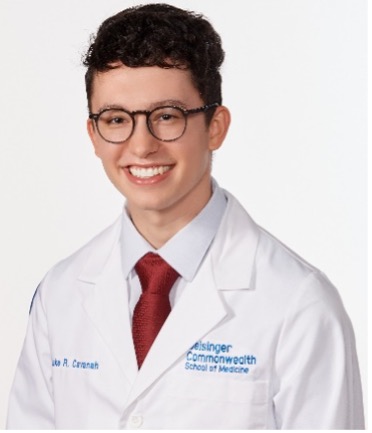
 Luke Cavanah[/caption]
Luke Cavanah, BS
Geisinger Commonwealth School of Medicine
Scranton, PA
MedicalResearch.com: What is the background for this study?
Response: It is well-known that schedule II stimulants, which are those that are highly addictive and include amphetamine, methylphenidate, and lisdexamfetamine, have had increasing use and misuse in the US.
Despite understanding the presence of this phenomenon, the reason for it is poorly understood. The purpose of this study was to see if rising rates of schedule II stimulants are related to the legalization of medical marijuana. We were interested in this because schedule II stimulants are primarily used as the treatment for attention-deficit hyperactivity disorder (ADHD), chronic cannabis use has been demonstrated to cause neurocognitive deficits resembling that of ADHD, and the conditions have been shown to affect similar brain regions.
Luke Cavanah[/caption]
Luke Cavanah, BS
Geisinger Commonwealth School of Medicine
Scranton, PA
MedicalResearch.com: What is the background for this study?
Response: It is well-known that schedule II stimulants, which are those that are highly addictive and include amphetamine, methylphenidate, and lisdexamfetamine, have had increasing use and misuse in the US.
Despite understanding the presence of this phenomenon, the reason for it is poorly understood. The purpose of this study was to see if rising rates of schedule II stimulants are related to the legalization of medical marijuana. We were interested in this because schedule II stimulants are primarily used as the treatment for attention-deficit hyperactivity disorder (ADHD), chronic cannabis use has been demonstrated to cause neurocognitive deficits resembling that of ADHD, and the conditions have been shown to affect similar brain regions.

 Dr. Piper[/caption]
Brian J. Piper, PhD, MS
Assistant Professor of Neuroscience
Department of Basic Sciences,
Geisinger Commonwealth School of Medicine,
Scranton PA 18509
MedicalResearch.com: What is the background for this study?
Response: The U.S. accounts for five percent of the world population but more than 92 percent of the world’s spending on pharmacotherapies for Attention Deficit Hyperactivity Disorder (ADHD). According to the 2011 National Survey of Children’s Health, ADHD increased to 11.0 percent of U.S. children, seven percent of girls and 15 percent of boys. Interestingly, ADHD rates were much lower among Hispanic children.
The 2013 revision to the Diagnostic and Statistical Manual of Mental Disorders broadened the criteria such that it became easier to diagnose adult ADHD. Together, we hypothesized that use of amphetamine (Adderall), methylphenidate (Ritalin), and lisdexamfetamine (Vyvanse) would be increasing. We also predicted that there would be some regional differences in stimulant use.
Dr. Piper[/caption]
Brian J. Piper, PhD, MS
Assistant Professor of Neuroscience
Department of Basic Sciences,
Geisinger Commonwealth School of Medicine,
Scranton PA 18509
MedicalResearch.com: What is the background for this study?
Response: The U.S. accounts for five percent of the world population but more than 92 percent of the world’s spending on pharmacotherapies for Attention Deficit Hyperactivity Disorder (ADHD). According to the 2011 National Survey of Children’s Health, ADHD increased to 11.0 percent of U.S. children, seven percent of girls and 15 percent of boys. Interestingly, ADHD rates were much lower among Hispanic children.
The 2013 revision to the Diagnostic and Statistical Manual of Mental Disorders broadened the criteria such that it became easier to diagnose adult ADHD. Together, we hypothesized that use of amphetamine (Adderall), methylphenidate (Ritalin), and lisdexamfetamine (Vyvanse) would be increasing. We also predicted that there would be some regional differences in stimulant use.