
04 Sep What Is Teleradiology Reporting and How Does It Support Patient Care?
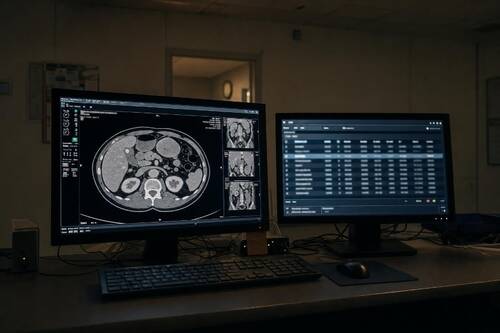
Teleradiology reporting is the remote interpretation of medical images, including X-ray, CT, MRI, and ultrasound, by licensed radiologists working outside the facility where the scan was performed. Images travel over secure networks to a reading workstation, and a written report returns to the ordering team. For emergency departments needing overnight coverage, rural hospitals without an on-site radiologist, and outpatient centers facing backlogs, this arrangement can support faster clinical decisions. In the United States, safe and defensible use depends on state licensure, HIPAA safeguards, and the same professional standards that apply to on-site reads. According to the American College of Radiology, remote radiology services must meet the same standards for quality, communication, and patient safety as interpretations performed on-site, with appropriate credentialing and licensure requirements applying to each facility whose studies are read.
What the Term Actually Covers
Teleradiology reporting is not a telehealth visit. It usually does not involve a video consultation with the patient. The main deliverable is a provisional or final radiology report based on images acquired at another location. In practice, it takes three common forms. With primary reads, the remote radiologist produces the final report. With overflow or after-hours coverage, an off-site group handles nights, weekends, or volume spikes. Second-opinion reads provide another interpretation, often from a subspecialist, after an initial report has been completed. On the patient side, the same mechanism underpins remote review programs where records and imaging are submitted electronically rather than in person.
How Teleradiology Works, Step by Step
Although systems vary, the typical workflow includes the following steps:
- A qualified technologist acquires the study at the scanner.
- The order and patient details move from the electronic health record or radiology information system using a standard such as HL7.
- Images move in DICOM format into a picture archiving and communication system or vendor-neutral archive.
- The data crosses an encrypted connection protected by authentication and access controls.
- A worklist prioritizes urgent studies and routes each case to a radiologist who is licensed and credentialed for the facility.
- The radiologist reviews the images on calibrated diagnostic displays in an appropriate reading environment.
- The report is dictated, reviewed, signed, and returned to the clinical system.
- Critical or unexpected findings are communicated directly under an agreed escalation policy. Any later addendum follows the same process.
- Studies and reports are archived, and selected cases may enter peer review or quality assurance.
Where It Can Improve Patient Care
The clearest benefits involve timing and access to expertise. A prompt overnight head CT interpretation can support an acute stroke pathway, where treatment decisions are time-sensitive. A rural hospital without continuous radiologist coverage may obtain a same-shift interpretation instead of transferring a patient for imaging alone. Subspecialty access is another potential benefit. Pediatric, neurological, musculoskeletal, and oncologic studies may benefit from review by a radiologist who regularly interprets that type of imaging. A remote network can route appropriate cases to those specialists. Screening programs and outpatient centers may also use remote capacity to address backlogs and reduce reporting delays.
The Guardrails That Make Remote Reads Reliable
Licensure
In the United States, interpretation is generally treated as taking place where the patient is located. A remote radiologist therefore usually needs a license in the patient’s state. Federal reimbursement may also be affected when an interpretation is performed outside the country. The Interstate Medical Licensure Compact can simplify applications for eligible physicians in participating jurisdictions, but it does not create a single national license. Facilities should verify current requirements with state boards, payers, and legal advisers. For outpatient or overflow needs, Teleradiology Reporting is one commercial option to compare with other providers’ integration and compliance arrangements.
Credentialing
A state license alone is not enough. Each radiologist must also hold the privileges required by every facility whose studies they interpret.
Security
The HIPAA Security Rule requires administrative, physical, and technical safeguards for electronic protected health information. Encryption, access controls, multi-factor authentication, audit logs, and documented incident-response procedures are important parts of a practical security program. Because federal requirements can change, organizations should confirm the current rule and any applicable state obligations rather than relying on an older checklist.
Reporting Standards
Remote reports should meet the same quality expectations as reports produced in the hospital. Written procedures should define turnaround targets, report status, access to prior studies, critical-result communication, addenda, peer review, and quality monitoring.
What to Ask a Teleradiology Provider
- What are the coverage windows and turnaround targets for STAT, urgent, and routine studies?
- Which subspecialists are available for each modality and time of day?
- How will the service integrate with the existing RIS, PACS, and EHR?
- Who communicates critical results, how quickly must they call, and how is the contact documented?
- How are peer review, discrepancy management, and display quality assurance handled?
- What security controls protect data during transmission, storage, and access?
- Does licensing coverage match every state in which patients are located?
- Can radiologists access prior studies, and how are comparisons documented?
- Who is responsible for reviewing performance metrics and escalating quality concerns?
Examples and Options in the Market
Some services focus on scheduled outpatient and overflow reads across X-ray, CT, MRI, and ultrasound rather than emergency coverage. PRO Radiology, an Australia-based commercial example, describes routine reporting with urgent options for time-sensitive cases. Its reporting information outlines available modalities and integration considerations. PRO Radiology notes that pricing varies by factors such as modality and volume, so organizations need a quote based on their expected case mix. U.S. facilities considering any international provider should examine licensure, credentialing, data handling, and reimbursement requirements before comparing price or turnaround time.
Trends Worth Watching
Several developments continue to shape remote reporting. Shared clinical criteria give distributed teams a more consistent vocabulary for imaging decisions. Multi-state licensing programs can reduce administrative delays for eligible radiologists. AI-assisted triage may help bring time-sensitive studies to the top of a worklist, while structured reporting tools can support completeness and consistency.
The Practical Takeaway
Teleradiology is most useful when it operates as part of the local clinical workflow rather than as a separate reporting service. Remote reads should meet the same expectations as on-site work, including appropriate licensure, facility credentialing, secure data handling, documented critical-result communication, and meaningful peer review. Whether a facility is assessing a large U.S. network or an outpatient provider such as PRO Radiology, it should agree on turnaround targets, responsibilities, and escalation procedures before the first study enters the system.
For a broader overview of how AI-assisted triage, structured reporting, and digital radiology workflows are reshaping diagnostic imaging operations, see this MedicalResearch.com overview of healthcare technology priorities for clinical companies.
Disclaimer: The information on MedicalResearch.com is provided for educational purposes only, and is in no way intended to diagnose, cure, or treat any medical or other condition. Some links are sponsored. MedicalResearch.com and Eminent Domains Inc. do not warrant or endorse products or claims made by third party links. Always seek the advice of your physician or other qualified health provider and ask your doctor any questions you may have regarding a medical condition. In addition to all other limitations and disclaimers in this agreement, service provider and its third party providers disclaim any liability or loss in connection with the content provided on this website.
Last Updated on September 4, 2026 by Marie Benz MD FAAD