
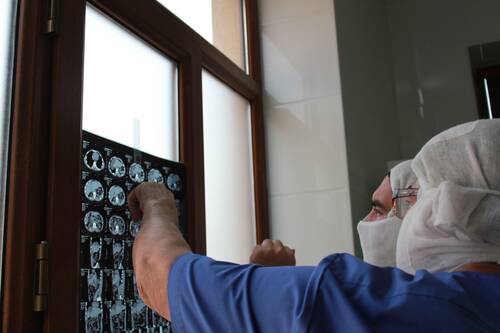
10 Jul What Does a Radiologist Do? Understanding the Role of Medical Imaging Experts
Your doctor orders an MRI. You show up, lie still for a while, and leave. Then a few days later, your physician calls with results — but who actually read those images? It wasn’t your doctor staring at scans in a back room. It was a radiologist, and the work they do is far more involved — and far more important — than most patients ever realize. Whether you’re getting a routine X-ray or a complex brain scan in Austin, a radiologist is the medical expert quietly working behind the scenes to make sure your diagnosis is accurate.
Understanding the difference between imaging technologies is also useful for patients — explored in detail in this guide to MRI compared to a CT scan and what patients should know.
Who Is a Radiologist, Exactly?
A radiologist is a fully licensed medical doctor who has completed medical school, a general residency, and then an additional four to five years of specialized training in radiology. That’s a significant investment of time — and for good reason. Reading medical images correctly requires a depth of anatomical knowledge and clinical experience that goes well beyond simply knowing what looks “normal.”
Radiologists don’t typically see patients face-to-face for ongoing care. Instead, they act as the diagnostic backbone of the healthcare system — the specialists your doctor relies on to interpret what’s actually happening inside your body when symptoms alone aren’t enough to tell the full story.
What Does a Radiologist Actually Do?
At its core, a radiologist’s job is to analyze medical images and translate what they see into a clinically useful report. But there’s real nuance in how that plays out day to day.
- Interpreting imaging studies — whether it’s an MRI, CT scan, X-ray, or ultrasound, the radiologist examines every image in detail, looking for abnormalities, measuring structures, and comparing findings to what’s expected for a patient of that age and health profile.
- Writing diagnostic reports — after reviewing the images, the radiologist prepares a structured report for the referring physician, outlining findings, flagging anything concerning, and often suggesting next steps or follow-up imaging if needed.
- Consulting with other physicians — when a finding is complex or urgent, radiologists often communicate directly with a patient’s treating doctor to make sure the implications are fully understood and acted on quickly.
- Overseeing imaging quality — radiologists also supervise the technologists who operate imaging equipment, ensuring scans are performed correctly and that image quality is high enough to draw reliable conclusions.
- Guiding image-assisted procedures — some radiologists perform interventional procedures, using real-time imaging to guide biopsies, drain fluid, or place catheters with precision that wouldn’t be possible otherwise.
The Different Types of Radiology You Should Know
Radiology isn’t a single specialty — it branches into several focused areas depending on the imaging technology and the body systems involved. According to the American College of Radiology, there are more than a dozen recognized subspecialties within radiology, each requiring additional fellowship training beyond the standard residency.
Some of the most common include neuroradiology, focused on the brain, spine, and nervous system; musculoskeletal radiology, which specializes in bones, joints, and soft tissue; body radiology, covering the chest, abdomen, and pelvis; interventional radiology, which uses imaging guidance to perform minimally invasive procedures; and breast imaging, dedicated to mammography and breast MRI for early detection and evaluation of breast conditions.
Why the Radiologist’s Experience Level Matters to You
Not all imaging reads are created equal. A radiologist with deep subspecialty experience will often catch subtleties on a scan that a generalist might miss — a small lesion, early-stage degeneration, or a pattern of findings that points toward a specific diagnosis. When the stakes are high, the person reading your images matters enormously.
That’s why choosing where you get your imaging done is worth thinking about carefully. A radiologist in Austin at a dedicated outpatient imaging center typically brings a high volume of subspecialty experience — reading hundreds of the same type of scan, which sharpens diagnostic precision over time. Longhorn Imaging, for example, backs its interpretations with over 35 years of combined radiologist experience, giving patients and referring physicians confidence in the accuracy of every report.
When Do You Actually Interact With a Radiologist?
For most outpatient imaging, you won’t meet your radiologist in person. They work behind the scenes, reviewing your scans after your appointment and sending a report to your doctor. However, there are situations where more direct contact happens — particularly with interventional procedures, urgent findings, or when a physician specifically requests a radiologist consultation.
Some imaging centers are moving toward more patient-facing models, where radiologists are available to walk patients through their results in plain language — which can be incredibly valuable when a finding is complex or anxiety-inducing. Knowing that a genuine expert reviewed your images and stands behind the report adds a level of reassurance that matters.
Advanced Imaging Services That Require Specialist Expertise
As imaging technology has evolved, so has the complexity of what radiologists are asked to interpret. Standard X-rays and basic MRIs are just the starting point. More advanced studies — like diffusion tensor imaging (DTI) for traumatic brain injury assessment, weight-bearing MRI for spine and joint evaluation under natural load, or full-body screening MRIs — require a radiologist with highly specific training and experience to interpret accurately.
These specialized scans are increasingly requested in clinical and legal settings alike, particularly for patients dealing with the aftermath of accidents or neurological conditions. Having access to a center equipped for these studies — and staffed with radiologists who regularly interpret them — can make a meaningful difference in both diagnosis and documentation.
Conclusion
Radiologists are the unsung experts of modern medicine. They may not take your pulse or sit across from you in an exam room, but their work is what turns a set of images into a diagnosis — and a diagnosis into a treatment plan. The next time you go in for a scan, it’s worth knowing that behind the scenes, a highly trained physician is reviewing every image with the sole purpose of making sure you get the most accurate picture of your health possible.
Wherever you are in your care journey, choosing an imaging center staffed by experienced, dedicated radiologists is one of the most important steps you can take toward an accurate diagnosis and the right next move for your health.
Disclaimer: The information on MedicalResearch.com is provided for educational purposes only, and is in no way intended to diagnose, cure, or treat any medical or other condition. Some links are sponsored. Products, services and providers are not warranted or endorsed by MedicalResearch.com or Eminent Domains Inc. Always seek the advice of your physician or other qualified health provider and ask your doctor any questions you may have regarding a medical condition. In addition to all other limitations and disclaimers in this agreement, service provider and its third party providers disclaim any liability or loss in connection with the content provided on this website.
Last Updated on July 10, 2026 by Marie Benz MD FAAD