
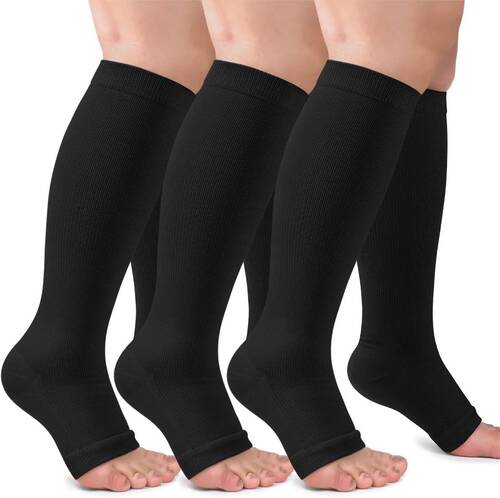
08 Oct 4 Mistakes to Avoid When Buying Compression Socks
Compression Garment Notice: Compression socks and stockings are not suitable for everyone. Speak with your healthcare provider before using them if you have peripheral artery disease or poor circulation in the legs, diabetes, neuropathy, heart failure, fragile skin, or skin infections or wounds on the legs. Seek prompt medical attention for sudden swelling, pain, warmth, or redness in one leg, or for shortness of breath or chest pain, which can be signs of a blood clot. This content is not specific medical advice, and suppliers linked here are not warranted or endorsed by MedicalResearch.com or Eminent Domains Inc.
If you’ve heard anything about compression socks so far, then you know that they can be useful for people who are dealing with heavy, tired, achy, or swollen legs. People tend to wear them during travel, as well as during long workdays, when pregnant, when exercising, or when recovering. Furthermore, they can be a part of a clinically recommended treatment plan for some vein related conditions.
Yet, while you understand their purpose and their importance, one thing is for sure here. Choosing the right pair takes a lot more thought than when you are buying ordinary socks. These are designed specifically to apply controlled pressure to the legs, meaning that the style, the fit, and the level will all affect how comfortable, and how effective, they really are.
Imagine having a poorly fitted pair. Socks like those can slide down, bunch at the ankle, or perhaps feel uncomfortably tight. Furthermore, they are likely to fail to provide the support you need. In some situations, choosing the wrong compression level can also make your condition even worse, especially if you’re doing it without medical guidance.
It is, unfortunately, not uncommon for people to make some mistakes in the process of buying these products. I assume you would much rather avoid those mistakes. Therefore, we are going to list some of the most common ones for you below, hoping to help you avoid them during your shopping process. Without any kind of additional ado, let us get started.
Buying Based on Shoe Size
One of the biggest mistakes that people make is this. They assume that compression socks are sized just like standard socks. And sure, the shoe size can be included on the label, but it is definitely not enough to ensure a proper fit. When you go to https://www.youcanhomemedical.com/compression/ (youcanhomemedical.com) , you will understand that there is much more to these products. You will understand that it takes much more to find the perfect fit.
Compression garments are usually sized based on ankle and calf circumference, as well as leg length, and sometimes even thigh measurements. The measurements you will need will depend on the style you want to get. But the measurements matter significantly, because the socks have to apply the pressure evenly and effectively from the ankle upward. So, never buy based on shoe size alone. Instead, get measured properly, ideally by a trained fitter or healthcare professional.
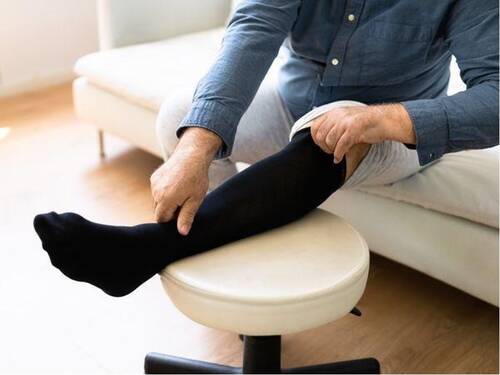
Going for the Strongest Compression Right Away
Another thing that people often do is assume that stronger compression automatically means better results. In reality, though, the right level depends on why it is that you need these socks in the first place, and on your overall health. For instance, mild compression could be suitable for travel, long periods of sitting, mild fatigue, or some occasional ankle swelling. On the other hand, moderate or firmer levels could be recommended for more persistent symptoms, recovery, varicose veins, or some diagnosed vein conditions.
If you just go for a higher level without any kind of guidance, that can make the socks rather difficult to wear, and not quite comfortable. Not to mention that those high levels could be inappropriate for people with certain medical conditions, such as diabetes, neuropathy, and others. It is a good idea to talk to your healthcare provider and get the proper level recommendations, as well as discuss any concerns you may have.
Picking the Wrong Style
Compression socks, as should be clear by now, come in more than one style. The knee-high style is often the easiest option for everyday use. That, however, doesn’t automatically mean that they are the right choice for pretty much anyone, or for any condition.
This means that you should be careful when picking the style. You have to match it to your daily routine. Think realistically about when and where you are planning to wear these. And remember that the sock will help only if you use it consistently. That is why comfort and practicality have to be a part of the decision.
Buying at the Wrong Place
Another thing to understand is that not all compression socks are made with the same quality standards in mind. This is why you should never make the mistake of buying these at the wrong place. Instead, you should do your best to choose the right supplier, and thus good-quality products.
Be cautious when you see some vague claims that the socks will resolve your circulation concerns. Great suppliers will be honest and straightforward about what you can expect from their products. Remember to check the reputation of those that you are considering, all with the aim of ultimately choosing a highly reliable supplier to buy your compression socks from. On top of all that, make sure to choose one that will help with fitting, and that will be willing to answer any of the questions you have along the way. The NLM (National Library of Medicine) also offers patient guidance on wearing and caring for compression stockings.
For a broader overview of vein health, see this MedicalResearch.com overview of varicose veins.
The information on MedicalResearch.com is provided for educational purposes only, and is in no way intended to diagnose, cure, or treat any medical or other condition. Some links are sponsored. MedicalResearch.com and Eminent Domains Inc. do not warrant or endorse products or claims made by third party links. Always seek the advice of your physician or other qualified health provider and ask your doctor any questions you may have regarding a medical condition. In addition to all other limitations and disclaimers in this agreement, service provider and its third party providers disclaim any liability or loss in connection with the content provided on this website.
Last Updated on October 8, 2026 by Marie Benz MD FAAD