
12 Nov How Technology Is Changing Mobility Support for People With Disabilities
People with mobility limitations, including older adults and people with disabilities, may find it hard to move independently at home, in shopping centers, in parks and in other public spaces. Some find it difficult to walk long distances, others rely on wheelchairs, and some struggle with stairs. Without the right mobility support, everyday activities can become harder. Technology is helping to close that gap through adaptive devices and smart software, making mobility equipment more advanced, more intuitive to use and better suited to independent living.
In this post, we review some of the key innovations in assistive devices that are helping make daily life more accessible.
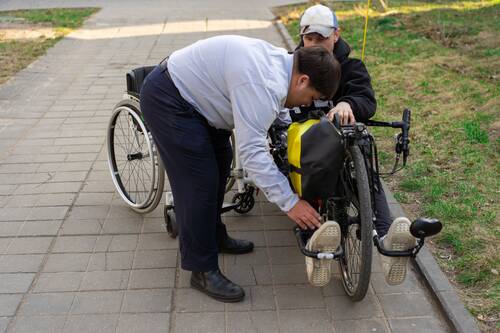
Photo by Mikhail Nilov via Pexels
Smart Assistive Devices Transforming Daily Mobility
Powered Mobility Devices
Motor-driven devices such as electric wheelchairs and mobility scooters help people with physical disabilities move more independently. Features such as joystick controls, adjustable seating and rechargeable batteries can make the experience smoother. The WHO (World Health Organization) estimates that more than 2.5 billion people worldwide need at least one assistive product.
Robotic Prosthetic Limbs
Some prosthetic arms and legs use sensors and small motors that respond to the user’s movements. For people with limb loss, this can make tasks such as walking and housework easier and give them finer control.
Exoskeleton Technology
Exoskeletons are wearable robotic devices for people with weak or paralyzed muscles. Guided by sensors, they can help users stand, walk and take part in exercise therapy, usually under clinical supervision.
Smart Navigation Systems
Smart navigation systems use cameras, sensors and GPS to detect obstacles. For people who are blind or have low vision, or who have mobility limitations, they can make moving through indoor and outdoor spaces safer.
Automated Accessibility Solutions
Automatic doors, stairlifts, platform lifts and voice-controlled systems help people with mobility limitations get around more easily. They make homes and public spaces more accessible, so older adults and people with disabilities or difficulty walking can move more comfortably and independently.
How Modern Mobility Equipment Improves Daily Independence
Something as simple as visiting a friend or running to the market can be exhausting when every step takes great effort. The right mobility equipment can ease this burden. An electric wheelchair can make it easier to move around at home, in a shopping center or elsewhere. Options include compact power chairs, folding wheelchairs and models with advanced seating and control features. For people who can still walk but need extra stability, modern three- and four-wheeled walkers may be a good fit.
The Role of Artificial Intelligence and Smart Technology
- AI-powered navigation assistance can guide users and help them avoid obstacles.
- Sensors can detect nearby obstacles and alert users to potential collisions.
- GPS-based mobility apps can help users plan routes and find accessible locations.
- Voice-assist devices let users control some mobility equipment and home appliances by voice.
- Indoor and outdoor navigation tools can make it easier to get around the home, the street or a shopping mall.
Innovations in Accessible Transportation
- Wheelchair-accessible vehicles provide extra room and support, so wheelchair users can travel comfortably without leaving their chairs.
- Automatic wheelchair lifts and ramps raise the wheelchair into and out of the vehicle, so it doesn’t have to be carried.
- Swivel seats turn outward, which makes getting into and out of a car easier and less straining.
Challenges and Limitations of Modern Mobility Technology
Advanced mobility equipment can be expensive, and regular maintenance adds to the cost. Even with modern devices, narrow footpaths, stairs and inaccessible public places can make getting around difficult. Electric wheelchairs and scooters need regular charging, and a low battery can cut a journey short. Some devices take time to learn, so proper training and technical support matter. Mobility needs differ from person to person, so equipment should match each user’s comfort, abilities and daily routine.
The Future of Mobility Support for People With Disabilities
The outlook for mobility support is promising. Lighter materials may make wheelchairs and other mobility aids easier to use and transport. Smarter assistive devices, better batteries and AI features could give users more control, longer use between charges and more freedom. As the technology matures, these tools may also become more affordable and easier to obtain, helping more people find equipment that works for them.
Conclusion
Technology is making mobility support safer, smarter and more accessible for people with disabilities. Modern mobility devices and assistive equipment help people manage everyday activities with more comfort and independence. Reliable delivery, proper maintenance and access to suitable equipment also matter. The goal is to help people move with greater confidence, comfort and freedom.
Choosing the right device depends on more than its features. For more on matching equipment to the user and the home, see why home patient safety takes more than the right device.
Some links are sponsored. Products, services and providers are not warranted or endorsed by MedicalResearch.com or Eminent Domains Inc. Always seek the advice of your physician or other qualified health provider and ask your doctor any questions you may have regarding a medical condition. In addition to all other limitations and disclaimers in this agreement, service provider and its third party providers disclaim any liability or loss in connection with the content provided on this website.
Last Updated on November 13, 2026 by Marie Benz MD FAAD