
20 Oct Skin Checks in Brisbane: Why They Matter and What to Expect
Queensland has among the highest rates of skin cancer in the world, and Brisbane’s year-round UV is a big part of the reason. Sun protection is the first line of defence. A professional skin check can be a second, because finding skin cancer early gives you the best chance of successful treatment.
Many people put off a skin check because they aren’t sure what it involves. In practice, the appointment is short, it’s painless, and you stay in control of how the examination is done.
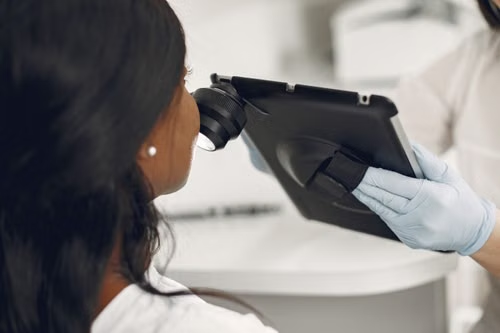
Photo by Gustavo Fring via Pexels
A skin check in Brisbane usually takes about 15 minutes, and many clinics don’t require a GP visit first. Cancer Council Australia provides independent information on skin cancer risk, prevention and early detection.
Why Brisbane’s UV Makes Regular Skin Checks Worthwhile
The UV Index in Queensland is high enough all year round to cause skin damage, and according to Queensland Health, more than 3,200 Queenslanders are diagnosed with melanoma each year. Sun protection is recommended whenever the UV Index reaches three or above, and winter doesn’t change that. UV isn’t linked to temperature, so a cool, cloudy morning can still burn unprotected skin.
The damage also adds up. Your risk relates to your total lifetime UV exposure, so years of weekends at the beach or outdoor work count even if you can’t remember a bad burn.
Some people have a higher risk. Increasing age, a personal or family history of skin cancer, a history of bad sunburn, fair skin, many moles, outdoor work and solarium use all raise it.
How Often Should You Have a Skin Check?
There’s no single schedule that suits everyone. People at high risk may be advised to have a full skin examination by a doctor every six to 12 months, sometimes supported by total body photography and dermoscopy. For people at average risk, a doctor can help decide whether regular professional checks make sense and how often, based on skin type, sun history and family history.
A scheduled appointment shouldn’t stop you from acting on a change. If you notice a new spot, or a change in the size, shape or colour of an existing one, see a doctor promptly rather than waiting for your next check.
What Happens During a Skin Check
A full skin check usually takes about 15 minutes. You may be given a gown while the doctor examines your whole body in a private room. Most checks are done with your underwear on, but you can ask the doctor to look at a particular spot in a private area if it concerns you.
The doctor uses a dermatoscope, a hand-held magnifying device with a light. It lets the doctor see patterns and structures beneath the skin’s surface that aren’t visible to the naked eye, without any incisions or discomfort.
If you would feel more comfortable, you can request a chaperone at your appointment, whether that’s someone you know or a member of the clinic team. It’s best to let the clinic know beforehand so they can arrange it.
If the doctor finds something that needs a closer look, they may take a skin biopsy and send the sample to a pathology lab. Treatment, such as cryotherapy or surgical excision, depends on what the results show.
Checking Your Skin Between Appointments
Getting to know your skin makes changes easier to spot. Use a full-length mirror and a hand-held mirror to check your whole body, because skin cancer can appear anywhere, including areas the sun rarely reaches. The ABCDE guide describes five features that can be warning signs of melanoma:
- A – Asymmetry: one half of the spot doesn’t match the other.
- B – Border: the edges are irregular, notched or blurred rather than smooth and round.
- C – Colour: the colour is uneven, with several shades, or changes over time.
- D – Diameter: the spot is larger than about 6mm (roughly the size of a pencil eraser), although melanomas can be smaller.
- E – Evolving: the spot is changing in size, shape, colour or height. Any new or evolving spot should be checked by a doctor as soon as possible.
Not every melanoma follows these rules. Some, such as nodular melanomas, appear as a raised, firm, fast-growing lump, so any spot that looks different from your others or keeps growing deserves attention.
Your back, scalp and the backs of your legs are hard to see yourself, which is where a full-body check by a doctor helps.
Choosing a Skin Check Clinic in Brisbane
Look for doctors who focus on skin cancer and use dermoscopy, and for a clinic that can take you from check to treatment in one place.
A clinic close to home or work is easier to return to, and there are skin check clinics across the north, south, east and west of Brisbane.
Skin Check FAQs
Do I need to see my GP before booking a skin check?
Often not. Many skin cancer clinics take direct bookings, so check with the clinic when you book.
How long does a skin check take?
A full-body skin check usually takes about 15 minutes.
Is a skin check only worth doing in summer?
No. The UV Index in Queensland is high enough to damage skin all year round, so a skin check suits any time of year.
Can a skin cancer app replace a check with a doctor?
No. Research has found that consumer skin cancer apps are generally unreliable for detecting melanoma, so they shouldn’t replace an examination by a doctor.
For a broader overview of skin cancer research, see this MedicalResearch.com overview of skin cancer and melanoma.
The information on MedicalResearch.com is provided for educational purposes only, and is in no way intended to diagnose, cure, or treat any medical or other condition. Some links are sponsored. MedicalResearch.com and Eminent Domains Inc. do not warrant or endorse products or claims made by third party links. Always seek the advice of your physician or other qualified health provider and ask your doctor any questions you may have regarding a medical condition. In addition to all other limitations and disclaimers in this agreement, service provider and its third party providers disclaim any liability or loss in connection with the content provided on this website.
Last Updated on October 20, 2026 by Marie Benz MD FAAD