
AAOS17 Tag
20 Mar Patients Can Expect To Return To Normal Function Relatively Quickly After Knee Arthroscopy
MedicalResearch.com Interview with: [caption id="attachment_33141" align="alignleft" width="100"] Dr. Colvin[/caption]
Alexis Colvin, MD
Associate Professor, Orthopaedics
Icahn School of Medicine at Mount Sinai
[caption id="attachment_33142" align="alignleft" width="100"]
Dr. Colvin[/caption]
Alexis Colvin, MD
Associate Professor, Orthopaedics
Icahn School of Medicine at Mount Sinai
[caption id="attachment_33142" align="alignleft" width="100"] Dr. Gladstone[/caption]
James N. Gladstone, MD
Co-Chief, Sports Medicine Service, The Mount Sinai Hospital
Associate Professor, Orthopaedics, Icahn School of Medicine at Mount Sinai
MedicalResearch.com: What is the background for this study?
Response: Knee arthroscopy is one of the most commonly performed procedures in the U.S. There is minimal literature on when patients can expect to return to daily activity.
We sought to help patients understand when they could expect to return to a number of basic activities, specifically in an urban environment where patients need to be mobile early.
Dr. Gladstone[/caption]
James N. Gladstone, MD
Co-Chief, Sports Medicine Service, The Mount Sinai Hospital
Associate Professor, Orthopaedics, Icahn School of Medicine at Mount Sinai
MedicalResearch.com: What is the background for this study?
Response: Knee arthroscopy is one of the most commonly performed procedures in the U.S. There is minimal literature on when patients can expect to return to daily activity.
We sought to help patients understand when they could expect to return to a number of basic activities, specifically in an urban environment where patients need to be mobile early.
19 Mar Tennis Elbow: Is the Problem the Joint or the Tendon?
MedicalResearch.com Interview with: [caption id="attachment_32956" align="alignleft" width="130"] Dr. Michael Hausman[/caption]
Michael Hausman, MD
Chief, Hand and Upper Extremity Surgery
Mount Sinai Health System
Professor, Orthopaedics
Icahn School of Medicine at Mount Sinai
MedicalResearch.com: What is the background for this study? What are the main findings?
Response: Lateral epicondylitis has traditionally been thought of as a tendon problem, but tendon pathology has not been well documented. Our study supports our hypothesis that the problem lies within the elbow joint, rather than in the tendon outside the joint.
Dr. Michael Hausman[/caption]
Michael Hausman, MD
Chief, Hand and Upper Extremity Surgery
Mount Sinai Health System
Professor, Orthopaedics
Icahn School of Medicine at Mount Sinai
MedicalResearch.com: What is the background for this study? What are the main findings?
Response: Lateral epicondylitis has traditionally been thought of as a tendon problem, but tendon pathology has not been well documented. Our study supports our hypothesis that the problem lies within the elbow joint, rather than in the tendon outside the joint.
17 Mar Risk Factors For Adverse Events After Total Shoulder Replacement
MedicalResearch.com Interview with: [caption id="attachment_33051" align="alignleft" width="130"] Dr. Parsons[/caption]
Brad Parsons, MD
Associate Professor, Orthopaedics
Icahn School of Medicine at Mount Sinai
MedicalResearch.com: What is the background for this study? What are the main findings?
Response: As bundled payment initiatives increase in order to contain health care costs, total shoulder arthroplasty (TSA) is a likely future target.
Understanding modifiable drivers of complications and unplanned readmission as well as identifying when such events occur will be critical for orthopedic surgeons and hospitals to improve outcomes and to make fixed-price payment models feasible for TSA.
Utilizing the American College of Surgeons National Surgical Quality Improvement Program we identified 5801 patients that underwent TSA with a 2.7% readmission rate and 2.5% severe adverse event rate. Patients with 3 or more risk factors were found to have a significantly increased risk of readmission and severe adverse events within the first two weeks postoperatively.
Dr. Parsons[/caption]
Brad Parsons, MD
Associate Professor, Orthopaedics
Icahn School of Medicine at Mount Sinai
MedicalResearch.com: What is the background for this study? What are the main findings?
Response: As bundled payment initiatives increase in order to contain health care costs, total shoulder arthroplasty (TSA) is a likely future target.
Understanding modifiable drivers of complications and unplanned readmission as well as identifying when such events occur will be critical for orthopedic surgeons and hospitals to improve outcomes and to make fixed-price payment models feasible for TSA.
Utilizing the American College of Surgeons National Surgical Quality Improvement Program we identified 5801 patients that underwent TSA with a 2.7% readmission rate and 2.5% severe adverse event rate. Patients with 3 or more risk factors were found to have a significantly increased risk of readmission and severe adverse events within the first two weeks postoperatively.
16 Mar The Short Form KOOS, Jr Is Valid for Revision Knee Arthroplasty
MedicalResearch.com Interview with: [caption id="attachment_32879" align="alignleft" width="155"]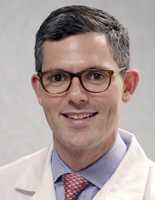 Dr. McLawhorn[/caption]
Alexander S. McLawhorn, MD, MBA
Orthopedic Surgery, Hip and Knee Replacement
Hospital for Special Surgery
New York, NY 10021
MedicalResearch.com: What is the background for this study? What are the main findings?
Response: Hospital for Special Surgery (HSS) researchers saw the need for a shorter, more patient friendly outcome survey for revision knee replacement surgery. This is an area where patient-reported outcomes data are essential to improving quality of care. In fact, knee replacement revisions, which are more complex and heterogeneous than primary knee surgery, are under-studied in this regard.
A commonly used knee replacement survey, the KOOS (Knee Injury and Osteoarthritis Outcome Score), is 42 questions and often leaves physicians with partial and unusable information secondary to patient burden and fatigue. Previously, researchers at HSS created the KOOS, JR, which is a shorter, 7-question survey that accurately measures “knee health”, meaning it reflects aspects of pain, symptom severity, and activities of daily living relevant and difficult for patients with knee arthritis. The current research presented at AAOS showed that the KOOS, JR can be extended to knee replacement revision patients and that it is a valid and efficient tool for assessing knee health in this challenging patient population.
Dr. McLawhorn[/caption]
Alexander S. McLawhorn, MD, MBA
Orthopedic Surgery, Hip and Knee Replacement
Hospital for Special Surgery
New York, NY 10021
MedicalResearch.com: What is the background for this study? What are the main findings?
Response: Hospital for Special Surgery (HSS) researchers saw the need for a shorter, more patient friendly outcome survey for revision knee replacement surgery. This is an area where patient-reported outcomes data are essential to improving quality of care. In fact, knee replacement revisions, which are more complex and heterogeneous than primary knee surgery, are under-studied in this regard.
A commonly used knee replacement survey, the KOOS (Knee Injury and Osteoarthritis Outcome Score), is 42 questions and often leaves physicians with partial and unusable information secondary to patient burden and fatigue. Previously, researchers at HSS created the KOOS, JR, which is a shorter, 7-question survey that accurately measures “knee health”, meaning it reflects aspects of pain, symptom severity, and activities of daily living relevant and difficult for patients with knee arthritis. The current research presented at AAOS showed that the KOOS, JR can be extended to knee replacement revision patients and that it is a valid and efficient tool for assessing knee health in this challenging patient population.
16 Mar How Does Spinal Deformity Impact Hip Stability?
MedicalResearch.com Interview with: [caption id="attachment_33024" align="alignleft" width="200"] Dr. Aaron Buckland[/caption]
Dr Aaron J. Buckland
Spinal and scoliosis surgeon and
Assistant professor
Orthopedic surgery
NYU Langone Medical Center
MedicalResearch.com: What is the background for this study?
Response: For decades, surgeons performing hip replacements have placed the acetabular component adjacent to the pelvis in a “safe zone” which has been shown to reduce dislocation risk. However, beginning in residency, I would notice that several of my patients with spinal deformities or lumbar fusions, would experience dislocations despite the safe zone placement of these implants. Our initial research demonstrated that there was an increased dislocation risk in patients with lumbar fusions, particularly if they underwent spinal realignment. We investigated this phenomenon further by retrospectively reviewing 107 patients who met the criteria for sagittal spinal deformity, including 139 hip replacements collectively.
Dr. Aaron Buckland[/caption]
Dr Aaron J. Buckland
Spinal and scoliosis surgeon and
Assistant professor
Orthopedic surgery
NYU Langone Medical Center
MedicalResearch.com: What is the background for this study?
Response: For decades, surgeons performing hip replacements have placed the acetabular component adjacent to the pelvis in a “safe zone” which has been shown to reduce dislocation risk. However, beginning in residency, I would notice that several of my patients with spinal deformities or lumbar fusions, would experience dislocations despite the safe zone placement of these implants. Our initial research demonstrated that there was an increased dislocation risk in patients with lumbar fusions, particularly if they underwent spinal realignment. We investigated this phenomenon further by retrospectively reviewing 107 patients who met the criteria for sagittal spinal deformity, including 139 hip replacements collectively.
16 Mar Female Soccer Players Have High Risk of Concussion
Posted at 00:41h
in Author Interviews, Brain Injury, Exercise - Fitness, Gender Differences, Mental Health Research
MedicalResearch.com Interview with:
[caption id="attachment_32985" align="alignleft" width="127"]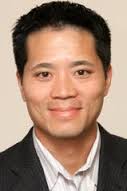 Dr. Hsu[/caption]
Wellington K. Hsu, MD
Clifford C. Raisbeck, MD, Professor of Orthopaedic Surgery
Associate Professor of Orthopaedic Surgery
Northwestern University
Chicago, IL
MedicalResearch.com: What is the background for this study? What are the main findings?
Response: Concussions remains a significant problem in youth sports. The recent enactment of Traumatic brain injury laws have certainly heightened awareness regarding this problem. Our study looked at publicly available data regarding diagnosis of concussion in high school athletes. We found that females are more likely to be diagnosed with a concussion than males. We also concluded that girl soccer players and boys football players are at highest risk for a diagnosis of concussion. Since the neck meant of the Traumatic brain injury state laws, the diagnosis of concussion in this patient group increased significantly past decade.
Dr. Hsu[/caption]
Wellington K. Hsu, MD
Clifford C. Raisbeck, MD, Professor of Orthopaedic Surgery
Associate Professor of Orthopaedic Surgery
Northwestern University
Chicago, IL
MedicalResearch.com: What is the background for this study? What are the main findings?
Response: Concussions remains a significant problem in youth sports. The recent enactment of Traumatic brain injury laws have certainly heightened awareness regarding this problem. Our study looked at publicly available data regarding diagnosis of concussion in high school athletes. We found that females are more likely to be diagnosed with a concussion than males. We also concluded that girl soccer players and boys football players are at highest risk for a diagnosis of concussion. Since the neck meant of the Traumatic brain injury state laws, the diagnosis of concussion in this patient group increased significantly past decade.
15 Mar Men and Women Have Different Post-Op Risks After Joint Replacement
MedicalResearch.com Interview with: [caption id="attachment_32959" align="alignleft" width="130"] Dr. Darwin Chen[/caption]
Darwin Chen, MD
Assistant Professor, Orthopaedics
Icahn School of Medicine at Mount Sinai
MedicalResearch.com: What is the background for this study?
Response: Total hip and knee replacement surgery are among the most commonly performed orthopaedic procedures today. Although success rates are high, complications can occur and some may be preventable. The goal of our research was to assess the impact of gender on complications within the first 30 days after hip and knee replacement.
Dr. Darwin Chen[/caption]
Darwin Chen, MD
Assistant Professor, Orthopaedics
Icahn School of Medicine at Mount Sinai
MedicalResearch.com: What is the background for this study?
Response: Total hip and knee replacement surgery are among the most commonly performed orthopaedic procedures today. Although success rates are high, complications can occur and some may be preventable. The goal of our research was to assess the impact of gender on complications within the first 30 days after hip and knee replacement.