MedicalResearch.com Interview with:
[caption id="attachment_54952" align="alignleft" width="200"]

Dr. Eunyoung Cho[/caption]
Eunyoung Cho, Sc.D.
Associate Professor and Director of Research
Department of Dermatology
The Warren Alpert Medical School of Brown University.
MedicalResearch.com: What is the background for this study?
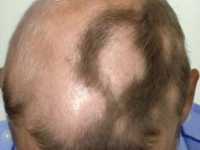
Response: We are interested in whether flares of alopecia area (AA), one of the most common autoimmune diseases resulting in sudden loss of scalp and facial hair, follow seasonal patterns and whether these potential patterns are related to climate factors. We recently analyzed a set of data on pediatric AA flares, which demonstrated seasonal patterns, with the largest number of flares in the fall, finding that climate factors such as UV index were correlated with the AA flare frequency of patients in Philadelphia, Pennsylvania, a geographical region with four distinct seasons. Here, we explored the seasonal patterns and contribution of climate factors in pediatric AA patients in Providence, Rhode Island, another geographical region with four distinct seasons, to test whether we can replicate our previous findings.

 Dr. Vallerand[/caption]
Isabelle Vallerand, PhD
Epidemiologist, MD Student
Department of Community Health Sciences
Cumming School of Medicine
University of Calgary
MedicalResearch.com: What is the background for this study? What are the main findings?
Response: It is well known that patients with alopecia areata, a form of autoimmune hair loss, are at a higher risk of suffering from depression than the general population. But in practice, we often hear patients tell us that they believe their hair loss developed as a result of stress or problems with mental health – certainly the phrase “so stressed your hair is falling out” is something most people have heard of. Despite this, there has actually been very little research investigating the role that mental health may have on development of alopecia areata.
Interestingly, depression has recently been associated with increased systemic inflammatory markers, so there is biologic plausibility that depression could increase the risk of alopecia areata. Our group was interested in addressing this question, and used a large population-level health records database with up to 26 years of follow-up to study it. We ultimately found that not only does depression increase one’s risk of alopecia areata, but that it increases their risk by nearly 90% compared to people who have never had depression. We also found that using antidepressants can significantly decrease the risk of developing alopecia areata in patients with depression. So there appears to be an important link between mental health and development of hair loss from alopecia areata.
Dr. Vallerand[/caption]
Isabelle Vallerand, PhD
Epidemiologist, MD Student
Department of Community Health Sciences
Cumming School of Medicine
University of Calgary
MedicalResearch.com: What is the background for this study? What are the main findings?
Response: It is well known that patients with alopecia areata, a form of autoimmune hair loss, are at a higher risk of suffering from depression than the general population. But in practice, we often hear patients tell us that they believe their hair loss developed as a result of stress or problems with mental health – certainly the phrase “so stressed your hair is falling out” is something most people have heard of. Despite this, there has actually been very little research investigating the role that mental health may have on development of alopecia areata.
Interestingly, depression has recently been associated with increased systemic inflammatory markers, so there is biologic plausibility that depression could increase the risk of alopecia areata. Our group was interested in addressing this question, and used a large population-level health records database with up to 26 years of follow-up to study it. We ultimately found that not only does depression increase one’s risk of alopecia areata, but that it increases their risk by nearly 90% compared to people who have never had depression. We also found that using antidepressants can significantly decrease the risk of developing alopecia areata in patients with depression. So there appears to be an important link between mental health and development of hair loss from alopecia areata.