MedicalResearch.com Interview with:
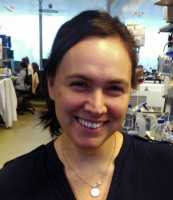
[caption id="attachment_50312" align="alignleft" width="100"]

Dr. Apple[/caption]
Dr. Fred Apple,
PhD, DABCC
Medical director,Clinical Laboratories, Clinical Chemistry, Clinical and Forensic Toxicology and Point of Care Testing, Hennepin HealthCare
Principal investigator, Minneapolis Medical Research Foundation
Professor, Department of Laboratory Medicine and Pathology
University of Minnesota
MedicalResearch.com: What is the background for this study?
Response: Few studies have addressed the role of high sensitivity cardiac troponin (hs-cTn) assays in ruling out myocardial infarction (MI) based on the measurement of a single baseline specimen in US patients presenting to the emergency department with symptoms suggestive of ischemia. Most studies have been published predicated on patients in Europe, Australia, and New Zealand. As US emergency departments have different ordering practices for using cTn in triaging patients, it is important to validate the role of hs-cTn assays in US practices to assure providers of appropriate utilization. We have published two papers using the Abbott ARCHITECT hs-cTnI assay, the same one used outside the US in clinical practice (as this assay is not yet FDA cleared) in a US cohort (clinicialtrials.gov trial: UTROPIA - Sandoval Y, Smith SW, Shah ASV, Anand A, Chapman AR, Love SA, Schulz K, Cao J, Mills NL, Apple FS.
Rapid rule-out of acute myocardial injury using a single high-sensitivity cardiac troponin I measurement. Clin Chem 2017;63:369-76. Sandoval
Y, Smith
SW, Love
SA, Sexter
A, Schulz
K, Apple
FS. Single high-sensitivity cardiac troponin I to rule out myocardial infarction. Am J Med 2017;130:1076-1083) that have shown similar rule out capacities predicated on clinical presentation, a normal ECG and the role of hs-cTnI testing.


 Dr. Finn[/caption]
Aloke V. Finn MD
Medical Director/Chief Scientific Officer
CVPath Institute Inc.
Gaithersburg, MD 20878
MedicalResearch.com: What is the background for this study?
Response:Transcatheter left atrial appendageal closure (LAAC) has become an established therapeutic approach for prevention of stroke in subjects with non-valvular atrial fibrillation who are ineligible for long-term oral anticoagulation. Device-related thrombus (DRT), developing after LAAO procedures occurs in a small proportion but patients receiving these devices but is associated with critical embolic events such as ischemic stroke. Thrombogenicity and delayed endothelialization of fabric play a role in the development of DRT. Fluorinated polymers are known to have thromboresistant properties which may favorably modify blood biomaterial interactions of a LAAO device.
In this study we compared the thrombogenicity and endothelial coverage (EC) after left atrial appendage occlusion (LAAO) between a novel fluoropolymer-coated Watchman (FP-WM (Watchman FLX PRO) and the conventional uncoated Watchman FLX (WM).
Dr. Finn[/caption]
Aloke V. Finn MD
Medical Director/Chief Scientific Officer
CVPath Institute Inc.
Gaithersburg, MD 20878
MedicalResearch.com: What is the background for this study?
Response:Transcatheter left atrial appendageal closure (LAAC) has become an established therapeutic approach for prevention of stroke in subjects with non-valvular atrial fibrillation who are ineligible for long-term oral anticoagulation. Device-related thrombus (DRT), developing after LAAO procedures occurs in a small proportion but patients receiving these devices but is associated with critical embolic events such as ischemic stroke. Thrombogenicity and delayed endothelialization of fabric play a role in the development of DRT. Fluorinated polymers are known to have thromboresistant properties which may favorably modify blood biomaterial interactions of a LAAO device.
In this study we compared the thrombogenicity and endothelial coverage (EC) after left atrial appendage occlusion (LAAO) between a novel fluoropolymer-coated Watchman (FP-WM (Watchman FLX PRO) and the conventional uncoated Watchman FLX (WM).


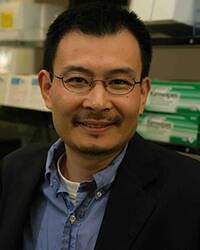 Dr. Simin Liu[/caption]
Simin Liu MD MPH ScD
Professor of Epidemiology at the School of Public Health,
Professor of Medicine (Endocrinology) and
Professor of Surgery at the Alpert School of Medicine
Brown University
MedicalResearch.com: What is the background for this study?
Response: Our research team has been researching the roles of environmental and genetic determinants of chronic diseases for nearly three decades, with special emphasis on evaluating micronutrients, minerals, and trace elements in relation to cardiometabolic outcomes, and findings of which have contributed to the design of several large, randomized trials of dietary supplements in the US (Liu JAMA 1999; 2011; Diabetes Care 2005a,b; Diabetes 2006). Several large intervention trials have consistently shown beneficial effects on clinical cardiometabolic outcomes of a diet pattern rich in micronutrients, although research on micronutrient supplementation has mainly focused on the health effects of a single or a few vitamins and minerals.
We decided to take a comprehensive and systematic approach to evaluate all the publicly available/accessible studies reporting all micronutrients including phytochemicals and antioxidant supplements and their effects on cardiovascular risk factors as well as multiple CVDs.
Dr. Simin Liu[/caption]
Simin Liu MD MPH ScD
Professor of Epidemiology at the School of Public Health,
Professor of Medicine (Endocrinology) and
Professor of Surgery at the Alpert School of Medicine
Brown University
MedicalResearch.com: What is the background for this study?
Response: Our research team has been researching the roles of environmental and genetic determinants of chronic diseases for nearly three decades, with special emphasis on evaluating micronutrients, minerals, and trace elements in relation to cardiometabolic outcomes, and findings of which have contributed to the design of several large, randomized trials of dietary supplements in the US (Liu JAMA 1999; 2011; Diabetes Care 2005a,b; Diabetes 2006). Several large intervention trials have consistently shown beneficial effects on clinical cardiometabolic outcomes of a diet pattern rich in micronutrients, although research on micronutrient supplementation has mainly focused on the health effects of a single or a few vitamins and minerals.
We decided to take a comprehensive and systematic approach to evaluate all the publicly available/accessible studies reporting all micronutrients including phytochemicals and antioxidant supplements and their effects on cardiovascular risk factors as well as multiple CVDs.



 Salim S. Virani, MD, PhD, FACC, FAHA, FASPC
Professor, Section of Cardiovascular Research
Director, Cardiology Fellowship Training Program
Baylor College of Medicine
Staff Cardiologist, Michael E. DeBakey Veterans Affairs Medical Center
Co-Director, VA Advanced Fellowship in Health Services Research & Development at the Michael E. DeBakey VA Medical Center, Houston, TX
Investigator, Health Policy, Quality and Informatics Program
Michael E. DeBakey Veterans Affairs Medical Center HSR&D Center of Innovation
Houston, TX @virani_md
MedicalResearch.com: What is the background for this study? What are the main findings? What do you think accounts for the gender differences?
Response: We know that women with ischemic heart disease (IHD) have lower prescription rates for statin and high-intensity statin therapy. In this study, we assessed whether the same trends hold true for women with other forms of atherosclerotic cardiovascular disease (ASCVD) i.e. women with peripheral artery disease (PAD) or ischemic cerebrovascular disease (ICVD). Maximally tolerated statin therapy is a Class-I indication in patients with clinical ASCVD which includes PAD and ICVD.
We also assessed statin adherence among men and women with PAD and ICVD.
Lastly, we performed exploratory analyses to assess whether statin therapy, statin intensity, and statin adherence in women with PAD and ICVD were associated with cardiovascular outcomes and/or mortality.
Salim S. Virani, MD, PhD, FACC, FAHA, FASPC
Professor, Section of Cardiovascular Research
Director, Cardiology Fellowship Training Program
Baylor College of Medicine
Staff Cardiologist, Michael E. DeBakey Veterans Affairs Medical Center
Co-Director, VA Advanced Fellowship in Health Services Research & Development at the Michael E. DeBakey VA Medical Center, Houston, TX
Investigator, Health Policy, Quality and Informatics Program
Michael E. DeBakey Veterans Affairs Medical Center HSR&D Center of Innovation
Houston, TX @virani_md
MedicalResearch.com: What is the background for this study? What are the main findings? What do you think accounts for the gender differences?
Response: We know that women with ischemic heart disease (IHD) have lower prescription rates for statin and high-intensity statin therapy. In this study, we assessed whether the same trends hold true for women with other forms of atherosclerotic cardiovascular disease (ASCVD) i.e. women with peripheral artery disease (PAD) or ischemic cerebrovascular disease (ICVD). Maximally tolerated statin therapy is a Class-I indication in patients with clinical ASCVD which includes PAD and ICVD.
We also assessed statin adherence among men and women with PAD and ICVD.
Lastly, we performed exploratory analyses to assess whether statin therapy, statin intensity, and statin adherence in women with PAD and ICVD were associated with cardiovascular outcomes and/or mortality.