17 Apr Short Rest Periods Are Performance Enhancers
MedicalResearch.com Interview with: [caption id="attachment_48644" align="alignleft" width="156"]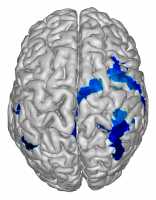 In a study of healthy volunteers, NIH researchers found that taking short breaks, early and often, may help our brains learn new skills.
Courtesy of Cohen lab, NIH/NINDS[/caption] Leonardo G. Cohen, M.D., Ph.D., Senior Investigator Marlene Bönstrup, M.D., Postdoctoral fellow in Dr. Cohen's lab NIH's National Institute of Neurological Disorders and Stroke MedicalResearch.com: What is the background for this study? What are the main findings? Response: Learning a new skill is typically divided into online (during practice) and offline (after practice has ended) components. Particularly motor skill learning occurs to a considerable degree offline, meaning that performance further improves even after practice has ended. A single practice session itself however, is typically divided into short (level of seconds) periods of practice and rest. In this study, we set out to investigate the contribution of those short periods of practice and rest to the learning during a practice session (i.e. online learning). We found that during early motor skill learning, when most of the total learning occurs, performance improvements actually precipitate during short periods of rest whereas during practice periods, performance mostly stagnated. We found a signature of neural activity predictive of those performance improvements during rest: The lower the beta rhythmic activity in the parietofrontal regions of the brain during those short periods of rest, the higher were participant’s performance jumps.