MedicalResearch.com Interview with:
[caption id="attachment_46437" align="alignleft" width="200"]

Dr. Bimonte-Nelson[/caption]
Heather A. Bimonte-Nelson, Ph.D.
Professor, Barrett Honors Faculty
Department of Psychology
Arizona State University
MedicalResearch.com: What is the background for this study? What are the main findings?
Response: The dogma in the field is that the nonpregnant uterus is dormant, and therefore it has not necessarily been of interest to study. Textbooks have described the nonpregnant uterus as “quiescent,” “dormant,” and “useless.” When I was in graduate school studying endocrinology, I read statements in books saying that the sole purpose of the uterus is for gestation.
However, all women aging into midlife will experience some type of menopause, and some of these women will undergo surgical menopause via removal of all, or a part of, their reproductive tracts. Research evaluating reproductive tract-brain connections has grown quite a bit in the last few decades. For example, the ovary-brain connection has been focused on quite a bit, and we now know that hormones coming from the ovaries (such as estrogens and progesterone) can affect more than reproduction, and can impact brain functioning. While the uterus-brain connection is not well understood, there is research indicating that the uterus and autonomic nervous system communicate directly.
We also know that hormones released from the ovaries impact the uterus. Therefore, there is a uterus-ovary-brain triad system. This uterus-ovary-brain triad has undergone little scientific investigation for functions outside of reproduction. Given that by age 60 one in three women experience hysterectomy, thereby interrupting this uterus-ovary-brain triad system, we believe it is important to understand the effects of variants of surgical menopause including hysterectomy.
This led to our current evaluation testing multiple variations in surgical menopause using a rat model, where we tested the effects of uterus removal alone (hysterectomy), ovarian removal alone, or uterus plus ovarian removal.




 Dr. Akefe[/caption]
Isaac O Akefe DVM, PhD
Clem Jones Centre for Ageing Dementia Research
Queensland Brain Institute
The University of Queensland St Lucia
Academy for Medical Education, Medical School
Brisbane QLD Australia
MedicalResearch.com: What is the background for this study?
Response: The brain is the body’s fattiest organ, with fatty compounds called lipids making up 60% of its weight. Fatty acids are the building blocks of a class of lipids called phospholipids.
In our study, we first showed that levels of saturated fatty acids increase in the brain during neuronal communication and long-term memory formation, but we didn’t know what was causing these changes.
Dr. Akefe[/caption]
Isaac O Akefe DVM, PhD
Clem Jones Centre for Ageing Dementia Research
Queensland Brain Institute
The University of Queensland St Lucia
Academy for Medical Education, Medical School
Brisbane QLD Australia
MedicalResearch.com: What is the background for this study?
Response: The brain is the body’s fattiest organ, with fatty compounds called lipids making up 60% of its weight. Fatty acids are the building blocks of a class of lipids called phospholipids.
In our study, we first showed that levels of saturated fatty acids increase in the brain during neuronal communication and long-term memory formation, but we didn’t know what was causing these changes.

 Prof. Leon[/caption]
Michael Leon, Professor emeritus
Prof. Leon[/caption]
Michael Leon, Professor emeritus

 Dr. Nation[/caption]
Daniel A. Nation, Ph.D.,
Associate Professor of Psychological Science
Institute for Memory Impairments and Neurological Disorders
University of California, Irvin
MedicalResearch.com: What is the background for this study?
Response: Hypertension is a risk factor for cognitive decline and dementia, and treatment of hypertension has been linked to decreased risk for cognitive impairment.
Prior studies have attempted to identify which specific type of antihypertensive treatment conveys the most benefit for cognition, but findings have been mixed regarding this question. We hypothesized that antihypertensive drugs acting on the brain angiotensin system may convey the greatest benefit since they affect the brain angiotensin system that has been implicated in memory function.
Dr. Nation[/caption]
Daniel A. Nation, Ph.D.,
Associate Professor of Psychological Science
Institute for Memory Impairments and Neurological Disorders
University of California, Irvin
MedicalResearch.com: What is the background for this study?
Response: Hypertension is a risk factor for cognitive decline and dementia, and treatment of hypertension has been linked to decreased risk for cognitive impairment.
Prior studies have attempted to identify which specific type of antihypertensive treatment conveys the most benefit for cognition, but findings have been mixed regarding this question. We hypothesized that antihypertensive drugs acting on the brain angiotensin system may convey the greatest benefit since they affect the brain angiotensin system that has been implicated in memory function.




 Dr. Ellingson[/caption]
Jarrod Ellingson PhD
Assistant Professor
Department of Psychiatry
Anschutz Medical Campus
University of Colorado Denver
MedicalResearch.com: What is the background for this study? What are the main findings?
Response: We know that cannabis use is associated with many negative outcomes, but there could be many of reasons for that. For example, socioeconomic factors and peer influences both affect adolescent cannabis use and poorer cognitive functioning. To account for some of those risk factors, we studied nearly 600 sibling pairs with moderate to heavy cannabis use. We found that, as a person uses more cannabis than their sibling, they tend to have worse memory recall than their sibling.
Dr. Ellingson[/caption]
Jarrod Ellingson PhD
Assistant Professor
Department of Psychiatry
Anschutz Medical Campus
University of Colorado Denver
MedicalResearch.com: What is the background for this study? What are the main findings?
Response: We know that cannabis use is associated with many negative outcomes, but there could be many of reasons for that. For example, socioeconomic factors and peer influences both affect adolescent cannabis use and poorer cognitive functioning. To account for some of those risk factors, we studied nearly 600 sibling pairs with moderate to heavy cannabis use. We found that, as a person uses more cannabis than their sibling, they tend to have worse memory recall than their sibling. 



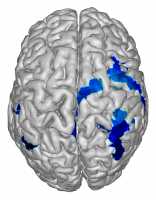
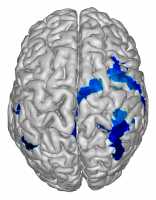 In a study of healthy volunteers, NIH researchers found that taking short breaks, early and often, may help our brains learn new skills.