Medical Equipment / 02.05.2025

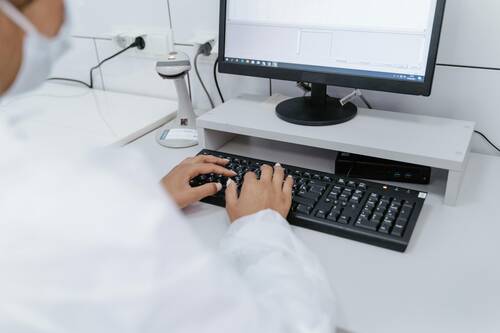
[caption id="attachment_68266" align="aligncenter" width="500"] Photo By: Kaboompics.com[/caption]

Medical devices play a vital role in modern healthcare, enhancing the ability of clinicians to diagnose, monitor, and treat a wide range of health conditions. From simple tools like thermometers to complex implants like pacemakers, each medical device follows a structured lifecycle that ensures its safety, efficacy, and compliance with regulatory standards. Understanding this lifecycle is crucial for manufacturers, regulatory bodies, and healthcare providers alike.

  1. Concept and Feasibility

The lifecycle of a medical device begins with the identification of a medical need. This could be a new method to monitor chronic disease, an improvement over existing tools, or a completely novel approach to treatment. During the concept phase, inventors, engineers, and medical experts collaborate to develop a clear understanding of the problem, explore potential solutions, and evaluate the feasibility of developing a device that addresses the identified need.

Feasibility studies often include technical assessments, market analysis, and an initial regulatory pathway review. At this stage, prototyping begins, often relying on rapid iteration techniques such as SLS 3D printing services, which allow engineers to create functional prototypes quickly and cost-effectively. Selective Laser Sintering (SLS) is particularly valuable for producing durable and precise components that can mimic final product functionality.

Race/Ethnic Diversity, Technology, Telemedicine / 20.03.2025

[caption id="attachment_67338" align="aligncenter" width="500"]health-care-inequalities Photo by Tessy Agbonome[/caption]   Healthcare inequality remains one of the most pressing global challenges, affecting billions of people worldwide. Despite advancements in medical science and healthcare infrastructure, access to quality healthcare services remains unequal across different regions, socioeconomic groups, and communities. Disparities in healthcare access, affordability, and outcomes persist due to factors such as income level, geographic location, race, gender, and social status. However, technology has emerged as a powerful tool in bridging these gaps and democratizing healthcare. From telemedicine and wearable devices to artificial intelligence (AI) and big data, innovative technologies are transforming the healthcare landscape and making healthcare more accessible, affordable, and efficient. Healthcare software developers play a crucial role in this transformation, creating the digital platforms, applications, and tools that enable these technological advancements to reach a wider audience.
Medical Devices, Technology / 14.03.2025

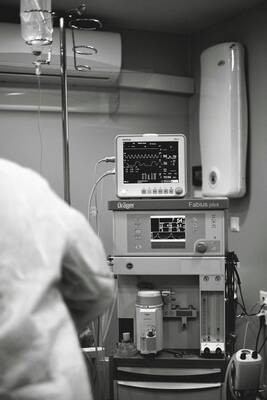
[caption id="attachment_67153" align="aligncenter" width="267"]medical-device-development Photo by Anna Shvets[/caption] In the highly regulated and rapidly evolving medical device industry, manufacturers face significant challenges in developing devices that are not only innovative but also safe, effective, and compliant with stringent regulatory requirements. Smart Reactors, a leader in medical device coating technology, offers a comprehensive suite of services designed to support medical device manufacturers throughout the entire product development lifecycle—from initial concept to commercial production and beyond. A Holistic Approach to Medical Device Development Smart Reactors has established itself as more than just a coating provider; it's a strategic partner offering end-to-end solutions that address the complex challenges of medical device development. With expertise spanning multiple medical specialties and a deep understanding of biocompatibility requirements, the company provides tailored services that ensure optimal device performance while enhancing patient safety. https://www.youtube.com/watch?v=gznPHGu11-U Prototype Coating: Building Foundations for Success At the earliest stages of device development, Smart Reactors offers specialized prototype coating services that lay the groundwork for successful product development. These services enable manufacturers to evaluate and optimize their designs before committing to larger-scale production.
Electronic Records, Mental Health Research, Technology, Telemedicine / 17.02.2025

  health-care-technology-and-burnout Physician burnout is a growing crisis in the healthcare industry, with many doctors facing overwhelming workloads, excessive administrative burdens, and emotional exhaustion. According to recent studies, nearly 50% of physicians experience symptoms of burnout, leading to reduced job satisfaction, increased medical errors, and even early retirement. Fortunately, advances in healthcare technology are helping to alleviate these stressors, allowing doctors to focus more on patient care rather than paperwork. Let's explore how modern healthcare technology is playing a crucial role in reducing physician burnout and improving overall well-being for healthcare providers.

1. Electronic Health Records (EHRs) that Prioritize Physician Efficiency

One of the biggest contributors to physician burnout is the time spent on administrative tasks, particularly electronic documentation. Traditional EHR systems have often been complex, time-consuming, and frustrating, but newer platforms are designed with physician efficiency in mind.
  • Streamlined User Interfaces  Modern EHRs now feature intuitive designs that make navigating patient records easier.
  • Voice-to-Text Documentation  AI-powered dictation tools allow doctors to document notes quickly without typing.
  • Automated Workflows  Features like auto-populating fields and predictive text reduce the time spent on repetitive data entry.
Platforms such as Elation Health are designed to simplify administrative tasks, giving physicians more time to engage with their patients. By reducing the time spent on documentation, doctors can avoid unnecessary stress and focus on what they do best: providing quality care.
Author Interviews, Technology / 28.05.2021

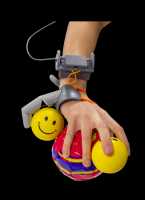
MedicalResearch.com Interview with: [caption id="attachment_57497" align="alignleft" width="150"]Dani Clode Designer & Senior Research Technician Plasticity Laboratory Institute of Cognitive Neuroscience University College London Dani Clode[/caption] Dani Clode Designer & Senior Research Technician Plasticity Laboratory Institute of Cognitive Neuroscience University College London   MedicalResearch.com: What was the inspiration behind creating the Third Thumb? [caption id="attachment_57498" align="alignleft" width="145"]Third Thumb Dani Clode Design Third Thumb Dani Clode Design[/caption] Response: From a design perspective, augmentation is about designing a new relationship with technology, creating something that is no longer just a tool for the hand, but instead an extension of the hand. I created the Third Thumb during my Design Product Masters project at the Royal College of Art (London). The Third Thumb is a flexible 3D-printed thumb extension for your hand, controlled by your toes. It is operated wirelessly with pressure sensors and affords proportional control over two degrees of freedom. The project began as a way to better understand what it was like to control something extra attached to my body. As an upper-limb prosthetics designer, I wanted to understand the unique relationship between a person and a prosthetic, it’s a relationship unlike any other product, and I wanted to explore that. The Plasticity Lab then got in contact with me after seeing the Third Thumb online, as they were already exploring augmentation in the brain. We started collaborating on this research shortly after, and I now work as an in-house designer for the Plasticity Lab, collaborating on neuroscience research.