MedicalResearch.com - Latest news, interviews, and insights into medical research, health and wellness, fitness and addiction.
AI and HealthCare, Author Interviews, Electronic Records, Technology / 02.11.2025

Medical documentation has always been one of those chores nobody really enjoys. Hours typing notes. Filling out charts. Updating records. All while patients wait, shifts keep rolling, and stress quietly creeps in. AI-powered transcription is slowly changing that. Quietly, almost invisibly. Tasks that used to feel like a slog are now happening faster, cleaner, and honestly, a lot less painfully. Speed Without Sacrificing Accuracy The biggest win? Speed. A doctor can dictate notes while seeing a patient. Minutes later, a clean transcript pops up. No more sitting at a computer after every appointment. No more juggling files. But speed alone isn’t enough. Accuracy is huge. One wrong number. One misheard symptom. And suddenly, the stakes are high. Modern AI transcription tools are actually pretty impressive. They catch tricky medical terms, common abbreviations, and sometimes even rival human transcriptionists. Some systems will even flag unclear words in real-time — little nudges that save headaches later. The mix of speed and accuracy? That’s what makes them genuinely useful. Notes happen almost automatically, letting clinicians focus on what really matters: patients. Breaking Language Barriers Healthcare doesn’t stop at borders. Clinics see patients from all sorts of backgrounds. Traditionally, that meant delays, miscommunication, and guesswork (not ideal). AI transcription is changing that. Some platforms even handle german voice to text & translate. A doctor can speak in German, and the system handles transcription and translation instantly. It’s not just faster. Notes are clearer. Staff don’t have to scramble to interpret them. Communication across languages actually improves. Multilingual transcription isn’t just a nice feature anymore — it’s becoming essential in modern healthcare. (more…)
AI and HealthCare, Author Interviews, Technology / 06.10.2025

If you ask any clinician or health system operator what changed most in the last few years, they’ll probably say this: data finally started doing real work. Not just dashboards for board slides, but near-real-time signals that redirect staffing, identify rising-risk patients, cut denials, and surface gaps in care before they become costly complications. In 2025, the healthcare data analytics market has matured enough that you no longer need to gamble on theory—you can pick partners with proven delivery and clear focus. Before we dive into the shortlist, a quick note on how I approached it. I looked for companies that build or implement modern data platforms and analytics for providers, payers, life sciences, and public health. The emphasis is on teams that actually ship working software and integrations in regulated environments, not just produce slideware. I also favored vendors with tangible healthcare footprints—FHIR, claims, EHR integrations, clinical trials, pop-health—over generalist data shops. In my own work, when organizations are starting to move beyond static reporting, I often recommend exploring healthcare data analytics consulting to understand what’s feasible with your existing data estate, and where incremental modernizations (not big-bang rewrites) can unlock the next tier of outcomes. Done well, this is the difference between another pilot and something clinicians actually use at the point of care. Healthcare Data Analytics -1 (more…)
AI and HealthCare, Author Interviews, Electronic Records, Technology / 25.09.2025

AI Clinical Notes Platforms for Clinicians Healthcare professionals spend a significant portion of their time on documentation. On average, clinicians devote 13 to 14 hours each week to paperwork outside of official work hours, a burden that contributes to burnout and fatigue across the healthcare sector. While clinical notes are essential for ensuring patient safety, care coordination, and legal compliance, the manual documentation process is time-consuming and mentally taxing. In 2025, AI-powered clinical notes platforms are transforming this workflow. These tools generate structured and accurate documentation faster, minimize administrative overhead, and enable clinicians to redirect their attention to patient care. Most platforms integrate with electronic health records (EHRs), follow HIPAA and other privacy regulations, and offer features like patient-facing summaries to support post-visit adherence. In this article, we explore the top AI clinical notes platforms available in 2025, why they matter, how to choose the right one, and what trends are shaping their continued evolution.

Best AI Clinical Notes Platforms for 2025

These AI-powered tools help clinicians save time, reduce paperwork, and improve accuracy by automatically generating structured clinical notes. This allows more focus on patient care and smoother workflows. Let’s have a look at some of the best tools:

1. Twofold

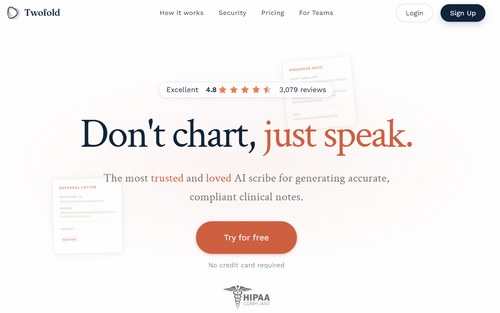
Twofold is an AI-powered medical scribe designed for clinicians who want accurate, audit‑ready documentation. Whether visits are in‑person or virtual, Twofold captures conversations, then generates structured SOAP notes, histories, care plans, and patient summaries within minutes. It supports custom templates, such as SOAP,  progress notes, etc., and works with any EHR, letting you export or sync notes directly. With Twofold, all protected health information (PHI) is secured via AES‑256 encryption, role‑based access controls, and a Business Associate Agreement (BAA) at signup. Audio is processed without being stored long‑term, and consent templates are built in, simplifying legal compliance. Clinicians often finish documentation during or immediately after patient sessions, eliminating the backlog of after‑hours charting. Twofold reduces administrative burden while maintaining clinical accuracy, letting you focus on patient care, not paperwork. (more…)
Addiction, addiction-treatment, AI and HealthCare, Technology / 01.09.2025

Risks of Getting Addiction Advice from Chat GPT.png AI shows up in headlines and daily life. People use it for school, work, and even health questions. Some chat with AI tools and grow to rely on them for connection. Many also turn to ChatGPT for help with mental health or addiction. Is AI a good place to seek support, and why are so many people choosing it?

Why Are People Using AI for Mental Health Support?

When something feels off, many people turn to the internet for answers. Whether it is anxiety or addiction, there is a lot of information online. AI tools like ChatGPT feel accessible and immediate. People who live with mental health conditions often feel isolated, and symptoms can make reaching out for help feel hard. People living with a substance use disorder may fear being judged. Neurodivergent people may find face-to-face conversations uncomfortable. Some worry about racial discrimination. ChatGPT does not require referrals or insurance, which lowers the barrier to trying it. Work with irregular hours or caregiving responsibilities can make scheduling therapy difficult. For some, access barriers are real, which makes it harder to get the care they need. ChatGPT can seem like an easy solution. It is not a therapist and does not deliver therapy. AI is often described as a mirror that reflects what a person brings to it. Media stories have raised concerns about people relying on chatbots during mental health crises. What is the reality, and can using AI this way be harmful? (more…)
AI and HealthCare, Author Interviews, Cannabis, Pharmacology, Technology / 28.08.2025

MedicalResearch.com Interview with: Duncan Dobbins, PharmD, MHI Geisinger College of Health Sciences Scranton, Pennsylvania MedicalResearch.com: What prompted this commentary, and what did you find? Response: In theory, there could be a drug interaction between immunotherapy and medical cannabis. A small (N=102) observational report from Israel appeared to find that immunotherapies worked much less well in cancer patients who also used medical cannabis.1 However, a follow up report2 took about two weeks and involved manually rechecking the math and data-analysis. Several discrepancies emerged between the methods and results. Two-tailed tests were listed in the methods yet one-tailed p values appeared in the results. Arithmetic errors, some traceable to unconventional “floor” rounding, affected key percentages. Multiple p values in Table 1 (21 out of 22) could not be reproduced with the stated tests. Finally, smoking status, a key confound, was not reported. Taken together, these issues complicate interpretation and highlight how small computational slips can cascade into larger inferential uncertainty. For this follow-up report, I was asked, “Do you think AI could have double checked this math?” (more…)
AI and HealthCare, Electronic Records, Medical Billing / 12.07.2025

Data fragmentation among EHRs, claims, and device feeds presents enormous issues for healthcare businesses. A comprehensive approach based on healthcare data aggregation and backed by a digital health platform is needed to address this. Providers can improve productivity and outcomes by integrating disparate information using a uniform data model, improved lakehouse architecture, semantic curation, and AI enrichment. records-healthcare-aggregation The healthcare sector lacks insights despite the volume of data. Because data is scattered across EHRs, claims, devices, and patient-reported systems, clinicians often do not have a complete picture of the patient. This fragmentation leads to delays, inefficiencies, and missed opportunities for early action. A truly connected environment requires meaningful healthcare data aggregation that can standardize, curate, and activate data across the care continuum. The cornerstone of this shift is the use of a robust digital health platform that can combine data from several sources into a single, intelligent stream. Data fragmentation causes needless expenses, delays the delivery of treatment, and impairs decision-making. When important information is scattered between payer files, EHRs, siloed systems, and remote monitoring platforms, clinicians are operating blindly. This challenge affects every touchpoint of patient care. Solving this calls for an advanced aggregation architecture that consolidates and refines all clinical, claims, and device data into a single intelligent patient view. The foundation of this transformation is a Healthcare data platform built for real-time intelligence, not just storage. (more…)
AI and HealthCare, Medical Equipment / 11.07.2025

Remote monitoring is rapidly becoming a central component of modern clinical research. Driven by advancements in digital health technologies, wearable sensors, and telecommunication platforms, remote monitoring allows investigators to collect real-time patient data without requiring participants to travel to study sites. This shift toward decentralized clinical trials and virtual monitoring has significant implications for the future of research—making studies more accessible, cost-effective, and representative. At its core, remote monitoring involves the collection of health-related data from participants outside of traditional clinical settings, using connected devices such as smartwatches, mobile apps, biosensors, and electronic health records (EHRs). Data collected may include vital signs, medication adherence, physical activity, symptom reporting, or even biometric data such as ECGs or glucose levels. The COVID-19 pandemic accelerated the adoption of remote monitoring, revealing both its vast potential and practical limitations. In 2025 and beyond, the challenge lies in striking a balance—leveraging the benefits while addressing regulatory, technical, and ethical complexities. (more…)
AI and HealthCare / 27.06.2025

Over the past decade, artificial intelligence (AI) and machine learning (ML) have been hailed as game-changers across multiple industries, and healthcare is no exception. From diagnostic imaging to personalized treatments, AI is transforming how we understand and treat disease. Among the most promising areas is clinical research—where AI and ML are touted as tools to make trials faster, smarter, and more efficient. But as the buzz around these technologies grows, so does skepticism. Are we really witnessing a revolution in clinical trials, or is much of the talk around AI still more hype than reality?

The Promises of AI in Clinical Research

AI’s application in clinical trials spans a wide array of use cases. One of the biggest promises lies in patient recruitment and matching. Traditional recruitment methods often lead to delays, with over 80% of trials failing to meet enrollment timelines. AI, through natural language processing (NLP) and predictive modeling, can scan electronic health records (EHRs) and other datasets to identify eligible participants with remarkable speed and accuracy. Beyond recruitment, AI is being used to optimize protocol design, predict patient dropout rates, monitor adverse events in real-time, and even simulate synthetic control arms to reduce placebo usage. Machine learning algorithms can also mine historical trial data to detect patterns or predict success probabilities, potentially saving millions in drug development costs. (more…)
AI and HealthCare, Author Interviews, Genetic Research, Neurology / 17.06.2025

MedicalResearch.com Interview with: Prof.  Amy Kuceyeski Ph.D. Professor of Mathematics in Radiology and Neuroscience Weill Cornell Medicine MedicalResearch.com: What is the purpose of the Krankencoder tool? Response: The Krakencoder is a tool that allows us to compactly represent brain networks, or the connections between different parts of the brain. This compact representation helps us to take a step toward achieving the goal of understanding how complex human behavior, like thinking, social interactions, and emotion, arise from the complex network that is the human brain. (more…)
AI and HealthCare, Technology / 02.06.2025

The Evolution of Clinical Decision Support 

Clinical decision support systems (CDSS) have been essential in healthcare, helping clinicians make informed choices with timely, evidence-based data. Traditional systems, however, often rely on fixed rules and limited data, limiting their impact in complex cases.  AI integration is changing this. Advanced technologies like machine learning and natural language processing now analyze vast and varied data, from health records to medical images and genomics, enabling smarter, personalized insights.  AI platforms assist radiologists by quickly detecting critical conditions in imaging. These AI-enhanced tools are becoming true partners in care—improving diagnoses, tailoring treatments, and streamlining workflows. In this article, we explore how AI is changing clinical decision support and driving better healthcare outcomes.  ai-powered-clinical-decisions.png

AI Transforming Diagnosis and Treatment 

AI-powered clinical decision support tools analyze a wide range of data—from patient records and lab results to medical imaging and genetics—to reveal insights that can be easily missed. This deep analysis helps clinicians detect diseases earlier and diagnose conditions more accurately.  For example, advanced algorithms can identify subtle abnormalities in imaging scans, supporting radiologists in detecting cancers or vascular issues with greater precision. Beyond diagnosis, AI assists in creating personalized treatment plans that reflect the latest research and patient-specific factors.  By enhancing clinical judgment with these data-driven insights, AI tools enable faster, more informed decisions that contribute to improved patient outcomes and reduced errors.  (more…)
AI and HealthCare, Health Care Workers, Technology / 11.03.2025

Technology is no longer a futuristic concept in healthcare — it's the present reality, reshaping everything from patient care to administrative tasks. This rapid evolution creates both challenges and unprecedented opportunities for those in healthcare careers. Understanding how technology impacts these roles is crucial for anyone looking to thrive in this dynamic field.

The Rise of the Machines? How Automation Is Reshaping Traditional Roles

Automation is changing the landscape, impacting tasks previously considered exclusively human. As a result, many healthcare jobs are in danger of going extinct. How are roles adapting?

The Digitalization of Healthcare Administration

Gone are the days of endless paper files and manual data entry. Electronic Health Records (EHRs) are now standard, streamlining workflows and making patient information readily accessible. This shift requires healthcare administrators to be tech-savvy, adept at managing digital systems and ensuring data security. Skills like data analysis and cybersecurity are now highly valued in administrative roles. Tasks like scheduling, billing, and insurance claims are increasingly automated, freeing up staff to focus on patient interaction and complex problem-solving. (more…)
AI and HealthCare, Technology / 04.03.2025

The healthcare industry just like other sectors is witnessing an increase in interactivity among websites. The advancement of artificial intelligence (AI) has transformed website chatbots while enhancing patient engagement and administrative process efficiency as well as medical information accessibility. ai-changing-healthcare-chatbots.png Medical organizations must provide efficient, patient-focused services while managing ongoing performance demands. AI-powered chatbots eliminate some healthcare provider workloads by executing tasks and giving live support and patient assistance. These digital assistants use automated systems that drive significant changes to healthcare services through appointment scheduling alongside symptom assessment.

Chatbots in Healthcare

AI-based chatbots serve as essential elements within healthcare through their ability to deliver personalized immediate support to healthcare recipients. Virtual health assistants perform multiple tasks, including answering health-related questions, processing booking requests, and resolving payment inquiries. The automated system decreases administrative tasks and maintains quick patient information delivery. Healthcare chatbots demonstrate a strong level of market expansion. The 2022 global market evaluation placed it at $195.85 million while experts predict this number will expand to $1.168 billion by 2032. The healthcare sector continues to adopt AI technologies for healthcare because providers understand how chatbots improve both efficiency and reduce costs. Hospital systems that choose to implement AI-powered chatbots should model their nonprofit website design to assist in increasing chatbot performance. Healthcare providers achieve better patient engagement together with service efficiency when they establish smooth integration between their systems and AI chatbots.  (more…)
AI and HealthCare, Health Care Systems, Technology / 20.12.2024

In today’s rapidly evolving healthcare landscape, artificial intelligence (AI) has emerged as a transformative force, redefining how hospitals operate and deliver care. With the growing complexity of healthcare systems, the need for smarter, faster, and more efficient operations has become paramount. AI is not just a tool for automation—it is a catalyst for improving patient outcomes, streamlining processes, and empowering healthcare professionals.

AI: The Backbone of Modern Hospital Operations

“Artificial intelligence in hospitals goes beyond robotic surgeries or AI-assisted diagnostics. It forms the backbone of operational efficiency, addressing challenges like overcrowding, miscommunication, and inefficiencies in resource allocation. By leveraging advanced machine learning algorithms, AI systems analyze vast amounts of data, identify patterns, and recommend actionable solutions,” shares Tiffany Payne, Head of Content at PharmacyOnline.co.uk For example, hospitals can now predict patient admission rates using historical data, seasonal trends, and real-time analytics. This allows administrators to allocate resources—like beds, staff, and equipment—more effectively, ensuring patients receive timely care. AI-driven operational systems also reduce the cognitive load on healthcare staff by automating routine decision-making. This frees up doctors, nurses, and administrators to focus on more complex tasks, ultimately enhancing the quality of care provided. (more…)
AI and HealthCare, Author Interviews, Breast Cancer, Genetic Research / 06.11.2024

MedicalResearch.com Interview with: Prof. Dina Schneidman-Duhovny PhD Academic researcher Hebrew University of Jerusalem MedicalResearch.com: What is the background for this study? What are the main findings? Response: The study analyzed genetic data of 12 families (~ 40 patients) with high incidence of breast cancer cases. Most families originate from ethnic groups that are poorly represented in public resources. All participants were tested negative to all known breast cancer predisposing genes. We developed a novel approach to study genetic variants utilizing state-of-the-art deep learning models tailored for analysis of familial data. The study highlighted 80 high-risk genes (out of > 1200 genes) and narrowed down on a group of 8 genes circulating in 7 out of 12 families in the study. These genes are involved in a cellular organelle called the peroxisome and play a role in fatty acids metabolism. We show that  these genes significantly affect breast cancer survival and use 3-dimensional protein structural analysis to illustrate the effect of some of the variants on protein structure. These provide strong evidence of the peroxisome involvement in breast cancer predisposition and pathogenicity, and provide potential targets for patient screening and targeted therapies. (more…)
AI and HealthCare, Technology / 12.09.2024

Integrating artificial intelligence (AI) into healthcare has opened numerous doors for improving efficiency and patient care. ChatGPT, an AI language model that can process and generate human-like text, is among the most promising advancements in AI-driven tools. Chat GPT for medical professionals is emerging as an innovative way to streamline workflows, assist with medical research, and enhance patient communication. This article delves into ChatGPT's opportunities for healthcare, its current use cases, and how it can transform the medical field. chat-gpt-image (more…)
AI and HealthCare, Author Interviews, Technology / 29.07.2024

Imagine a world where your health plan is as unique as your fingerprint. That's not a far-off dream - it's happening right now. In 2022, the global wellness industry hit a staggering $5.6 trillion, showing just how much people care about their health. But here's the thing: we're all different. What works for your neighbor might not work for you. That's where personalized wellness plans come in, and they're getting a big boost from technology. Think of it as having a super-smart health coach in your pocket. Thanks to AI in healthcare, we can now crunch huge amounts of data to create health plans that fit you perfectly. From your DNA to your daily habits, these tech tools consider it all. This article will explore how these amazing technological advancements are changing the game in wellness. We'll see how they're making it possible to create health strategies that are truly tailored to you, helping everyone live their best, healthiest life. (more…)