
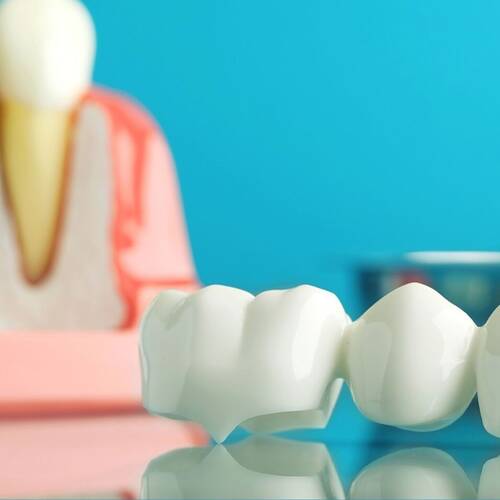
23 Jun Osseointegration: How Dental Implants Bond to Bone
Osseointegration: The Science Behind How Implants Bond to Bone
Dental implants work because of a biological phenomenon that, when it was first understood, seemed almost too convenient to be true: living bone will accept and fuse with a piece of titanium as if it belonged there. That process is called osseointegration, and it is the quiet foundation beneath every successful implant. Understanding it explains both why implants are so durable and why the procedure has to be done with such care.
A Discovery by Accident
The story behind osseointegration is a favorite in dental science because nobody set out to find it. In the mid-twentieth century, Per-Ingvar Brånemark, a Swedish researcher studying blood flow in bone, placed titanium chambers into bone tissue for observation. When the time came to remove them, he found they had become firmly anchored — fused to the surrounding bone in a way that could not easily be undone. What started as an inconvenience turned into one of the most important insights in modern dentistry.
That accidental finding reframed what was possible. If titanium could integrate with living bone reliably, it could serve as an artificial tooth root, anchored directly in the jaw rather than resting on top of the gum. The entire field of implant dentistry grew from that realization.
What Actually Happens at the Bone
Osseointegration is not glue and it is not a mechanical clamp. It is a genuine biological process unfolding at the surface where metal meets bone. After an implant is placed, the body responds to it much as it would to a healing site. Bone-forming cells migrate toward the implant surface, lay down new bone matrix, and gradually build a direct structural connection between the living bone and the titanium.
Over a period of weeks to months, that connection matures. The bone health around the implant remodels, locking it in place at a microscopic level. The result is an anchor that can withstand the substantial forces of chewing, because the load is transmitted directly into the bone, distributing stress the way a natural root would.
Why Titanium
Titanium earned its central role for a reason. It is biocompatible, meaning the body tolerates it without mounting the kind of rejection response it would against many foreign materials. It also forms a stable oxide layer on its surface that the bone readily bonds to. More recently, zirconia has entered the picture as an alternative for certain cases, but titanium’s track record across decades of research and use remains the benchmark. Those interested in how the materials compare can read more about the science behind it here.
The Conditions That Make It Work
Osseointegration is reliable, but it is not automatic. Several conditions influence whether it succeeds:
- Bone quantity and quality: there must be enough healthy bone for the implant to integrate with, which is why some patients need grafting first.
- Stability at placement: the implant needs to sit securely from the start, since excessive movement during healing disrupts bone formation.
- A clean, controlled environment: infection at the site is a major threat to integration.
- Patient health and habits: conditions affecting healing, and especially smoking, can compromise the process.
This is why implant placement is approached methodically, with imaging, planning, and often a healing period before the final crown is attached. The biology needs the right conditions to do its work.
Why the Healing Period Matters
Patients sometimes wonder why they cannot simply receive a tooth the same day in every case. The answer lies in osseointegration’s timeline. While some situations allow for immediate placement of a temporary restoration, the underlying fusion of bone to implant takes time to develop the strength needed for full function. Rushing that process risks loosening the implant before the bond has matured. The wait is the biology, not bureaucracy.
The Payoff in Longevity
Once osseointegration is complete, the result is remarkably durable. Because the implant is fused into the bone rather than sitting on it, well-integrated implants boast strong long-term survival rates across the research literature. That durability is the direct dividend of the biological bond, and it is a large part of why implants are considered a long-term solution rather than a temporary fix.
An Evolving Science
What is striking is that osseointegration research has not stood still since that first accidental discovery. Implant surface textures have been refined to encourage faster, stronger bone attachment. Imaging and digital planning have made placement more precise, improving the stability that integration depends on. Even the understanding of how factors like systemic health affect healing has sharpened. The core biology is the same, but the conditions clinicians can now create around it have steadily improved the odds — which is part of why modern success rates are as strong as they are.
The Bigger Picture
Osseointegration is one of those quiet scientific principles that most people benefit from without ever knowing its name. It transformed tooth replacement from something that sat awkwardly on the surface of the mouth into something anchored within it, capable of functioning like the real thing for many years. A chance observation in a bone-blood-flow study became the bedrock of a treatment that has restored function and confidence for millions — all because living bone, given the right partner, is willing to bond with metal.
Disclaimer: The information on MedicalResearch.com is provided for educational purposes only, and is in no way intended to diagnose, cure, or treat any medical or other condition. Opinions expressed are those of the Contributing Writer and do not represent the views of MedicalResearch.com or Eminent Domains Inc. Some links are sponsored. Products, services and providers are not warranted or endorsed by MedicalResearch.com or Eminent Domains Inc. Always seek the advice of your physician or other qualified health provider and ask your doctor any questions you may have regarding a medical condition. In addition to all other limitations and disclaimers in this agreement, service provider and its third party providers disclaim any liability or loss in connection with the content provided on this website.
Last Updated on June 23, 2026 by Marie Benz MD FAAD