
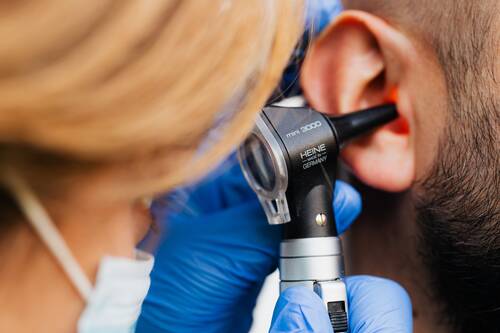
09 Nov Cerumen Impaction: What the Evidence Says About Causes, Risks and Removal
Ear Health Notice: This article is for general information only and is not medical advice. Do not insert cotton buds or other objects into the ear canal, and do not use ear candles. Do not use drops or irrigation at home if you have, or may have, a perforated eardrum, ear tubes (grommets), previous ear surgery, or ear pain or discharge. People with diabetes or a weakened immune system should see a clinician before trying home treatment. Seek prompt medical care for ear pain, discharge, bleeding, fever, dizziness, or sudden hearing loss. Sudden hearing loss in one ear should be assessed urgently.
Editorial Notice: Clinics and providers named or linked in this article are not warranted or endorsed by MedicalResearch.com or Eminent Domains Inc.
Ear wax is one of the most common reasons people visit a primary care clinic or audiologist, and one of the most misunderstood. It is routinely treated as dirt to be scrubbed away, when in physiological terms it is a protective secretion with a self-clearing mechanism that works well for most people most of the time.
Problems arise when that mechanism is disrupted or overwhelmed, producing impaction. This article summarises what is generally understood about cerumen, why impaction occurs, who is most at risk, and how the main removal methods compare, drawing on guidance published by otolaryngology and audiology bodies.
What Cerumen Is and Why the Ear Produces It
Cerumen is a mixture of secretions from the ceruminous and sebaceous glands in the outer third of the ear canal, combined with shed skin cells and, often, trapped hair and debris. Its composition gives it several functions. It is slightly acidic and contains antimicrobial components, which helps discourage bacterial and fungal growth. It lubricates the canal skin, preventing dryness and itching. And it traps dust and particles before they reach the eardrum. Genetics influences its texture, with a wet, sticky type predominating in people of European and African ancestry and a dry, flaky type more common in East Asian populations.
The Self-Cleaning Mechanism
The skin of the ear canal migrates outward from the eardrum, at a slow pace often compared to fingernail growth, carrying wax with it toward the opening, where jaw movement during talking and chewing helps work it loose. In an ear that functions normally, wax leaves on its own and nothing needs to be done. This is the basis of the frequently repeated clinical advice that the ear canal should be left alone, and it is why most guidelines describe routine cleaning of a healthy ear as unnecessary.
Why Impaction Happens
Impaction is generally defined as an accumulation of cerumen that causes symptoms, prevents a necessary examination of the ear, or both. Several factors interfere with normal clearance. The most common is instrumentation: cotton buds, hairpins, fingers and similar objects tend to push wax deeper and compact it against the eardrum, while also irritating the canal skin and stimulating further production. Hearing aids and earplugs block the exit and can have a similar effect.
Narrow or unusually shaped canals, excessive hair in the canal, and skin conditions such as eczema or psoriasis all reduce clearance. Older adults are affected more often because the glands produce drier wax, migration slows, and canal hair becomes coarser. Studies of institutionalised elderly populations have found impaction rates well above those in the general population.
Symptoms and Consequences
The characteristic symptom is a sense of fullness or blockage, often with a measurable conductive hearing loss once the canal is substantially occluded. Tinnitus, itching, discomfort, cough triggered by stimulation of the vagal branch in the canal, and a feeling of imbalance are also reported. In people who wear hearing aids, impaction is a frequent cause of feedback and reduced performance.
There is a body of research suggesting that unrecognised hearing loss, including the reversible loss caused by wax, is associated with poorer cognitive performance and social withdrawal in older adults, which is one reason screening in that population is recommended.
Comparing Removal Methods
Three main approaches are described in the literature, and each has a place.
Cerumenolytic Drops
Cerumenolytic drops, whether water based, oil based or a proprietary preparation, soften wax and may allow it to clear on its own. Systematic reviews have generally found that drops are more effective than no treatment but have not shown that any one type is clearly superior to another. They are a reasonable first step for mild cases and are often used to prepare the ear for another method.
Irrigation
Irrigation, using warm water delivered by syringe or a controlled pressure device, has a long history and is widely available in primary care. It is effective in many cases but carries recognised risks, including perforation of the eardrum, infection, and vertigo if the water temperature is not close to body temperature. It is contraindicated where there is a known or suspected perforation, previous ear surgery, or a history of recurrent outer ear infection.
Microsuction
Microsuction, performed under direct magnified vision with a fine suction tip, is increasingly the method preferred by audiologists and ear specialists. Because the clinician can see the canal throughout, it allows controlled removal, works where irrigation is contraindicated, and avoids introducing water. Reported disadvantages include noise, which some patients find uncomfortable, and brief dizziness. Access depends on availability of trained practitioners and equipment, which is why clinics offering ear wax removal in Auckland and comparable cities have expanded in recent years.
What Clinical Guidelines Generally Advise
Published guidance from professional bodies tends to converge on several points. Asymptomatic wax that does not obstruct examination should be left alone. Patients should be discouraged from inserting objects into the ear. Clinicians should ask about hearing aid use and skin conditions when assessing recurrent impaction. Removal should be performed by someone trained in the chosen method, with the method selected according to the patient’s history and the condition of the canal. The AAO-HNS (American Academy of Otolaryngology–Head and Neck Surgery) notes that manual removal is preferred when the canal is narrow, the eardrum has a perforation or tube, or a person has diabetes or a weakened immune system.
Patients with recurrent impaction benefit from a planned schedule of review rather than waiting for symptoms to become severe. Ear candling is specifically advised against, with studies finding no evidence of benefit and documented cases of burns and canal obstruction by candle wax.
Implications for Patients and Clinicians
For the general public, the practical message is simple: leave a healthy ear alone, avoid cotton buds, and seek a professional assessment if fullness, hearing change or discomfort develops rather than attempting removal at home. If you have blocked ears, a hearing care professional can review your symptoms and medical history to recommend a suitable earwax removal method. An audiologist in Auckland or your local hearing specialist can advise whether microsuction is appropriate and whether you also need a hearing assessment.
Cerumen impaction is minor in the hierarchy of ear conditions, but because it is so common and so readily reversible, managing it well has an outsized effect on quality of life, particularly for older adults.
For a broader overview of everyday ear care, see this MedicalResearch.com overview of tips for maintaining healthy ears.
The information on MedicalResearch.com is provided for educational purposes only, and is in no way intended to diagnose, cure, or treat any medical or other condition. Some links are sponsored. MedicalResearch.com and Eminent Domains Inc. do not warrant or endorse products or claims made by third party links. Always seek the advice of your physician or other qualified health provider and ask your doctor any questions you may have regarding a medical condition. In addition to all other limitations and disclaimers in this agreement, service provider and its third party providers disclaim any liability or loss in connection with the content provided on this website.
Last Updated on November 9, 2026 by Marie Benz MD FAAD