
20 Oct Can AI Replace Human Touch in Healthcare? The Future of Physical Therapy and Massage
Editorial Notice: This post is for general information only and is not medical or career advice. Requirements for healthcare training and licensure vary by state. In the U.S., physical therapist assistants must generally graduate from a CAPTE-accredited program and pass a licensing exam, and massage therapy licensing rules differ from state to state. Before enrolling in any program, confirm its accreditation and whether it meets the licensing requirements where you plan to work. Programs named or linked in this post are not warranted or endorsed by MedicalResearch.com or Eminent Domains Inc.
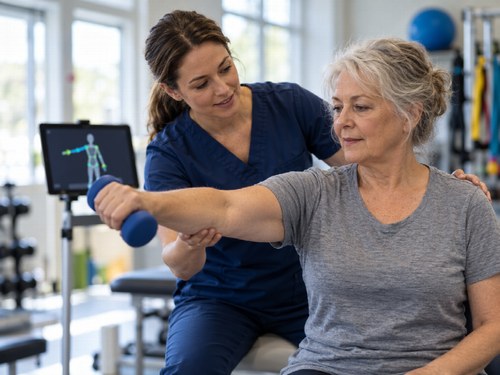
Imagine visiting a rehabilitation clinic where artificial intelligence analyzes your movements, identifies potential problems, and recommends exercises within seconds. A digital assistant tracks your recovery, while sophisticated software adjusts your treatment plan.
Now imagine that same system trying to recognize your hesitation, understand your fear of reinjury, or reassure you during a painful recovery.
This is where the future of healthcare becomes complicated.
Artificial intelligence is transforming how healthcare professionals assess patients, monitor progress, and deliver treatment. Physical therapy and massage therapy are increasingly encountering technologies that promise greater precision, efficiency, and accessibility.
But an important question remains: Can technology truly replace the human touch that makes rehabilitation effective?
The answer may reveal more about the future of healthcare careers than the technology itself.
How Is AI Changing Physical Therapy?
Physical therapy has traditionally relied on observation, clinical assessment, guided movement, and ongoing communication between patients and healthcare professionals.
AI introduces new opportunities to support these activities. Advanced systems can analyze movement patterns, recognize changes in physical performance, and help clinicians monitor rehabilitation exercises outside traditional treatment settings.
Some promising applications include:
- Movement analysis: Computer vision can assess posture, joint movements, and exercise performance.
- Personalized rehabilitation: Software may help clinicians adjust exercise recommendations using patient progress data.
- Remote monitoring: Wearable sensors can collect information about physical activity and recovery between appointments.
- Progress tracking: Digital platforms can organize rehabilitation measurements and highlight changes over time.
- Administrative assistance: AI tools may help reduce documentation and scheduling burdens.
These technologies could be especially valuable for individuals who face transportation difficulties or have limited access to rehabilitation services.
However, technological capability does not automatically translate into better patient outcomes. Research on AI-supported physical rehabilitation has identified promising applications, but clinical findings remain mixed, and stronger real-world evaluations are needed.
AI can provide useful information. Determining what that information means for an individual patient remains a clinical responsibility.
Can AI Replace Physical Therapists?
Consider two patients recovering from similar knee injuries.
Both demonstrate comparable movement limitations and receive similar rehabilitation recommendations. Yet one confidently completes the prescribed exercises, while the other hesitates because of a previous painful experience.
An algorithm might identify the same physical limitations in both patients. A skilled rehabilitation professional can also explore their concerns, observe subtle behavioral differences, and adapt communication accordingly.
This distinction highlights several aspects of rehabilitation that cannot simply be reduced to measurements:
- Recognizing discomfort that patients struggle to describe
- Building confidence after injury or surgery
- Adjusting techniques based on immediate patient responses
- Understanding personal goals and emotional concerns
- Encouraging consistency throughout a difficult recovery
Physical therapists also make clinical decisions involving medical histories, symptoms, and safety considerations that require professional judgment.
AI may become increasingly sophisticated at supporting these decisions, but current evidence does not establish that it can independently replace comprehensive, human-led rehabilitation.
The more realistic future involves clinicians using AI to strengthen care rather than surrendering clinical responsibility to technology.
AI vs. Human Therapists: What Can Each Do?
Although AI and healthcare professionals can sometimes perform related tasks, their capabilities differ significantly. The following comparison illustrates where technology can provide support and where professional expertise remains essential.
| Aspect of Care | Artificial Intelligence | Human Professionals |
|---|---|---|
| Movement Analysis | Tracks measurable movement patterns | Interprets movement alongside symptoms |
| Treatment Planning | Suggests data-driven adjustments | Makes individualized clinical decisions |
| Emotional Support | Offers automated communication | Responds to fears and concerns |
| Hands-On Treatment | Limited to specialized devices | Provides skilled physical interventions |
| Progress Monitoring | Analyzes recorded rehabilitation data | Evaluates physical and personal progress |
| Patient Safety | Identifies predefined warning patterns | Applies judgment to complex situations |
The comparison highlights an important point: AI is particularly useful for processing measurable information, while healthcare professionals integrate that information with clinical experience and patient needs. Combining these strengths may help improve rehabilitation services without compromising individualized care.
Why Does Human Touch Still Matter in Rehabilitation?
Human touch in healthcare serves both practical and interpersonal purposes.
In physical therapy, hands-on techniques may help professionals assess movement, guide positioning, or deliver appropriate manual interventions. In massage therapy, touch is a fundamental component of the intervention.
However, physical contact should not be confused with guaranteed therapeutic benefit. The effectiveness of any technique depends on the patient’s condition, the treatment selected, and the available clinical evidence.
For patients recovering from injury or surgery, rehabilitation is not simply about completing exercises. It also involves trust, reassurance, and feeling understood throughout the recovery process.
While AI can measure physical progress and identify patterns, healthcare professionals can interpret these findings alongside a patient’s concerns, comfort level, and individual circumstances.
This combination of clinical expertise and human connection remains an important part of patient-centered rehabilitation.
Will AI Change Physical Therapy and Massage Therapy Jobs?
The rise of artificial intelligence raises an understandable concern for students and healthcare workers: Will these careers still be relevant in the next decade?
Current technological developments suggest that many rehabilitation jobs may evolve rather than disappear entirely.
AI could increasingly handle documentation, analyze exercise performance, and support routine progress monitoring, allowing professionals to concentrate on responsibilities that require direct patient interaction.
As a result, future rehabilitation professionals may benefit from developing three essential skills:
- Clinical judgment: Understanding when technology-generated recommendations are appropriate.
- Patient communication: Building trust and responding to individual concerns.
- Digital literacy: Using healthcare technologies effectively while recognizing their limitations.
For individuals considering rehabilitation-related careers, this creates an important educational question: What skills will remain valuable as technology evolves?
People researching physical therapy assistant programs online should carefully distinguish between physical therapist assistant and physical therapy aide pathways, which have different responsibilities and educational requirements. The APTA (American Physical Therapy Association) describes the roles, training and licensing requirements for each.
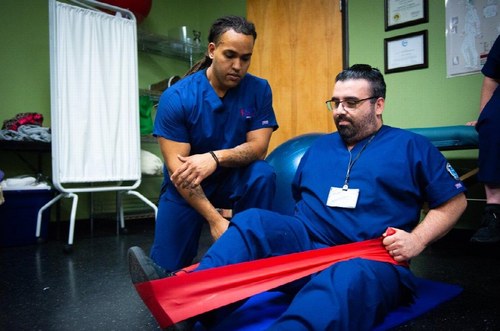
Online learning can provide flexibility for theoretical instruction, but practical skills and supervised experience remain important considerations when evaluating healthcare training.
Similarly, prospective massage practitioners exploring online massage therapy courses should consider how anatomy instruction, practical techniques, supervised learning, and applicable licensing requirements fit together.
The goal is not simply to become comfortable using digital tools. It is to develop the professional skills necessary to deliver safe, responsive, patient-centered services alongside advancing technology.
What Are the Biggest Risks of AI in Rehabilitation?
Although AI offers promising opportunities, healthcare organizations must address several challenges before relying heavily on automated systems.
- Data privacy: Movement recordings, health histories, and rehabilitation measurements require appropriate safeguards.
- Algorithmic bias: Systems trained on limited patient populations may perform differently across ages, disabilities, and clinical conditions.
- Overreliance on automation: Clinicians must be able to question recommendations that conflict with patient symptoms or professional judgment.
- Unequal accessibility: Patients without reliable internet access, suitable devices, or digital literacy may struggle with technology-dependent care.
- Limited clinical validation: Not every promising rehabilitation application has demonstrated meaningful improvements in patient outcomes.
These concerns make responsible implementation essential.
Healthcare organizations should assess whether a technology genuinely improves care rather than adopting it simply because it is new.
The Future of Rehabilitation: AI and Human Expertise Working Together
The future of rehabilitation lies in combining AI-powered technology with human expertise. While AI can improve movement analysis, monitor recovery, and support treatment planning, healthcare professionals remain essential for clinical judgment, hands-on care, and patient communication.
For physical therapy and massage therapy, the goal is not to replace human touch but to use technology to deliver safer, more personalized, and effective rehabilitation services.
For a broader overview of AI in medicine, see this MedicalResearch.com overview of AI in medicine.
The information on MedicalResearch.com is provided for educational purposes only, and is in no way intended to diagnose, cure, or treat any medical or other condition. Some links are sponsored. MedicalResearch.com and Eminent Domains Inc. do not warrant or endorse products or claims made by third party links. Always seek the advice of your physician or other qualified health provider and ask your doctor any questions you may have regarding a medical condition. In addition to all other limitations and disclaimers in this agreement, service provider and its third party providers disclaim any liability or loss in connection with the content provided on this website.
Last Updated on October 20, 2026 by Marie Benz MD FAAD