
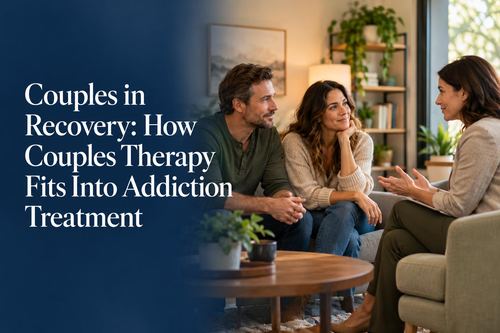
29 Oct Couples in Recovery: How Couples Therapy Fits Into Addiction Treatment
Substance Use Notice: Couples therapy supports, but does not replace, individual addiction treatment. Stopping alcohol, benzodiazepines, or opioids suddenly can cause dangerous withdrawal, so seek medical guidance. For confidential help finding treatment, call the SAMHSA National Helpline at 1-800-662-4357 (24/7). If you are in crisis, call or text 988. If you feel unsafe in your relationship, call 911 or the National Domestic Violence Hotline at 1-800-799-7233 (text START to 88788).
Editorial Notice: This article is for general information and is not specific medical advice. Treatment programs and providers named or linked in this article are not warranted or endorsed by MedicalResearch.com or Eminent Domains Inc.
Addiction rarely affects only one person. When someone struggles with drugs or alcohol, their partner often carries a heavy burden: worry, broken trust, financial stress, and emotional exhaustion. Even after treatment begins, relationship strain can remain a powerful source of stress, and sometimes a relapse trigger.
That is why many outpatient addiction programs include couples therapy as part of treatment. Here is how couples therapy works and why it can make a meaningful difference.
Programs such as Renova Recovery in Brick Township, New Jersey, build couples work into outpatient care so that both partners can take part in the recovery process.
How Addiction Affects Relationships
Couples affected by addiction often experience:
- Broken promises and lost trust
- Frequent arguments or avoidance of conflict
- Financial strain
- Emotional distance and loneliness
- Secrecy and dishonesty
- Imbalanced responsibilities
Over time, both partners may develop patterns that keep problems going, even if neither intends to.
Why Couples Therapy Can Help
It Supports Recovery
Research on approaches such as behavioral couples therapy has found that involving a partner in treatment can improve outcomes, including reduced substance use and better relationship satisfaction. The NIDA (National Institute on Drug Abuse) lists behavioral couples therapy among its evidence-based approaches to addiction treatment.
It Rebuilds Trust
Trust is often one of the biggest casualties of addiction. Couples therapy creates a structured space to work on honesty, consistency, and repair.
It Improves Communication
Couples learn healthier ways to express needs, resolve conflict, and listen.
It Supports Both Partners
The partner who is not in treatment often needs support too. Couples therapy acknowledges their experience and helps them care for themselves.
Renova Recovery offers couples therapy alongside individual, group, and family therapy, along with CBT, DBT, and relapse prevention, as part of its addiction therapy services.
What Couples Therapy Looks Like
Sessions are guided by a trained clinician and may include:
- Learning about addiction and recovery
- Identifying patterns that contribute to conflict
- Practicing communication skills
- Creating agreements around sobriety and support
- Planning how to handle stress and triggers
- Rebuilding positive shared activities
Couples therapy is not about assigning blame. It focuses on understanding and building a healthier partnership.
Common Challenges Couples Face in Recovery
Rebuilding Trust Takes Time
Partners may feel hopeful and skeptical at the same time. Trust grows through consistent actions over time.
Adjusting Roles
During active addiction, one partner may have taken on more responsibilities. Recovery often means renegotiating roles.
Managing Fear of Relapse
Partners may worry about relapse. Open communication and a shared plan can help.
Addressing Resentment
Hurt and anger may surface as recovery progresses. Therapy provides a safe place to work through these feelings.
A Closer Look at Behavioral Couples Therapy
Behavioral couples therapy is one of the most studied approaches for couples affected by substance use. It often includes a daily “recovery contract,” in which the partner in treatment states an intention to stay sober and the other partner expresses support. Couples also practice positive communication, plan shared activities, and learn to address problems without blame. These structured steps help replace patterns of conflict with patterns of cooperation.
Couples Therapy and Family Life
When children are involved, couples therapy can also help parents create a more stable home. Learning to communicate calmly, resolve conflict, and work as a team benefits not only the relationship but also the children who are affected by the tension that addiction often brings.
Taking Care of the Non-Using Partner
Partners of people in recovery often put their own needs aside for a long time. Support groups such as Al-Anon, individual therapy, and time for self-care can help partners recover from the stress of active addiction and participate in the relationship from a healthier place.
When Both Partners Struggle
Sometimes both partners use substances. Couples therapy can still help, especially when combined with individual treatment for each person. Supporting each other’s recovery can strengthen the relationship.
When Couples Therapy May Not Be Appropriate
If there is domestic violence or safety concerns, couples therapy may not be the right approach. Individual support and safety planning should come first. The National Domestic Violence Hotline (1-800-799-7233) offers confidential help with safety planning.
How Partners Can Support Recovery
- Learn about addiction and recovery
- Encourage participation in treatment
- Avoid enabling behaviors
- Set healthy boundaries
- Take care of your own wellbeing
- Celebrate progress together
Building a Stronger Future Together
Addiction can strain even the strongest relationships, but recovery offers a chance to rebuild. With couples therapy, partners can learn to communicate better, rebuild trust, and support each other through the challenges and successes of recovery.
If you or someone you love is in crisis, call or text 988, or call 911 in an emergency. New Jersey residents can also reach the ReachNJ addiction helpline at 1-844-732-2465.
For a broader overview of addiction care, see this MedicalResearch.com overview of who should be on an addiction treatment team.
The information on MedicalResearch.com is provided for educational purposes only, and is in no way intended to diagnose, cure, or treat any medical or other condition. Some links are sponsored. MedicalResearch.com and Eminent Domains Inc. do not warrant or endorse products or claims made by third party links. Always seek the advice of your physician or other qualified health provider and ask your doctor any questions you may have regarding a medical condition. In addition to all other limitations and disclaimers in this agreement, service provider and its third party providers disclaim any liability or loss in connection with the content provided on this website.
Last Updated on October 29, 2026 by Marie Benz MD FAAD