
08 Oct Managing Motor & Sensory Challenges in Children With Cerebral Palsy
Pediatric Care Notice: This article is for general education and is not a substitute for individualized care from your child’s medical team. Call 911 or your local emergency number for a seizure lasting more than five minutes, breathing difficulty, or a sudden change in alertness. Do not start, stop, or change your child’s medications, therapy exercises, or equipment without guidance from their physician or therapist. Transportation and other providers linked here are not warranted or endorsed by MedicalResearch.com or Eminent Domains Inc.
Cerebral palsy (CP) is a neurological condition caused by disruptions in early brain development or by injury to the developing brain. Although complications during pregnancy or childbirth are among the possible causes, researchers are increasingly examining the role of genetics.
A 2026 study published in The American Journal of Human Genetics examined 460 children with CP through genome sequencing. Researchers identified pathogenic or likely pathogenic genetic variants in 15.8% of them.
The condition is uncommon, although certainly not rare. CDC surveillance data estimate its prevalence at approximately 2.4 per 1,000 eight-year-old children in monitored U.S. communities.
Daily life with cerebral palsy can present challenges beyond muscle stiffness, limited mobility, and coordination difficulties. Even familiar activities, such as getting dressed, holding objects, or maintaining balance, may require considerable effort.
Fortunately, appropriate therapies, adaptive equipment, and thoughtful adjustments to daily routines can help manage many of these challenges. Here’s a clinically informed look at practical ways to address the motor and sensory difficulties children with CP experience.
Making Therapy Part of Everyday Routines
In CP, the signals that guide muscles can arrive mixed or incomplete. As a result, a child may experience tight muscles, shaky coordination, or trouble sensing where their limbs are.
A 2026 research paper reported that approximately three-quarters of children with hemiplegic cerebral palsy experience impaired somatosensation. Hemiplegic CP affects one side of the body, and somatosensation is simply the body’s sense of touch and position. When that feedback is unclear, even simple tasks take extra effort.
Young brains are highly adaptable, a quality known as neuroplasticity. With repetition, they can build new connections, which is why early and consistent practice tends to pay off.
Most of this practice takes place in therapy sessions. Physical therapy (PT) helps build strength, flexibility, and balance. It’s commonly paired with occupational therapy (OT), which focuses on daily skills like dressing, feeding, and handwriting.
Therapists often set small, specific goals, such as buttoning a shirt or reaching for a cup. Depending on their individual needs, physical therapists may recommend:
- Supportive seating: Adaptive chairs with appropriate back, trunk, and foot support can improve stability during meals, play, and learning.
- Regular position changes: Adjusting sitting and lying positions helps relieve pressure and reduce prolonged strain on muscles and joints.
- Guided movement: Therapist-recommended reaching, weight-shifting, and supported standing activities can help children practice body control.
Coordinate Care Across Multiple Specialists
Managing cerebral palsy typically involves more than one type of treatment. For instance, if a child experiences seizures, a neurologist may need to evaluate the condition and prescribe appropriate medication.
For musculoskeletal problems, such as hip displacement, joint deformities, or muscle contractures, an orthopedic specialist may recommend suitable treatment. Since these conditions can affect one another, coordination between specialists is extremely important.
Some children may also need periodic evaluations at specialized hospitals or rehabilitation centers, particularly when complex medical conditions require advanced care. If these facilities are far from home, transportation can present a huge challenge.
Most traditional vehicles aren’t equipped to safely carry wheelchairs, braces, or positioning supports. Long rides can also cause muscle stiffness or limited trunk control. In such situations, a non-emergency medical transportation (NEMT) service can be a practical solution.
According to ACC Medlink, these vehicles are typically staffed by personnel trained to assist passengers with mobility needs and are designed for safe boarding and secure seating.
Reliable transportation is just one piece of a care routine. Families should consider grouping appointments on the same day, keep a shared calendar of therapy goals, and ask providers about telehealth follow-ups. Fewer missed sessions mean more consistent practice, which supports the motor and sensory progress described earlier.
Addressing Persistent Pain
Children with CP often stay in one position for long stretches, whether sitting, standing, or lying down. Tight muscles can pull joints out of alignment, and over time that strain may turn into chronic pain.
Pain can be difficult to identify in children with cerebral palsy, particularly when they have trouble communicating how they feel. The problem is more widespread than many realize.
In a September 2025 Medical Xpress report, Dr. Meredith Smith, a clinical pediatric physiotherapist and researcher at the University of Adelaide, explained, “Up to 75% of children and young people with cerebral palsy report ongoing pain, which is much higher than those without cerebral palsy.”
Children with persistent pain are more likely to sleep poorly, regardless of their gross motor function. A 2025 study published in Research in Developmental Disabilities found that 33% of children with CP aged 2 to 8 experienced sleep difficulties.
Pain in children with CP can look like grimacing, crying during stretches, or protecting one limb. A simple log of these signs, along with bedtimes and night wakings, helps care teams spot patterns.
Sharing the log with a pediatrician or physiatrist lets them review positioning, stretching routines, and medications. Picture-based scales and adapted questionnaires can also help children communicate pain even when speech is difficult.
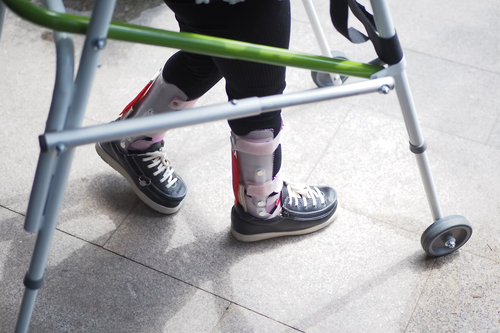
Well-fitted equipment can help ease the pain to an extent. Supportive seating, standing frames, and ankle-foot orthoses (AFOs) help keep joints aligned and spread pressure evenly. AFOs are light braces that steady the foot and ankle. Firm support also gives the body clearer feedback about its position, which helps with sensory challenges.
Frequently Asked Questions
Can cerebral palsy be cured?
There’s no cure for CP yet, but many symptoms can be managed well. The brain injury behind CP doesn’t heal, so care focuses on building function, easing discomfort, and supporting independence. Earlier support often brings better long-term results.
Does cerebral palsy get worse with age?
The original brain injury doesn’t worsen, but its effects on the body can change. Growth spurts, muscle tightness, and joint strain may bring new challenges over time. Regular checkups help care teams adjust therapies and equipment as a child grows.
What are the early signs of cerebral palsy in babies?
Delays in rolling over, sitting, or crawling are common early signs. Babies may also seem very stiff or floppy, or favor one hand before age one. Any of these is worth discussing with a pediatrician, who can arrange for further evaluation.
CP Key Facts at a Glance
| Key Point | Data |
|---|---|
| Prevalence in the U.S. | About 2.4 per 1,000 eight-year-old children (CDC (Centers for Disease Control and Prevention) surveillance data) |
| Genetic findings | Pathogenic or likely pathogenic variants in 15.8% of 460 children (2026 genome sequencing study) |
| Sensory difficulty | Roughly three-quarters of children with hemiplegic CP have impaired somatosensation (2026 Australian paper) |
| Pain and sleep | Up to 75% report ongoing pain. Among children aged 2 to 8, 47.4% had recent pain, and 33% had sleep difficulties |
Progress Keeps Its Own Pace
Managing CP is less of a sprint and more of a long walk with good company along the way. Some weeks bring visible gains, while others feel slow, and both are part of the process. Steady therapy, comfortable equipment, and a care team that talks to each other tend to help the most.
Small wins, like a steadier step or an easier bedtime, build confidence over time. Every child follows a different path, and a path that bends is still moving forward. With patience and good support, a more comfortable and capable daily life is well within reach.
For a broader look at lifelong health with CP, see this MedicalResearch.com overview of chronic disease risk in adults with cerebral palsy.
The information on MedicalResearch.com is provided for educational purposes only, and is in no way intended to diagnose, cure, or treat any medical or other condition. Some links are sponsored. MedicalResearch.com and Eminent Domains Inc. do not warrant or endorse products or claims made by third party links. Always seek the advice of your physician or other qualified health provider and ask your doctor any questions you may have regarding a medical condition. In addition to all other limitations and disclaimers in this agreement, service provider and its third party providers disclaim any liability or loss in connection with the content provided on this website.
Last Updated on October 8, 2026 by Marie Benz MD FAAD