MedicalResearch.com Interview with:
[caption id="attachment_60149" align="alignleft" width="150"]

Dr. Lazarus[/caption]
Philip Lazarus, PhD
Boeing Distinguished Professor, Pharmaceutical Sciences
Professor, Dept of Pharmaceutical Sciences
College of Pharmacy and Pharmaceutical Sciences
Washington State University
Spokane, WA 99210
MedicalResearch.com: What is the background for this study?
Response: Smoking and tobacco use remains a major health issue. Smokers use cigarette over the course of the day because the levels of nicotine, the addictive agent in cigarettes and other forms of tobacco, dimmish with time in the bloodstream due to the breakdown of nicotine by enzymes in the body. By inhibiting the breakdown of nicotine in smokers, one would expect that the levels of nicotine would remain higher after smoking a single cigarette, and that these individuals may not require lighting up another cigarette so quickly, reducing the number of cigarettes smoked over the course of a day. This could have a profound effect on reducing the overall harm incurred from smoking or from using other forms of tobacco.
In a single previous study, smokers who used a CBD inhaler exhibited a 40% reduction in cigarette use. In addition, while cannabis users are often smokers, previous studies have indicated that they smoke less cigarettes than non-cannabis-using cigarette smokers. In previous studies published in 2021, we found that major cannabinoids present in cannabis like THC and CBD inhibit major metabolizing enzymes in our body, including several that are important in drug metabolism. We hypothesized that CBD and its major active metabolite, 7-hydroxy (OH)-CBD, may also be inhibiting one or more of the enzymes important in the metabolism (or breakdown) of nicotine.


 Kazi Albab Hussain[/caption]
Kazi Albab Hussain
Graduate Student (PhD)
Specialization: Water Resources
Advisor: Professor Yusong Li, PhD
Associate Dean for Faculty and Inclusion
MedicalResearch.com: What is the background for this study?
Response: Microplastics have been detected in various food items and beverages, including table salt, bottled water, fish, and mussels. The extensive use of plastic-based products in food preparation, storage, and handling has raised concerns about the direct release of microplastics. Interestingly, we often discuss microplastics but overlook nanoplastics in the conversation. Due to their smaller size, nanoplastics are harder to be detected.
In our study, we wanted to see the release of both microplastics and nanoplastics, as nanoplastics may be even more toxic than microplastics.
Unfortunately, infants and toddlers are particularly vulnerable to the potential health impacts of micro- and nanoplastics. Studies have shown significant ingestion of these particles from polypropylene feeding bottles and silicone-rubber baby teats. We aimed to investigate the release of of micro- and nanoplastics, estimated their exposure for infants and toddlers, and evaluated their cytotoxicity to human embryonic kidney cells.
Kazi Albab Hussain[/caption]
Kazi Albab Hussain
Graduate Student (PhD)
Specialization: Water Resources
Advisor: Professor Yusong Li, PhD
Associate Dean for Faculty and Inclusion
MedicalResearch.com: What is the background for this study?
Response: Microplastics have been detected in various food items and beverages, including table salt, bottled water, fish, and mussels. The extensive use of plastic-based products in food preparation, storage, and handling has raised concerns about the direct release of microplastics. Interestingly, we often discuss microplastics but overlook nanoplastics in the conversation. Due to their smaller size, nanoplastics are harder to be detected.
In our study, we wanted to see the release of both microplastics and nanoplastics, as nanoplastics may be even more toxic than microplastics.
Unfortunately, infants and toddlers are particularly vulnerable to the potential health impacts of micro- and nanoplastics. Studies have shown significant ingestion of these particles from polypropylene feeding bottles and silicone-rubber baby teats. We aimed to investigate the release of of micro- and nanoplastics, estimated their exposure for infants and toddlers, and evaluated their cytotoxicity to human embryonic kidney cells.

 Response: We started many years ago by studying some natural and synthetic molecules that were able to counteract the early stages of this disease. With a view to early prevention, we wondered if these molecules could be routinely taken with the diet or dietary supplements. So our studies focused on the search for bioactive molecules present in food and edible plants.
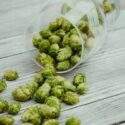
Hops are very rich in polyphenolic compounds, and for this reason it is historically used for the production of beer, but also for the preparation of herbal teas and infusions, and its uses in traditional medicine are known. In recent years we have also collected interesting results on Coffee, Sage, Radix Imperatoriae, Cocoa and Cinnamon extracts.
Response: We started many years ago by studying some natural and synthetic molecules that were able to counteract the early stages of this disease. With a view to early prevention, we wondered if these molecules could be routinely taken with the diet or dietary supplements. So our studies focused on the search for bioactive molecules present in food and edible plants.
Hops are very rich in polyphenolic compounds, and for this reason it is historically used for the production of beer, but also for the preparation of herbal teas and infusions, and its uses in traditional medicine are known. In recent years we have also collected interesting results on Coffee, Sage, Radix Imperatoriae, Cocoa and Cinnamon extracts.