COVID -19 Coronavirus / 03.04.2026

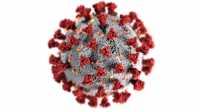
MedicalResearch.com Interview with: Jamie I Forrest PhD, MPH Scientific Director, Health Equity & Resilience Observatory (HERO) Faculty of Applied Science University of British Columbia MedicalResearch.com: What is the background for this study? Response: We’ve known since early in the pandemic that many people don’t fully recover after COVID-19. Fatigue is one of the most persistent and disabling symptoms, and it significantly reduces quality of life — affecting people’s ability to work, care for their families, and participate in daily life. Until now, there have been very few treatment options backed by solid evidence. Doctors have largely focused on supportive care — helping patients manage their symptoms through rest, pacing, and multidisciplinary teams — because no medication had been shown to work in a well-designed clinical trial. Several smaller or uncontrolled studies had suggested certain drugs might help, but robust randomized controlled trial evidence was scarce. Interestingly, metformin had previously been shown to reduce the risk of developing Long COVID when taken during the acute phase of infection. Our study asked a different question: can these drugs help people who already have established Long COVID? Long COVID — also called post-acute sequelae of SARS-CoV-2, or PASC — is a condition where people continue to feel sick for months or even years after recovering from a COVID-19 infection. The most common and debilitating complaint is fatigue: a profound, persistent exhaustion that doesn’t get better with rest and can make even simple daily activities feel impossible. Despite affecting an estimated tens of millions of people worldwide, there are almost no proven treatments. We wanted to test whether two existing, widely available, and affordable medications could help. The first was fluvoxamine — an antidepressant that also has potent anti-inflammatory effects and acts on brain pathways involved in fatigue. The second was metformin — a common diabetes medication that reduces inflammation and may support cellular energy production. Both had biological reasons to think they might work against Long COVID fatigue, but neither had been rigorously tested for this purpose in a proper clinical trial.
Annals Internal Medicine, Author Interviews, COVID -19 Coronavirus, Kidney Disease, Vaccine Studies / 16.12.2021

MedicalResearch.com Interview with: Shuchi Anand, MD MS (she/her) Assistant Professor in Medicine Director, Center for Tubulointerstitial Kidney Disease Stanford University School of Medicine  MedicalResearch.com: What is the background for this study? What are the main findings? Response: A majority of  people on dialysis who completed vaccination as of September 2021 have had a decline in antibody response to levels that would render them vulnerable to infection. Antibody response immediately after vaccination and circulating antibody response is strongly associated with risk for breakthrough after the initial vaccination series.

Annals Internal Medicine, Author Interviews, CDC, COVID -19 Coronavirus / 09.09.2020

MedicalResearch.com Interview with: [caption id="attachment_55322" align="alignleft" width="200"]Dr. Nathan Furukawa, MD, MPH Medical officer, Division of HIV/AIDS Prevention CDC  Dr. Furukawa[/caption] Dr. Nathan Furukawa, MD, MPH Medical officer, Division of HIV/AIDS Prevention CDC MedicalResearch.com: What is the background for this study? Response: The cost of the PrEP medication is the largest driver of the cost of providing PrEP care. Most patients need insurance or help from a medication assistance program to cover the large costs of the PrEP medication. We wanted to describe how these costs were paid by patients (out-of-pocket payments) and insurers (third-party payments) nationally.    MedicalResearch.com: What are the main findings? Response: The study found that the cost for a month of the PrEP medication tenofovir disoproxil fumarate/emtricitabine increased from $1350 to $1638 from 2014 to 2018, an average annual increase of 5%. Out-of-pocket costs increased faster from $54 to $94, an average annual increase of 14.9%. In 2018, at least $2 billion was spent paying for the PrEP medication, and this covered 18% of people that had an indication for PrEP. 
Annals Internal Medicine, Author Interviews, Opiods, University of Pittsburgh / 18.06.2019

MedicalResearch.com Interview with: [caption id="attachment_49771" align="alignleft" width="130"]Dr. Julie Donohue, Ph.D. Professor, Department of Health Policy and Management Vice Chair for Research Graduate School of Public Health University of Pittsburgh Dr. Donohue[/caption] Dr. Julie Donohue, Ph.D. Professor, Department of Health Policy and Management Vice Chair for Research Graduate School of Public Health University of Pittsburgh MedicalResearch.com: What is the background for this study? Response: The opioid epidemic is exacting a significant burden on families, communities and health systems across the U.S. Prescription and illicit opioids are responsible for the highest drug overdose mortality rates ever recorded. We know from previous studies that some surgical and medical patients who fill opioid prescriptions immediately after leaving the hospital go on to have chronic opioid use. Until our study, however, little was known about how and if those patients were being introduced to the opioids while in the hospital. My colleagues and I reviewed the electronic health records of 191,249 hospital admissions of patients who had not been prescribed opioids in the prior year and were admitted to a community or academic hospital in Pennsylvania between 2010 and 2014. Opioids were prescribed in 48% of the admissions, with those patients being given opioids for a little more than two-thirds of their hospital stay, on average.
Annals Internal Medicine, Author Interviews, Critical Care - Intensive Care - ICUs, Infections, University of Pittsburgh / 15.05.2019

MedicalResearch.com Interview with: [caption id="attachment_49126" align="alignleft" width="160"]Minh-Hong Nguyen, MDInfectious DiseasesProfessor of MedicineDirector, Transplant Infectious DiseasesDirector, Antimicrobial Management ProgramDepartment of Medicine University of Pittsburgh School of Medicine Dr, Minh-Hong Nguyen[/caption] Minh-Hong Nguyen, MD Infectious Diseases Professor of Medicine Director, Transplant Infectious Diseases Director, Antimicrobial Management Program Department of Medicine University of Pittsburgh School of Medicine MedicalResearch.com: What is the background for this study? What are the main findings?  Response: Blood cultures, the gold standard for diagnosing blood stream infections, are insensitive and limited by prolonged time to results. Early institution of appropriate antibiotics is a crucial determinant of improved outcomes in patients with sepsis and blood stream infections (BSI). For these reasons, development of rapid non-culture diagnostic tests for blood stream infections is a top priority. The T2Bacteria panel is the first direct from blood, non-culture test cleared by FDA for diagnosis of blood stream infections .  It detects within 4-6 hours the 5 most common ESKAPE bacteria that are frequent causes of hospital infection, and which are often multi-drug resistant.  This study shows that the T2Bacteria panel rapidly and accurately diagnosed and identified ESKAPE bacterial BSIs, and identified probable and possible BSIs that were missed by blood cultures (in particular among patients who were already receiving antibiotics).
Annals Internal Medicine, Author Interviews, Diabetes, Kaiser Permanente, Surgical Research, Weight Research / 18.08.2018

MedicalResearch.com Interview with: [caption id="attachment_43970" align="alignleft" width="139"]David Arterburn, MD, MPH Kaiser Permanente Washington Health Research Institute Seattle, WA  Dr. Arterburn[/caption] David Arterburn, MD, MPH Kaiser Permanente Washington Health Research Institute Seattle, WA MedicalResearch.com: What is the background for this study? What are the main findings? Response: More than 9 percent of adult Americans—about 30 million people—are estimated to have type 2 diabetes, according to the American Diabetes Association. The disease tends to worsen over time, with blood sugar levels rising along with the risks of developing large blood vessel (macrovascular) complications like heart attack and stroke, as well as small blood vessel (microvascular) complications affecting the nerves of the feet and hands (neuropathy), kidneys (nephropathy), and eyes (retinopathy). Among more than 4000 patients who underwent bariatric surgery, the 5-year incidence of microvascular disease — including neuropathy, nephropathy, and retinopathy — was nearly 60% lower than that of 11,000 matched nonsurgical control patients receiving usual diabetes care.