MedicalResearch.com Interview with:
[caption id="attachment_25254" align="alignleft" width="200"]

Dr. Gregoire Boulouis[/caption]
Dr. Gregoire Boulouis MD MS
Research Fellow at Massachusetts General Hospital / Harvard Med. School
Boston, Massachusetts
MedicalResearch.com: What is the background for this study? What are the main findings?
Dr. Boulouis: Hemorrhagic Stroke or Intracerebral hemorrhage (ICH) still has a poor prognosis. A substantial proportion of patients will experience ongoing intracranial bleeding and their hematomas will grow in size in the first hours following presentation, a phenomenon called 'hemorrhage epxansion'. Patients with hemorrhage expansion have been shown to have significantly worse clinical outcome. If all baseline ICH characteristics (location, initial hemorrhage volume, ..) are non modifiable at the time of diagnosis, hemorrhage expansion, however, represents one of the few potential targets to improve outcome in ICH patients. An accurate selection of patients at high risk of expansion is needed to optimize patients' selection in expansion targetted trials and, eventually, to help stratifying the level of care at the acute phase.
In this study, we investigated whether the presence of non-contrast Computed Tomography hypodensities within the baseline hematoma, a very easily and reliably assessed imaging marker, was associated with more hemorrhage expansion.
A total of 1029 acute phase ICH patients were included ; approximately a third of them demonstrated CT hypodensities at baseline. In this population, CT hypodensities were independently associated with hemorrhage expansion with an odds ratio of 3.42 (95% CI 2.21-5.31) for expansion in fully adjusted multivariable model.



 Prof. David Halon[/caption]
Prof. David A. Halon MB ChB, FACC, FESC
Associate Professor of Clinical Medicine
Technion, Israel Institute of Technology.
Director, Interventional Cardiology
Lady Davis Carmel Medical Center
Haifa, Israel
MedicalResearch.com: What is the background for this study?
Prof. Halon: Type 2 diabetics are well known to have more cardiovascular events than non-diabetics but even among diabetics this risk is heterogeneous and some remain at very low risk. It remains uncertain if additional diagnostic modalities over and above clinical risk scores may be helpful in defining which diabetics are at high risk for an adverse event. We performed a study using cardiac CT angiography (CCTA) in 630 type 2 diabetics 55-74 years of age with no history of coronary artery disease to examine if CTA findings would have additional prognostic value over traditional risk scores for cardiovascular or microvascular based events over 7.5 years of follow-up.
Prof. David Halon[/caption]
Prof. David A. Halon MB ChB, FACC, FESC
Associate Professor of Clinical Medicine
Technion, Israel Institute of Technology.
Director, Interventional Cardiology
Lady Davis Carmel Medical Center
Haifa, Israel
MedicalResearch.com: What is the background for this study?
Prof. Halon: Type 2 diabetics are well known to have more cardiovascular events than non-diabetics but even among diabetics this risk is heterogeneous and some remain at very low risk. It remains uncertain if additional diagnostic modalities over and above clinical risk scores may be helpful in defining which diabetics are at high risk for an adverse event. We performed a study using cardiac CT angiography (CCTA) in 630 type 2 diabetics 55-74 years of age with no history of coronary artery disease to examine if CTA findings would have additional prognostic value over traditional risk scores for cardiovascular or microvascular based events over 7.5 years of follow-up.
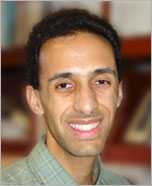 Dr. Hormuzd Katki[/caption]
Hormuzd A. Katki, PhD
Division of Cancer Epidemiology and Genetics
National Cancer Institute
National Institutes of Health Department of Health and Human Services,
Bethesda, Maryland
MedicalResearch.com: What is the background for this study? What are the main findings?
Dr. Katki: The National Lung Screening Trial (NLST) showed that 3 annual CT screens reduced lung cancer death by 20% in a subgroup of high-risk smokers. However, selecting smokers for screening based on their individual lung cancer risk might improve the effectiveness and efficiency of screening. We developed and validated new lung cancer risk tools, and used them to project the potential impact of different selection strategies for CT lung cancer screening.
We found that risk-based selection might substantially increase the number of prevented lung cancer deaths versus current subgroup-based guidelines. Risk-based screening might also improve the effectiveness of screening, as measured by reducing the number needed to screening to prevent 1 death. Risk-based screening might also improve the efficiency of screening, as measured by reducing the number of false-positive CT screens per prevented death.
Dr. Hormuzd Katki[/caption]
Hormuzd A. Katki, PhD
Division of Cancer Epidemiology and Genetics
National Cancer Institute
National Institutes of Health Department of Health and Human Services,
Bethesda, Maryland
MedicalResearch.com: What is the background for this study? What are the main findings?
Dr. Katki: The National Lung Screening Trial (NLST) showed that 3 annual CT screens reduced lung cancer death by 20% in a subgroup of high-risk smokers. However, selecting smokers for screening based on their individual lung cancer risk might improve the effectiveness and efficiency of screening. We developed and validated new lung cancer risk tools, and used them to project the potential impact of different selection strategies for CT lung cancer screening.
We found that risk-based selection might substantially increase the number of prevented lung cancer deaths versus current subgroup-based guidelines. Risk-based screening might also improve the effectiveness of screening, as measured by reducing the number needed to screening to prevent 1 death. Risk-based screening might also improve the efficiency of screening, as measured by reducing the number of false-positive CT screens per prevented death.
