Posted at 22:42h
in
Author Interviews,
NEJM,
STD
MedicalResearch.com Interview with:
[caption id="attachment_45787" align="alignleft" width="200"]
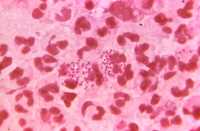
Intracellular Gram-negative, Neisseria gonorrhoeae diplococcal bacteria, - CDC image[/caption]
Edward W. Hook, III, MD
University of Alabama at Birmingham
Medicine / Infectious Diseases
Birmingham, AL
MedicalResearch.com: What is the background for this study? What are the main findings?
Response: Zoliflodacin represents a new class of antibiotics (spiropyrimidinetriones) with in vitro activity against
Neisseria gonorrhoeae, as well as other STD pathogens (
Chlamydia trachomatis and
Mycoplasma genitalium). Because of this promising data and the fact that the manufacturer (Entasis Pharmaceuticals) was willing to pursue the possibility of using this drug to treat gonorrhea, a Phase II trial was conducted which showed he drug to be 96% effective for genital or rectal infections. The drug was well tolerated as well making it a promising drug for gonorrhea treatment which might help to combat the increasing problem of antibiotic resistant gonorrhea.



 Dr. Travers[/caption]
Colm Travers, M.D., MSPH
Assistant Professor
Department of Pediatrics
University of Alabama at Birmingham
MedicalResearch.com: What is the background for this study?
Response: It is known that black mothers are much more likely to deliver preterm and low birth weight infants. The purpose of this study was to determine whether racial/ethnic disparities in care practices and outcomes were decreasing or increasing among extremely preterm infants.
These are infants born from 22 to 27 weeks of gestation who have a high risk of death and major illnesses.
Dr. Travers[/caption]
Colm Travers, M.D., MSPH
Assistant Professor
Department of Pediatrics
University of Alabama at Birmingham
MedicalResearch.com: What is the background for this study?
Response: It is known that black mothers are much more likely to deliver preterm and low birth weight infants. The purpose of this study was to determine whether racial/ethnic disparities in care practices and outcomes were decreasing or increasing among extremely preterm infants.
These are infants born from 22 to 27 weeks of gestation who have a high risk of death and major illnesses.