
27 Oct Understanding Home-Based Primary Care: A Practical Guide for Families
Editorial Notice: This post is for general information and is not specific medical advice. Eligibility for home-based care and insurance coverage, including Medicare’s homebound requirements, depend on individual circumstances. In an emergency, call 911. Providers named or linked in this post are not warranted or endorsed by MedicalResearch.com or Eminent Domains Inc.
Navigating healthcare options for aging family members, people with chronic illnesses, or those with limited mobility can be challenging. Traditional medical visits can be taxing, from getting to the office to waiting to be seen.
For people who find it hard to leave their homes, getting regular professional medical care can be especially difficult. This is where alternative care options, such as home-based primary care, come into play.
Understanding how these options work is important for families planning long-term care. Resources like the care options from Iris Medical Group can help people understand how professional medical services can be brought to a patient at home. Learning about these services can help families support a loved one’s health, potentially reduce avoidable hospital visits, and provide care in the comfort and dignity of home.
What Is Home-Based Primary Care?
At its core, home-based primary care brings fundamental medical services into a person’s home rather than requiring them to travel to a medical office. It is generally intended for patients who are homebound, older adults with chronic illnesses, and people recovering from a major illness or surgery.
Unlike the occasional house call of years past, home-based primary care can provide ongoing, comprehensive care. A team that may include physicians, nurse practitioners, physician assistants, and social workers can work together to build and manage a care plan for the patient at home. The VA (U.S. Department of Veterans Affairs), which runs one of the largest home-based primary care programs in the country, describes how this team-based model works.
Clinicians can prescribe medications, monitor vital signs and symptoms, order lab tests, and arrange referrals to specialists, often without the patient having to leave home.
Benefits of Receiving Care at Home
Receiving clinical care at home differs from visiting a doctor’s office in several ways, with potential benefits for patients and their families.
Less Stressful Care
Because patients don’t have to leave home, they avoid the strain of arranging transportation, traveling, and sitting in a waiting room, which can be exhausting for people who are frail or unwell.
A Look at Living Conditions
Visiting a patient at home lets providers see factors that affect health, such as fall hazards, how medications are stored and taken, access to food, and the support available from family or caregivers.
A More Personalized Experience
Seeing patients in their own surroundings can give providers a fuller picture of daily life and routines, which can help them tailor care to the patient’s needs and goals.
Closer Support for Chronic Illness
Monitoring chronic illnesses can be difficult for patients and families. Regular home visits can help catch changes earlier, keep medications on track, and coordinate care with specialists.
Who Is Home-Based Primary Care For?
Most patients who benefit from these services have needs that make regular office visits difficult.
People who may qualify for home-based primary care services are often older adults, physically frail, living with degenerative neurological conditions, recovering from major surgery, or managing several chronic illnesses such as heart disease, diabetes, and chronic obstructive pulmonary disease. If traveling to a medical office is a significant burden or risk for the patient, in-home primary care may be worth discussing with their current doctor.
What to Expect From an In-Home Doctor’s Visit
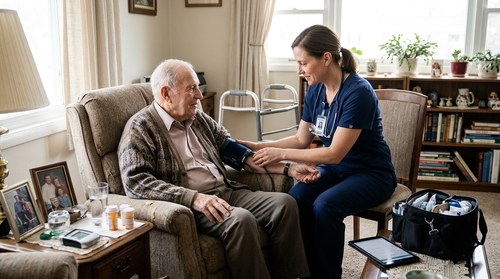
The idea of a doctor visiting the home can feel unfamiliar to some families. The good news is that an in-home visit is similar to a regular doctor’s visit, except that the provider comes to the patient’s residence.
As with a traditional appointment, the clinician will bring the tools needed to check vital signs, review medications and their effects, and address any physical concerns. The provider will also take time to listen to questions and concerns from the patient and from family members or caregivers at home.
Conclusion
Managing the needs of an aging or homebound loved one can be taxing. Traditional clinic visits do not always serve these patients well, which is why home-based options are an important part of modern healthcare. By bringing care into the home, families can help their loved ones receive consistent, compassionate medical attention with dignity.
For a broader overview of healthy aging research, see this MedicalResearch.com overview of [anchor text].
The information on MedicalResearch.com is provided for educational purposes only, and is in no way intended to diagnose, cure, or treat any medical or other condition. Some links are sponsored. MedicalResearch.com and Eminent Domains Inc. do not warrant or endorse products or claims made by third party links. Always seek the advice of your physician or other qualified health provider and ask your doctor any questions you may have regarding a medical condition. In addition to all other limitations and disclaimers in this agreement, service provider and its third party providers disclaim any liability or loss in connection with the content provided on this website.
Last Updated on October 27, 2026 by Marie Benz MD FAAD