MedicalResearch.com Interview with:
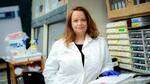
[caption id="attachment_60210" align="alignleft" width="130"]
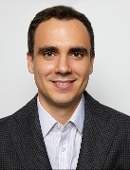
Dr. Turro[/caption]
Ernest Turro, PhD
Associate Professor Genetics and Genomics Sciences
The Turro group runs a research program on statistical genomics,
with a dual focus on rare diseases and blood-related traits at the Icahn School of Medicine
Mount Sinai Health System
MedicalResearch.com: What is the background for this study? Would you describe the Rareservoir database?
Response: The main motivation for our work is that only half of the approximately 10,000 catalogued rare diseases have a resolved genetic cause (or aetiology). Patients with these diseases are unable to obtain a genetic diagnosis which could otherwise inform prognosis, treatment for themselves and affected relatives.
One route towards resolving the remaining aetiologies is to enroll large numbers of rare disease patients into research studies so that statistical analyses can be performed comparing the genetic with the clinical characteristics of the study participants. One major endeavour, the 100,000 Genomes Project (100KGP), sequenced the genomes and collected clinical phenotype data for 34,523 UK patients and 43,016 unaffected relatives across 29,741 families.
The scale of this study is unprecedented, partly thanks to the ever-decreasing cost of DNA sequencing (25 years ago, it cost $1bn to sequence a whole genome, while now it costs only a few hundred dollars). Working with such large datasets is notoriously cumbersome. To overcome this, we developed a computational approach (the Rareservoir) that distills the most important information into a relatively small database, allowing us to apply our statistical methods nimbly.
We noted that the "genetic variants" that cause rare diseases are typically kept rare in the human population by natural selection because affected individuals tend to have few children, if any. This meant that we could discard the genetic information corresponding to variants that are common in the human population without throwing away the key disease-causing variants. By focussing on these "rare variants", we were able to perform our analyses using a small database (a `Rareservoir’), only 5.5GB in size, hastening our progress significantly.





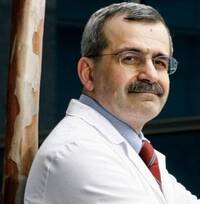


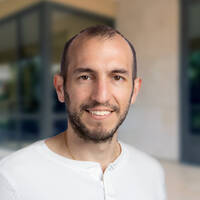
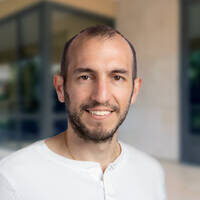 Dr. Torkamani[/caption]
Ali Torkamani, Ph.D.
Director of Genomics and Genome Informatics
Scripps Research Translational Institute
Professor, Integrative Structural and Computational Biology
Scripps Research
La Jolla, CA 92037
MedicalResearch.com: What is the background for this study?
Response: Prior research has shown that people with higher polygenic risk for coronary artery disease achieve greater risk reduction with statin or other lipid lowering therapy. In general, adherence to standard guidelines for lipid lowering therapy is low - about 30% of people who should be on lipid lowering therapy are, with no correlation to their genetic risk. We set out to see whether communicating personalized risk, including polygenic risk, for coronary artery disease would drive the adoption of lipid lowering therapy.
Dr. Torkamani[/caption]
Ali Torkamani, Ph.D.
Director of Genomics and Genome Informatics
Scripps Research Translational Institute
Professor, Integrative Structural and Computational Biology
Scripps Research
La Jolla, CA 92037
MedicalResearch.com: What is the background for this study?
Response: Prior research has shown that people with higher polygenic risk for coronary artery disease achieve greater risk reduction with statin or other lipid lowering therapy. In general, adherence to standard guidelines for lipid lowering therapy is low - about 30% of people who should be on lipid lowering therapy are, with no correlation to their genetic risk. We set out to see whether communicating personalized risk, including polygenic risk, for coronary artery disease would drive the adoption of lipid lowering therapy.

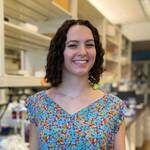 Morgan Walker[/caption]
Morgan Walker
Ph.D. Candidate, UNC-Chapel Hill Chemistry
Redinbo Laboratory
MedicalResearch.com: What is the background for this study? Where is triclosan commonly found?
Response: Triclosan is a commonly found antibacterial compound present in hand soaps, toothpastes, athletic clothes, and children’s toys. A previous study by the Zhang group (corresponding author on this publication) found that antimicrobial compounds including triclosan increased inflammation (similar to that of inflammatory bowel disease (IBD)) and tumor formation in the colon. These effects were observed only in mice with an intact gut microbiome, not in germ-free mice which lack a gut microbiome, suggesting that the gut microbiome is somehow responsible for the toxicity of triclosan to the gut. Our study investigates how gut bacteria promote triclosan toxicity in the gut
Morgan Walker[/caption]
Morgan Walker
Ph.D. Candidate, UNC-Chapel Hill Chemistry
Redinbo Laboratory
MedicalResearch.com: What is the background for this study? Where is triclosan commonly found?
Response: Triclosan is a commonly found antibacterial compound present in hand soaps, toothpastes, athletic clothes, and children’s toys. A previous study by the Zhang group (corresponding author on this publication) found that antimicrobial compounds including triclosan increased inflammation (similar to that of inflammatory bowel disease (IBD)) and tumor formation in the colon. These effects were observed only in mice with an intact gut microbiome, not in germ-free mice which lack a gut microbiome, suggesting that the gut microbiome is somehow responsible for the toxicity of triclosan to the gut. Our study investigates how gut bacteria promote triclosan toxicity in the gut