
16 May What Is the Relationship Between Bipolar Disorder and Cocaine Addiction?

 Dr. Bahrami[/caption]
Shahram Bahrami, PhD
NORMENT Centre, Institute of Clinical Medicine
Division of Mental Health and Addiction
Oslo University Hospital
Oslo, Norway
MedicalResearch.com: What is the background for this study?
Response: We know that patients with severe mental disorders such as schizophrenia, bipolar disorder and major depression have shorter life span than the rest of the population, largely due to comorbid cardiovascular diseases. The increased risk seems related to lifestyle including diet and physical activity and medicines, while the mechanisms are not fully understood. Different studies have shown increased weight (high body mass index) in many people with mental disorders. Yet very little is known about genetic variants jointly in influencing major psychiatric disorders and body mass index. Thus, we investigated if there are overlapping genetic risk variants between body mass index and the mental disorders schizophrenia, bipolar disorders and major depression.
Dr. Bahrami[/caption]
Shahram Bahrami, PhD
NORMENT Centre, Institute of Clinical Medicine
Division of Mental Health and Addiction
Oslo University Hospital
Oslo, Norway
MedicalResearch.com: What is the background for this study?
Response: We know that patients with severe mental disorders such as schizophrenia, bipolar disorder and major depression have shorter life span than the rest of the population, largely due to comorbid cardiovascular diseases. The increased risk seems related to lifestyle including diet and physical activity and medicines, while the mechanisms are not fully understood. Different studies have shown increased weight (high body mass index) in many people with mental disorders. Yet very little is known about genetic variants jointly in influencing major psychiatric disorders and body mass index. Thus, we investigated if there are overlapping genetic risk variants between body mass index and the mental disorders schizophrenia, bipolar disorders and major depression.
 Dr. Stahl[/caption]
Dr. Stephen Stahl MD PhD
Professor of Psychiatry
University of California San Diego
MedicalResearch.com: What is the background for this study? How does cariprazine differ from other medications for bipolar depression?
MedicalResearch.com: It is important to note that cariprazine, a dopamine D3-preferring D3/D2 receptor and serotonin 5-HT1A receptor partial agonist, is approved for the treatment of schizophrenia (1.5-6 mg/d) and bipolar mania (3-6 mg/d) in adults. It is not yet approved for depressive episodes related to bipolar I disorder (bipolar depression).
In these data that focus on the investigational use for the treatment of bipolar depression, cariprazine has demonstrated efficacy vs placebo (PBO) in 3 phase 2/3 studies of patients with bipolar depression (NCT01396447, NCT02670538, NCT02670551). These analyses investigated the efficacy of cariprazine in patients with bipolar depression and concurrent manic symptoms (mixed features).
Dr. Stahl[/caption]
Dr. Stephen Stahl MD PhD
Professor of Psychiatry
University of California San Diego
MedicalResearch.com: What is the background for this study? How does cariprazine differ from other medications for bipolar depression?
MedicalResearch.com: It is important to note that cariprazine, a dopamine D3-preferring D3/D2 receptor and serotonin 5-HT1A receptor partial agonist, is approved for the treatment of schizophrenia (1.5-6 mg/d) and bipolar mania (3-6 mg/d) in adults. It is not yet approved for depressive episodes related to bipolar I disorder (bipolar depression).
In these data that focus on the investigational use for the treatment of bipolar depression, cariprazine has demonstrated efficacy vs placebo (PBO) in 3 phase 2/3 studies of patients with bipolar depression (NCT01396447, NCT02670538, NCT02670551). These analyses investigated the efficacy of cariprazine in patients with bipolar depression and concurrent manic symptoms (mixed features).
 Dr. Wolfers[/caption]
Thomas Wolfers PhD
Donders Center for Cognitive Neuroimaging
Kapittelweg 29
6525EN Nijmegen
The Netherlands
MedicalResearch.com: What is the background for this study? What are the main findings?
Response: Schizophrenia and bipolar disorder are severe and complex mental disorders. Currently, the most common approach in characterizing disorders biologically is by comparing patient groups with groups of healthy individuals.
We employed a fundamentally different approach and investigated how much the brains of individual patients diagnosed with schizophrenia and bipolar disorder differ from one another. For this purpose, we selected brain scans from healthy individuals to model a norm reflecting the healthy range, subsequently we compared the brain scans of patients with schizophrenia and bipolar disorder to this norm on the level of the individual.
The main outcome was that individuals with schizophrenia and bipolar disorder differ substantially from one another, thus, considering only the ‘average patient’ has little to say about what might be occurring in the brain of an individual patient.
Dr. Wolfers[/caption]
Thomas Wolfers PhD
Donders Center for Cognitive Neuroimaging
Kapittelweg 29
6525EN Nijmegen
The Netherlands
MedicalResearch.com: What is the background for this study? What are the main findings?
Response: Schizophrenia and bipolar disorder are severe and complex mental disorders. Currently, the most common approach in characterizing disorders biologically is by comparing patient groups with groups of healthy individuals.
We employed a fundamentally different approach and investigated how much the brains of individual patients diagnosed with schizophrenia and bipolar disorder differ from one another. For this purpose, we selected brain scans from healthy individuals to model a norm reflecting the healthy range, subsequently we compared the brain scans of patients with schizophrenia and bipolar disorder to this norm on the level of the individual.
The main outcome was that individuals with schizophrenia and bipolar disorder differ substantially from one another, thus, considering only the ‘average patient’ has little to say about what might be occurring in the brain of an individual patient.
 Dr. C. David Nicholson[/caption]
Dr. C. David Nicholson, PhD
Chief R&D Officer
Allergan
MedicalResearch.com: What is the background for this data milestone?
Response: Bipolar I depression refers to the depressive episodes of bipolar I disorder, the overarching brain and behavioral disorder. People with bipolar I disorder can have manic and depressive episodes, as well as mixed episodes that feature both manic and depressive symptoms at the same time. Bipolar I depression typically lasts at least two weeks, and can be difficult to differentiate from major depression during diagnosis.
Once diagnosed, treating bipolar depression can be difficult given the few therapies available to manage these symptoms of bipolar I disorder. Additionally, patients with bipolar disorder may experience shifts from depression to mania or mania to depression as well as mixed states. More treatment options are needed so that physicians can find a therapy that will treat bipolar depression effectively, while also addressing the myriad of other symptoms that patients can experience.
Cariprazine is already approved for the treatment of mania and mixed episodes. With this new data, we have the potential to also treat bipolar depression, effectively addressing the full spectrum of symptoms associated with bipolar I disorder with just one medication.
Dr. C. David Nicholson[/caption]
Dr. C. David Nicholson, PhD
Chief R&D Officer
Allergan
MedicalResearch.com: What is the background for this data milestone?
Response: Bipolar I depression refers to the depressive episodes of bipolar I disorder, the overarching brain and behavioral disorder. People with bipolar I disorder can have manic and depressive episodes, as well as mixed episodes that feature both manic and depressive symptoms at the same time. Bipolar I depression typically lasts at least two weeks, and can be difficult to differentiate from major depression during diagnosis.
Once diagnosed, treating bipolar depression can be difficult given the few therapies available to manage these symptoms of bipolar I disorder. Additionally, patients with bipolar disorder may experience shifts from depression to mania or mania to depression as well as mixed states. More treatment options are needed so that physicians can find a therapy that will treat bipolar depression effectively, while also addressing the myriad of other symptoms that patients can experience.
Cariprazine is already approved for the treatment of mania and mixed episodes. With this new data, we have the potential to also treat bipolar depression, effectively addressing the full spectrum of symptoms associated with bipolar I disorder with just one medication.
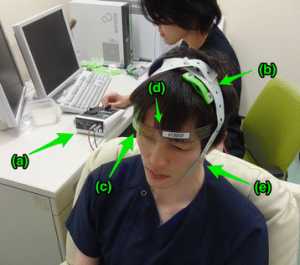 tDCS administration at National Center of Neurology and Psychiatry Hospital. A subject (front) sits on a sofa relaxed, and a researcher (behind) controls the tDCS device (a). In this picture, anodal (b) and cathodal (c) electrodes with 35-cm2 size are put on F3 and right supraorbital region, respectively. We use a head strap (d) for convenience and reproducibility, and also use a rubber band (e) for reducing resistance
 Gary Sachs, MD
Associate Clinical Professor of Psychiatry
Harvard Medical School
MedicalResearch.com: What is the background for this data milestone?
Response: Bipolar disorder affects about 5.7 million adults in the United States. It is a common, often disabling condition in which abnormal mood states impair a person’s ability to carry out everyday tasks. Bipolar disorder touches nearly every family and community in America, because periods of illness, a patient’s symptoms often impact their family, their friends, and their community.
There are a limited number of products approved to treat bipolar depression and even fewer products that have been studied and approved to treat the full spectrum of bipolar disorder, from mania through depression. Having another product proven to treat the full range of bipolar disorder would be a welcome addition to the treatment options currently available to the psychiatry community and patients.
Gary Sachs, MD
Associate Clinical Professor of Psychiatry
Harvard Medical School
MedicalResearch.com: What is the background for this data milestone?
Response: Bipolar disorder affects about 5.7 million adults in the United States. It is a common, often disabling condition in which abnormal mood states impair a person’s ability to carry out everyday tasks. Bipolar disorder touches nearly every family and community in America, because periods of illness, a patient’s symptoms often impact their family, their friends, and their community.
There are a limited number of products approved to treat bipolar depression and even fewer products that have been studied and approved to treat the full spectrum of bipolar disorder, from mania through depression. Having another product proven to treat the full range of bipolar disorder would be a welcome addition to the treatment options currently available to the psychiatry community and patients.
 Dr. Loebel[/caption]
Antony Loebel, M.D.
Executive Vice President and Chief Medical Officer
Sunovion, Head of Global Clinical Development
Sumitomo Dainippon Pharma Group
MedicalResearch.com: What is the background for this study? What are the main findings?
In the six-week, randomized, double-blind, placebo-controlled study, 347 children and adolescents (10 to 17 years of age) with bipolar depression received once-daily LATUDA flexibly dosed (20-80 mg/day) or placebo.The Phase 3 clinical study met its primary endpoint, showing statistically significant and clinically meaningful improvement in symptoms compared to placebo. LATUDA was generally well tolerated, with minimal effects on weight and metabolic parameters.
The primary efficacy endpoint was change from baseline to week 6 on the Children Depression Rating Scale, Revised (CDRS-R) total score. LATUDA was associated with statistically significant and clinically meaningful improvement in bipolar depression symptoms compared to placebo, based on CDRS-R total score (-21.0 vs. -15.3; effect size = 0.45; p<0.0001) and CGI-BP-S score for depression (-1.49 vs. -1.05; effect size = 0.44; p<0.001).
LATUDA also demonstrated statistically significant improvement on secondary efficacy endpoints.
The most common treatment-emergent adverse events reported for LATUDA compared to placebo were nausea (16% vs. 5.8%), somnolence (9.1% vs. 4.7%), weight gain (6.9% vs. 1.7%), vomiting (6.3% vs. 3.5%), dizziness (5.7% vs. 4.7%) and insomnia (5.1% vs. 2.3%). LATUDA was associated with no increases in fasting glucose or lipids, and minimal increase in mean weight vs. placebo (+0.74 kg vs. +0.44 kg).
Dr. Loebel[/caption]
Antony Loebel, M.D.
Executive Vice President and Chief Medical Officer
Sunovion, Head of Global Clinical Development
Sumitomo Dainippon Pharma Group
MedicalResearch.com: What is the background for this study? What are the main findings?
In the six-week, randomized, double-blind, placebo-controlled study, 347 children and adolescents (10 to 17 years of age) with bipolar depression received once-daily LATUDA flexibly dosed (20-80 mg/day) or placebo.The Phase 3 clinical study met its primary endpoint, showing statistically significant and clinically meaningful improvement in symptoms compared to placebo. LATUDA was generally well tolerated, with minimal effects on weight and metabolic parameters.
The primary efficacy endpoint was change from baseline to week 6 on the Children Depression Rating Scale, Revised (CDRS-R) total score. LATUDA was associated with statistically significant and clinically meaningful improvement in bipolar depression symptoms compared to placebo, based on CDRS-R total score (-21.0 vs. -15.3; effect size = 0.45; p<0.0001) and CGI-BP-S score for depression (-1.49 vs. -1.05; effect size = 0.44; p<0.001).
LATUDA also demonstrated statistically significant improvement on secondary efficacy endpoints.
The most common treatment-emergent adverse events reported for LATUDA compared to placebo were nausea (16% vs. 5.8%), somnolence (9.1% vs. 4.7%), weight gain (6.9% vs. 1.7%), vomiting (6.3% vs. 3.5%), dizziness (5.7% vs. 4.7%) and insomnia (5.1% vs. 2.3%). LATUDA was associated with no increases in fasting glucose or lipids, and minimal increase in mean weight vs. placebo (+0.74 kg vs. +0.44 kg).
 Dr. Thomas Lancaster[/caption]
Thomas M. Lancaster, PhD
Neuroscience and Mental Health Research Institute
Cardiff University Brain Imaging Research Centre
Cardiff University, Cardiff, United Kingdom
MedicalResearch.com: What is the background for this study? What are the main findings?
Response: Psychotic disorders such as schizophrenia and bipolar disorders are heritable. Part of this genetic risk may be conferred by the combined effects of common risk alleles identified via genome wide association studies. Individuals with psychosis are also more likely to experience alterations in the ventral striatum (VS); a key node in the brain’s reward processing network. We hypothesized that common genetic risk for psychosis may confer risk via alterations in the VS. Using functional magnetic resonance imaging (fMRI) data from an adolescent sample (the IMAGEN cohort), we showed that increased psychosis risk was associated with increased BOLD (blood oxygen level dependency) in the VS, during reward processing.
Dr. Thomas Lancaster[/caption]
Thomas M. Lancaster, PhD
Neuroscience and Mental Health Research Institute
Cardiff University Brain Imaging Research Centre
Cardiff University, Cardiff, United Kingdom
MedicalResearch.com: What is the background for this study? What are the main findings?
Response: Psychotic disorders such as schizophrenia and bipolar disorders are heritable. Part of this genetic risk may be conferred by the combined effects of common risk alleles identified via genome wide association studies. Individuals with psychosis are also more likely to experience alterations in the ventral striatum (VS); a key node in the brain’s reward processing network. We hypothesized that common genetic risk for psychosis may confer risk via alterations in the VS. Using functional magnetic resonance imaging (fMRI) data from an adolescent sample (the IMAGEN cohort), we showed that increased psychosis risk was associated with increased BOLD (blood oxygen level dependency) in the VS, during reward processing.
 Dr. Emily Severance[/caption]
Emily G. Severance, Ph.D
Stanley Division of Developmental Neurovirology
Department of Pediatrics
Johns Hopkins University School of Medicine
Baltimore, MD
MedicalResearch.com: What is the background for this study? What are the main findings?
Dr. Severance: This research stems in part from anecdotal dialogues that we had with people with psychiatric disorders and their families, and repeatedly the issue of yeast infections came up. We found that Candida overgrowth was more prevalent in people with mental illness compared to those without psychiatric disorders and the patterns that we observed occurred in a surprisingly sex-specific manner. The levels of IgG antibodies directed against the Candida albicans were elevated in males with schizophrenia and bipolar disorder compared to controls. In females, there were no differences in antibody levels between these groups, but in women with mental illness who had high amounts of these antibodies, we found significant memory deficits compared to those without evidence of past infection.
Dr. Emily Severance[/caption]
Emily G. Severance, Ph.D
Stanley Division of Developmental Neurovirology
Department of Pediatrics
Johns Hopkins University School of Medicine
Baltimore, MD
MedicalResearch.com: What is the background for this study? What are the main findings?
Dr. Severance: This research stems in part from anecdotal dialogues that we had with people with psychiatric disorders and their families, and repeatedly the issue of yeast infections came up. We found that Candida overgrowth was more prevalent in people with mental illness compared to those without psychiatric disorders and the patterns that we observed occurred in a surprisingly sex-specific manner. The levels of IgG antibodies directed against the Candida albicans were elevated in males with schizophrenia and bipolar disorder compared to controls. In females, there were no differences in antibody levels between these groups, but in women with mental illness who had high amounts of these antibodies, we found significant memory deficits compared to those without evidence of past infection.
 MedicalResearch.com Interview with:
Glenn T. Konopaske, MD
McLean Hospital, Belmont, Massachusetts
Department of Psychiatry, Harvard Medical School
Boston, Massachusetts
Medical Research: What are the main findings of the study?
Dr. Konopaske: Using postmortem human brain tissue this study did reconstructions of basilar dendrites localized to pyramidal cells in the deep layer III of the dorsolateral prefrontal cortex. Tissue from individuals with schizophrenia, bipolar disorder or controls was examined. Dendritic spine density (number of spines per μm dendrite) was significantly reduced in bipolar disorder and also reduced in schizophrenia at a trend level. The number of dendritic spines per dendrite and dendrite length were significantly reduced in subjects with schizophrenia and bipolar disorder.
MedicalResearch.com Interview with:
Glenn T. Konopaske, MD
McLean Hospital, Belmont, Massachusetts
Department of Psychiatry, Harvard Medical School
Boston, Massachusetts
Medical Research: What are the main findings of the study?
Dr. Konopaske: Using postmortem human brain tissue this study did reconstructions of basilar dendrites localized to pyramidal cells in the deep layer III of the dorsolateral prefrontal cortex. Tissue from individuals with schizophrenia, bipolar disorder or controls was examined. Dendritic spine density (number of spines per μm dendrite) was significantly reduced in bipolar disorder and also reduced in schizophrenia at a trend level. The number of dendritic spines per dendrite and dendrite length were significantly reduced in subjects with schizophrenia and bipolar disorder.
 MedicalResearch.com: Interview with:
Edward I. Ginns, MD, PhD, Director
Program in Medical Genetics and
Lysosomal Disorders Treatment and Research Program
University of Massachusetts Medical School
Reed Rose Gordon Building, Room 137
Shrewsbury, MA 01545
Medical Research: What are the main findings of the study?
Dr. Ginns: Our study identified that sonic hedgehog signaling, an important brain pathway, is involved in bipolar affective disorder.
This finding shows a mechanism and provides new targets for drug development. It suggests that sonic hedgehog signaling can be modulated to help manage bipolar symptoms in adults by using drugs already being studied in clinical trials for other medical conditions.
The new findings were uncovered by decades of translational research in the Old Order Amish families of Pennsylvania, where in a few special families in the Amish Study there is a high incidence of both bipolar disorder and a rare genetic dwarfism, Ellis van‐Creveld (EvC) syndrome. No person with EvC had bipolar disorder despite forty years of documented research across multiple generations, suggesting that the genetic cause of this rare dwarfism was protective of bipolar affective disorder.
MedicalResearch.com: Interview with:
Edward I. Ginns, MD, PhD, Director
Program in Medical Genetics and
Lysosomal Disorders Treatment and Research Program
University of Massachusetts Medical School
Reed Rose Gordon Building, Room 137
Shrewsbury, MA 01545
Medical Research: What are the main findings of the study?
Dr. Ginns: Our study identified that sonic hedgehog signaling, an important brain pathway, is involved in bipolar affective disorder.
This finding shows a mechanism and provides new targets for drug development. It suggests that sonic hedgehog signaling can be modulated to help manage bipolar symptoms in adults by using drugs already being studied in clinical trials for other medical conditions.
The new findings were uncovered by decades of translational research in the Old Order Amish families of Pennsylvania, where in a few special families in the Amish Study there is a high incidence of both bipolar disorder and a rare genetic dwarfism, Ellis van‐Creveld (EvC) syndrome. No person with EvC had bipolar disorder despite forty years of documented research across multiple generations, suggesting that the genetic cause of this rare dwarfism was protective of bipolar affective disorder.
 MedicalResearch.com Interview with:
John I. Nurnberger, Jr., M.D., Ph.D.
Professor of Psychiatry
Joyce and Iver Small Professor of Psychiatry
Indiana University School of Medicine
MedicalResearch.com: What are the main findings of this study?
Dr. Nurnberger: The main findings of the study are the biological pathways identified to be associated with bipolar disorder, including those involved in hormonal regulation, calcium channels, second messenger systems, and glutamate signaling. Gene expression studies implicated neuronal development pathways as well.
These findings highlight the role of certain neurobiological processes that have been considered in prior hypotheses of bipolar disorder. They underline a role for calcium signaling, which has only been clearly implicated in the genetics of bipolar disorder in recent years. They also feature hormonal processes such as the hypothalamic-pituitary-adrenal axis, which has been known to be involved in stress responses, but has not been prominent in many recent theories of the pathogenesis of bipolar disorder.
MedicalResearch.com Interview with:
John I. Nurnberger, Jr., M.D., Ph.D.
Professor of Psychiatry
Joyce and Iver Small Professor of Psychiatry
Indiana University School of Medicine
MedicalResearch.com: What are the main findings of this study?
Dr. Nurnberger: The main findings of the study are the biological pathways identified to be associated with bipolar disorder, including those involved in hormonal regulation, calcium channels, second messenger systems, and glutamate signaling. Gene expression studies implicated neuronal development pathways as well.
These findings highlight the role of certain neurobiological processes that have been considered in prior hypotheses of bipolar disorder. They underline a role for calcium signaling, which has only been clearly implicated in the genetics of bipolar disorder in recent years. They also feature hormonal processes such as the hypothalamic-pituitary-adrenal axis, which has been known to be involved in stress responses, but has not been prominent in many recent theories of the pathogenesis of bipolar disorder.
 Alan S. Brown, M.D., M.P.H.
Professor of Clinical Psychiatry and Clinical Epidemiology College of Physicians and Surgeons of Columbia University Director
Unit in Birth Cohort Studies Division of Epidemiology New York State Psychiatric Institute
New York, NY
MedicalResearch.com: What are the main findings of the study?
Dr. Brown: We found that a mother's exposure to influenza during pregnancy, documented by antibodies in her serum, increased the risk of bipolar disorder with psychotic symptoms in her offspring. We did not show a relationship between influenza and bipolar disorder not accompanied by psychosis.
Alan S. Brown, M.D., M.P.H.
Professor of Clinical Psychiatry and Clinical Epidemiology College of Physicians and Surgeons of Columbia University Director
Unit in Birth Cohort Studies Division of Epidemiology New York State Psychiatric Institute
New York, NY
MedicalResearch.com: What are the main findings of the study?
Dr. Brown: We found that a mother's exposure to influenza during pregnancy, documented by antibodies in her serum, increased the risk of bipolar disorder with psychotic symptoms in her offspring. We did not show a relationship between influenza and bipolar disorder not accompanied by psychosis.
Knowledge about the biological origin of diseases like schizophrenia, bipolar disorder and other psychiatric conditions is critical to improving diagnosis and treatment. In an effort to push the field forward, three UCLA researchers, along with scientists from more than 20 countries, have been taking part in one of the largest collaborative...