MedicalResearch.com Interview with:
 Howa Yeung, MD
Assistant Professor of Dermatology
Emory University School of Medicine
Atlanta, GA 30322
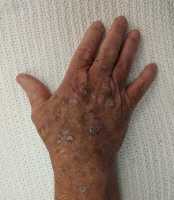
MedicalResearch.com: What is the background for this study? Would you briefly explain what is meant by actinic keratoses?
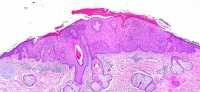
Response: Actinic keratoses are common precancerous skin lesions caused by sun exposure. Because actinic keratoses may develop into skin cancers such as squamous cell carcinoma and basal cell carcinoma, they are often treated by various destructive methods. We used Medicare Part B billing claims to estimate the number and cost of treated actinic keratoses from 2007 to 2015.
MedicalResearch.com: What are the main findings?
Response: While the number of Medicare Part B beneficiaries increased only moderately, the number of actinic keratoses treated by destruction rose from 29.7 million in 2007 to 35.6 million in 2015. Medicare paid an average annual amount of $413.1 million for actinic keratosis destruction from 2007 to 2015. Independently billing non-physician clinicians, including advanced practice registered nurses and physician assistants, are treating an increasing proportion of actinic keratosis, peaking at 13.5% in 2015.
MedicalResearch.com: What should readers take away from your report?
Response: Readers should understand that the burden of actinic keratosis treatment is increasing in the Medicare population. There is also an increasing proportion of actinic keratoses being treated by advanced practice registered nurses and physician assistants.


 Dr. Johnson[/caption]
Dayna A. Johnson PhD
Department of Epidemiology
Emory University
Atlanta, GA
MedicalResearch.com: What is the background for this study? What are the main findings?
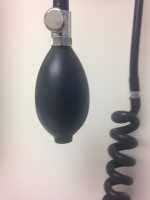
Response: There are several studies that have determined that African Americans have the highest prevalence of hypertension and are the most likely to have uncontrolled hypertension compared to other racial/ethnic groups. We were interested in studying whether sleep apnea contributed to hypertension control among African Americans.
We found that participants with sleep apnea were more likely to have resistant hypertension than those without sleep apnea. In particular, individuals with severe sleep apnea had the highest risk of resistant hypertension. Most of the participants with measured sleep apnea were undiagnosed (96%).
Dr. Johnson[/caption]
Dayna A. Johnson PhD
Department of Epidemiology
Emory University
Atlanta, GA
MedicalResearch.com: What is the background for this study? What are the main findings?
Response: There are several studies that have determined that African Americans have the highest prevalence of hypertension and are the most likely to have uncontrolled hypertension compared to other racial/ethnic groups. We were interested in studying whether sleep apnea contributed to hypertension control among African Americans.
We found that participants with sleep apnea were more likely to have resistant hypertension than those without sleep apnea. In particular, individuals with severe sleep apnea had the highest risk of resistant hypertension. Most of the participants with measured sleep apnea were undiagnosed (96%).