Posted at 19:18h
in
Author Interviews,
Emory
MedicalResearch.com Interview with:
[caption id="attachment_35176" align="alignleft" width="150"]

Dr. Liu[/caption]
Dr. Robert Liu, PhD
Silvio O. Conte Center for Oxytocin and Social Cognition
Center for Translational Social Neuroscience
Department of Biology
Graduate Program in Neuroscience
Emory University, Atlanta, Georgia
MedicalResearch.com: What is the background for this study? What are the main findings?
Response: This study describes for the first time some of the novel brain mechanisms underlying how social relationships are formed. In this case we studied the formation of a pair bond in voles. Pair bonding in voles is not exactly the same as love in humans, but we believe that pair bonding in voles likely shares many of the underlying neural mechanisms as falling in love in humans, such as developing a rewarding feeling towards your partner.
Basically, we discovered that rhythmic oscillations of groups of neurons in the prefrontal cortex, an area of the brain that is involved in decision making and executive function, can control the strength of oscillations at a different frequency in populations of neurons in the nucleus accumbens, an area that is involved in pleasure and reward, as well as addiction. We show that the strength of that PFC-NAc control predicted how quickly animals would begin to show affectionate behavior, analogous to people who may fall in love quicker than others. But the most intriguing thing was that when animals mated for the first time, the strength of the control of the reward system by the decision making circuit increased, and the greater the increase in that control, the faster the animal started huddling or showing affection toward its partner. We think that this cortical control of the reward system allows for the neural encoding of the partner’s features (odors, sounds) to become stamped into the reward system, so that the partner becomes rewarding themselves. Indeed in studies in humans, parts of the striatum, to which the nucleus accumbens belongs, become activated when men look at images of their lovers or when mothers look at images of babies.
We not only observed that during pair bond formation the cortex controls rhythmic activity within the reward system, but we actually recreated that communication using a highly innovative technique that allows us to control neural activity using light. We expressed a light sensitive protein in the cortical neurons that project to the reward system, and then light stimulated those projections in the reward system in animals at the same frequency as normally happens during mating, but in this case the animals were not allowed to mate. By simply recreating the neural oscillatory control of the cortex of the reward area when the female was near the male, we biased how affectionately she acted towards him.
We think that the implications for this is not restricted to forming bonds or falling in love, but tells us something fundamental about how certain brain circuits communicate with each other to build social relationships, to make us feel pleasure from being with others that we like. We believe that by understanding how social cues get instantiated into the brain’ reward system, we may ultimately be able to use this information to help people with impairments in the forming strong social relationships, such as in autism or schizophrenia.


 Dr. Jernigan[/caption]
Dr. John Jernigan, MD MS
Clinical Associate Professor of Medicine
Division of Infectious Diseases
Emory University School of Medicine
Branch Chief
Epidemiology, Research and Innovations Branch
CDC Center for Disease Control
MedicalResearch.com: What is the background for this study?
Response: Staphylococcus aureus commonly causes infections in ICUs. One approach to preventing these infections is using nasal mupirocin plus chlorhexidine gluconate (CHG) bathing for ICU patients. This practice is known to prevent methicillin-resistant Staphylococcus aureus (MRSA) infections and all-cause. bloodstream infections. This practice has been broadly adopted in ICUs in the US, but adoption of mupirocin as a universal topical antibiotic has been slowed by concerns for engendering mupirocin resistance.
This cluster-randomized trial in adult ICUs was conducted to assess whether universal nasal antiseptic povidone-iodine (iodophor), to which minimal S. aureus resistance is expected, was an acceptable alternative to universal nasal mupirocin for reducing S. aureus and MRSA clinical cultures in the setting of daily CHG bathing. Those who received chlorhexidine (CHG) bathing with mupirocin had an 18% reduction in risk of Staphylococcus aureus clinical cultures and a 15% reduction in risk of methicillin-resistant S. aureus (MRSA) clinical cultures compared to patients who received CHG bathing with intranasal iodophor. These results show that using mupirocin for nasal decolonization may be preferred over iodophor because it is more effective at preventing S. aureus infections.
Dr. Jernigan[/caption]
Dr. John Jernigan, MD MS
Clinical Associate Professor of Medicine
Division of Infectious Diseases
Emory University School of Medicine
Branch Chief
Epidemiology, Research and Innovations Branch
CDC Center for Disease Control
MedicalResearch.com: What is the background for this study?
Response: Staphylococcus aureus commonly causes infections in ICUs. One approach to preventing these infections is using nasal mupirocin plus chlorhexidine gluconate (CHG) bathing for ICU patients. This practice is known to prevent methicillin-resistant Staphylococcus aureus (MRSA) infections and all-cause. bloodstream infections. This practice has been broadly adopted in ICUs in the US, but adoption of mupirocin as a universal topical antibiotic has been slowed by concerns for engendering mupirocin resistance.
This cluster-randomized trial in adult ICUs was conducted to assess whether universal nasal antiseptic povidone-iodine (iodophor), to which minimal S. aureus resistance is expected, was an acceptable alternative to universal nasal mupirocin for reducing S. aureus and MRSA clinical cultures in the setting of daily CHG bathing. Those who received chlorhexidine (CHG) bathing with mupirocin had an 18% reduction in risk of Staphylococcus aureus clinical cultures and a 15% reduction in risk of methicillin-resistant S. aureus (MRSA) clinical cultures compared to patients who received CHG bathing with intranasal iodophor. These results show that using mupirocin for nasal decolonization may be preferred over iodophor because it is more effective at preventing S. aureus infections.





 Dr. Jacob[/caption]
Jesse T. Jacob, MD
School of Medicine
Director, Antibiotic Stewardship Program
Emory University, Atlanta, Georgia
MedicalResearch.com: What is the background for this study?
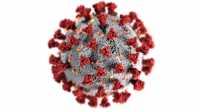
Response: Since coronavirus disease 2019 (COVID-19) was recognized in the United States in January 2020, the risk of infection with severe acute respiratory syndrome coronavirus 2 (SARS-CoV-2) attributed to exposures in the health care workplace has been studied with conflicting results, and the role of job functions (such as nurse) or specific workplace activities, including care for individuals with known and unknown SARS-CoV-2 positivity, increase the risk of SARS-CoV-2 infection.
We assessed more than 24,000 healthcare providers between April and August 2020 across four large academic medical systems (Emory, Johns Hopkins, Rush University Medical Center, and University of Maryland) which collaborate in the CDC’s Prevention Epicenter Program and conduct innovative infection prevention research. Each site conducted voluntary COVID-19 antibody testing on its health care workers, as well as offered a questionnaire/survey on the employees’ occupational activities and possible exposures to individuals with COVID-19 infection both inside and outside the workplace. We also looked at three-digit residential zip-code prefixes to determine COVID-19 prevalence in communities.
Dr. Jacob[/caption]
Jesse T. Jacob, MD
School of Medicine
Director, Antibiotic Stewardship Program
Emory University, Atlanta, Georgia
MedicalResearch.com: What is the background for this study?
Response: Since coronavirus disease 2019 (COVID-19) was recognized in the United States in January 2020, the risk of infection with severe acute respiratory syndrome coronavirus 2 (SARS-CoV-2) attributed to exposures in the health care workplace has been studied with conflicting results, and the role of job functions (such as nurse) or specific workplace activities, including care for individuals with known and unknown SARS-CoV-2 positivity, increase the risk of SARS-CoV-2 infection.
We assessed more than 24,000 healthcare providers between April and August 2020 across four large academic medical systems (Emory, Johns Hopkins, Rush University Medical Center, and University of Maryland) which collaborate in the CDC’s Prevention Epicenter Program and conduct innovative infection prevention research. Each site conducted voluntary COVID-19 antibody testing on its health care workers, as well as offered a questionnaire/survey on the employees’ occupational activities and possible exposures to individuals with COVID-19 infection both inside and outside the workplace. We also looked at three-digit residential zip-code prefixes to determine COVID-19 prevalence in communities. 
 Dr. Mahncke[/caption]
MedicalResearch.com: What is heart failure?
Response: Heart failure – sometimes called congestive heart failure or congestive cardiac failure – is when the heart cannot pump sufficient blood flow to maintain the body’s needs. Common symptoms include excessive tiredness, shortness of breath and swelling particularly in legs. It’s treated with a combination of lifestyle changes, drugs, and devices. An estimated 6.5 million Americans are diagnosed with heart failure, with 960,000 new cases each year, leading some to describe it as reaching epidemic proportions. In older adults, it’s the most common cause of hospital readmissions within 30 days of discharge and among the most costly areas of Medicare expenditures.
Dr. Mahncke[/caption]
MedicalResearch.com: What is heart failure?
Response: Heart failure – sometimes called congestive heart failure or congestive cardiac failure – is when the heart cannot pump sufficient blood flow to maintain the body’s needs. Common symptoms include excessive tiredness, shortness of breath and swelling particularly in legs. It’s treated with a combination of lifestyle changes, drugs, and devices. An estimated 6.5 million Americans are diagnosed with heart failure, with 960,000 new cases each year, leading some to describe it as reaching epidemic proportions. In older adults, it’s the most common cause of hospital readmissions within 30 days of discharge and among the most costly areas of Medicare expenditures.








 Dr. Johnson[/caption]
Dayna A. Johnson PhD
Department of Epidemiology
Emory University
Atlanta, GA
MedicalResearch.com: What is the background for this study? What are the main findings?
Response: There are several studies that have determined that African Americans have the highest prevalence of hypertension and are the most likely to have uncontrolled hypertension compared to other racial/ethnic groups. We were interested in studying whether sleep apnea contributed to hypertension control among African Americans.
We found that participants with sleep apnea were more likely to have resistant hypertension than those without sleep apnea. In particular, individuals with severe sleep apnea had the highest risk of resistant hypertension. Most of the participants with measured sleep apnea were undiagnosed (96%).
Dr. Johnson[/caption]
Dayna A. Johnson PhD
Department of Epidemiology
Emory University
Atlanta, GA
MedicalResearch.com: What is the background for this study? What are the main findings?
Response: There are several studies that have determined that African Americans have the highest prevalence of hypertension and are the most likely to have uncontrolled hypertension compared to other racial/ethnic groups. We were interested in studying whether sleep apnea contributed to hypertension control among African Americans.
We found that participants with sleep apnea were more likely to have resistant hypertension than those without sleep apnea. In particular, individuals with severe sleep apnea had the highest risk of resistant hypertension. Most of the participants with measured sleep apnea were undiagnosed (96%).