

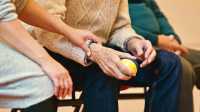
 One of the most difficult conversations that you will need to have with your aging parents throughout their retirement is about the future. Though no matter how difficult this conversation may be, it is vital that you can plan for what might happen as a family to ensure that you are prepared for anything that comes your way. If you are struggling to do this, here are some top tips to help you comprehensively plan for your parent’s future, so they can have the most comfortable lives possible, and you do not have to worry for them.
Here are some to do lists to help you get started:.
One of the most difficult conversations that you will need to have with your aging parents throughout their retirement is about the future. Though no matter how difficult this conversation may be, it is vital that you can plan for what might happen as a family to ensure that you are prepared for anything that comes your way. If you are struggling to do this, here are some top tips to help you comprehensively plan for your parent’s future, so they can have the most comfortable lives possible, and you do not have to worry for them.
Here are some to do lists to help you get started:.
 XinQi Dong MD, MPH
Henry Rutgers Distinguished Professor of Population Health Sciences
Director of the Director of Institute for Health, Health Care Policy and Aging Research
Rutgers University
New Brunswick, NJ 08901
MedicalResearch.com: What is the background for this study? What are the main findings?
Response: This study was done among community-dwelling US Chinese older adults aged 60 and above living in the greater Chicago area. The baseline cohort consisted of 3,157 participants, and we followed up with them from 2011 to 2017. There were heterogeneities in the associations between the strictness of definitions and subtypes of elder mistreatment (EM) and yearly mortality.
XinQi Dong MD, MPH
Henry Rutgers Distinguished Professor of Population Health Sciences
Director of the Director of Institute for Health, Health Care Policy and Aging Research
Rutgers University
New Brunswick, NJ 08901
MedicalResearch.com: What is the background for this study? What are the main findings?
Response: This study was done among community-dwelling US Chinese older adults aged 60 and above living in the greater Chicago area. The baseline cohort consisted of 3,157 participants, and we followed up with them from 2011 to 2017. There were heterogeneities in the associations between the strictness of definitions and subtypes of elder mistreatment (EM) and yearly mortality.
 Dr. Ehrlich[/caption]
Joshua R. Ehrlich, MD, MPH
Assistant Professor, Ophthalmology and Visual Sciences
Kellogg Eye Center
Department of Ophthalmology and Visual Sciences
University of Michigan
MedicalResearch.com: What is the background for this study?
Response: This study came out of data collected as part of the National Poll on Healthy Aging (NPHA). The NPHA is funded by AARP and the Institute for Healthcare Policy and Innovation at the University of Michigan to inform the public, healthcare providers, and policymakers on a variety issues related to health. The vision survey, conducted in March 2018, was just one of many NPHA surveys.
Due to aging of the population, the number of older U.S. adults with blindness and vision impairment is expected to double over the next 30 years. Thus, this study was designed to provide crucial data on contemporary data on patterns of eye care utilization in older adults.
Dr. Ehrlich[/caption]
Joshua R. Ehrlich, MD, MPH
Assistant Professor, Ophthalmology and Visual Sciences
Kellogg Eye Center
Department of Ophthalmology and Visual Sciences
University of Michigan
MedicalResearch.com: What is the background for this study?
Response: This study came out of data collected as part of the National Poll on Healthy Aging (NPHA). The NPHA is funded by AARP and the Institute for Healthcare Policy and Innovation at the University of Michigan to inform the public, healthcare providers, and policymakers on a variety issues related to health. The vision survey, conducted in March 2018, was just one of many NPHA surveys.
Due to aging of the population, the number of older U.S. adults with blindness and vision impairment is expected to double over the next 30 years. Thus, this study was designed to provide crucial data on contemporary data on patterns of eye care utilization in older adults.
 Dr. Liu-Ambrose[/caption]
Teresa Liu-Ambrose, PT, PhD
Canada Research Chair (Tier II), Physical Activity, Mobility, and Cognitive Neuroscience
Director, Aging, Mobility, and Cognitive Neuroscience Laboratory
University of British Columbia
MedicalResearch.com: What is the background for this study?
Response: Falls in older adults are the third-leading cause of chronic disability and the leading cause of hospitalization for adults over age 65. Older adults who experience multiple falls are at increased risk for disability, loss of independence, and even death. How to best prevent falls in this high risk group is not well established.
Dr. Liu-Ambrose[/caption]
Teresa Liu-Ambrose, PT, PhD
Canada Research Chair (Tier II), Physical Activity, Mobility, and Cognitive Neuroscience
Director, Aging, Mobility, and Cognitive Neuroscience Laboratory
University of British Columbia
MedicalResearch.com: What is the background for this study?
Response: Falls in older adults are the third-leading cause of chronic disability and the leading cause of hospitalization for adults over age 65. Older adults who experience multiple falls are at increased risk for disability, loss of independence, and even death. How to best prevent falls in this high risk group is not well established.
 Khalid Ali, MBBS, FRCP, MD
Senior lecturer in Geriatrics
Brighton and Sussex Medical School, UK
MedicalResearch.com: What is the background for this study? What are the main findings?
Response: Older people are more like to have more than one chronic condition (multi-morbidity), and as such as are more likely to be prescribed several medications (poly pharmacy) to treat those conditions. At the point of hospital discharge, older people are given different / new medications in addition to their old ones, and this puts them at higher risk of harm related to medicines. Our study led by Brighton and Sussex Medical School (BSMS) and King’s College London involved five hospitals and 1,280 patients (average age 82 years) in South England. Senior pharmacists interviewed patients and carers, reviewed GP records and analysed hospital readmission to determine medication-related harm.
The study found that more than one in three patients (37%) experienced harm from their medicines within two months of hospital discharge, and that this was potentially preventable in half of the cases. Medication-related harm was most commonly found to occur from the toxicity of the medicine itself and in a quarter of cases from poor adherence. The medicines found to pose the highest risk were opiates, antibiotics and benzodiazepines. Patients suffered a range of side effects including serious kidney injury, psychological disturbance, irregular heart rhythms, confusion, dizziness, falls, diarrhoea, constipation and bleeding.
Khalid Ali, MBBS, FRCP, MD
Senior lecturer in Geriatrics
Brighton and Sussex Medical School, UK
MedicalResearch.com: What is the background for this study? What are the main findings?
Response: Older people are more like to have more than one chronic condition (multi-morbidity), and as such as are more likely to be prescribed several medications (poly pharmacy) to treat those conditions. At the point of hospital discharge, older people are given different / new medications in addition to their old ones, and this puts them at higher risk of harm related to medicines. Our study led by Brighton and Sussex Medical School (BSMS) and King’s College London involved five hospitals and 1,280 patients (average age 82 years) in South England. Senior pharmacists interviewed patients and carers, reviewed GP records and analysed hospital readmission to determine medication-related harm.
The study found that more than one in three patients (37%) experienced harm from their medicines within two months of hospital discharge, and that this was potentially preventable in half of the cases. Medication-related harm was most commonly found to occur from the toxicity of the medicine itself and in a quarter of cases from poor adherence. The medicines found to pose the highest risk were opiates, antibiotics and benzodiazepines. Patients suffered a range of side effects including serious kidney injury, psychological disturbance, irregular heart rhythms, confusion, dizziness, falls, diarrhoea, constipation and bleeding.
 Dr. Krist[/caption]
Dr. Alex Krist, M.D., M.P.H.
Dr. Krist is is a professor of family medicine and population health at Virginia Commonwealth University and active clinician and teacher at the Fairfax Family Practice residency.
What is the background for these recommendation statements? What are the main findings?
Response: Falls are the leading cause of injuries in adults age 65 and older and can lead to serious disability and even death. Bone fractures—which may result from a fall—can also cause serious disability and death in older adults.
The U.S. Preventive Services Task Force looked into the most recent evidence on the best ways to prevent falls and fractures in older adults. We found that clinicians should recommend exercise or physical therapy to help prevent falls by older adults who live at home and are at higher risk for falling.
Additionally, we concluded that taking a low dose of vitamin D and calcium does not help prevent fractures due to osteoporosis, but we don’t know if taking a higher dose is effective or not, so we are calling for more research.
Dr. Krist[/caption]
Dr. Alex Krist, M.D., M.P.H.
Dr. Krist is is a professor of family medicine and population health at Virginia Commonwealth University and active clinician and teacher at the Fairfax Family Practice residency.
What is the background for these recommendation statements? What are the main findings?
Response: Falls are the leading cause of injuries in adults age 65 and older and can lead to serious disability and even death. Bone fractures—which may result from a fall—can also cause serious disability and death in older adults.
The U.S. Preventive Services Task Force looked into the most recent evidence on the best ways to prevent falls and fractures in older adults. We found that clinicians should recommend exercise or physical therapy to help prevent falls by older adults who live at home and are at higher risk for falling.
Additionally, we concluded that taking a low dose of vitamin D and calcium does not help prevent fractures due to osteoporosis, but we don’t know if taking a higher dose is effective or not, so we are calling for more research.
 Sanna Torvinen-Kiiskinen[/caption]
Sanna Torvinen-Kiiskinen
MSc (Pharm.), PhD student,
Kuopio Research Centre of Geriatric Care and School of Pharmacy
University of Eastern Finland
MedicalResearch.com: What is the background for this study?
Response: Antidepressants are widely used among elderly persons, especially persons with Alzheimer’s disease. They are used not only for treatment for major depression, but for treatment of anxiety, insomnia and chronic pain as well as behavioral symptoms caused by dementia.
However, antidepressants, as well as other psychotropic drugs, may cause sedation, confusion, orthostatic hypotension and hyponatremia, which increase the risk of falling and fractures. Because of changes in pharmacodynamics and pharmacokinetics due to aging, older persons are at the higher risk of those adverse events.
The aim of our study was to investigate whether antidepressant use is associated with an increased risk of hip fracture among community-dwelling persons with and without Alzheimer’s disease.
Sanna Torvinen-Kiiskinen[/caption]
Sanna Torvinen-Kiiskinen
MSc (Pharm.), PhD student,
Kuopio Research Centre of Geriatric Care and School of Pharmacy
University of Eastern Finland
MedicalResearch.com: What is the background for this study?
Response: Antidepressants are widely used among elderly persons, especially persons with Alzheimer’s disease. They are used not only for treatment for major depression, but for treatment of anxiety, insomnia and chronic pain as well as behavioral symptoms caused by dementia.
However, antidepressants, as well as other psychotropic drugs, may cause sedation, confusion, orthostatic hypotension and hyponatremia, which increase the risk of falling and fractures. Because of changes in pharmacodynamics and pharmacokinetics due to aging, older persons are at the higher risk of those adverse events.
The aim of our study was to investigate whether antidepressant use is associated with an increased risk of hip fracture among community-dwelling persons with and without Alzheimer’s disease.
 Medical Research Interview with:
Neha P. Gothe, PhD
Division of Kinesiology, Health and Sport Studies
Wayne State University
Detroit, MI 48202.
Medical Research: What are the main findings of the study?
Dr. Gothe: The yoga group was speedier and more accurate on tests of information recall, mental flexibility and task-switching than it had been before the intervention. Participants in the yoga group showed significant improvements in working memory capacity, which involves continually updating and manipulating information. They were also able to perform the task at hand quickly and accurately, without getting distracted.
Medical Research Interview with:
Neha P. Gothe, PhD
Division of Kinesiology, Health and Sport Studies
Wayne State University
Detroit, MI 48202.
Medical Research: What are the main findings of the study?
Dr. Gothe: The yoga group was speedier and more accurate on tests of information recall, mental flexibility and task-switching than it had been before the intervention. Participants in the yoga group showed significant improvements in working memory capacity, which involves continually updating and manipulating information. They were also able to perform the task at hand quickly and accurately, without getting distracted.
 MedicalResearch.com Interview with:
Dr. Michele Callisaya
Faculty of Medicine, Nursing & Health Sciences
Monash University, Clayton
MedicalResearch: What are the main findings of the study?
Dr. Callisaya: Falls are common in older people and can lead to hip fracture and loss of mobility. Blood pressure reducing medications are commonly taken by older people to protect against heart attacks and stroke, but may have some unwanted side effects such as light-headedness and loss of balance. We found that older people who were on large doses of such medications were at increased risk of falling.
MedicalResearch.com Interview with:
Dr. Michele Callisaya
Faculty of Medicine, Nursing & Health Sciences
Monash University, Clayton
MedicalResearch: What are the main findings of the study?
Dr. Callisaya: Falls are common in older people and can lead to hip fracture and loss of mobility. Blood pressure reducing medications are commonly taken by older people to protect against heart attacks and stroke, but may have some unwanted side effects such as light-headedness and loss of balance. We found that older people who were on large doses of such medications were at increased risk of falling.
 MedicalResearch.com Interview with:
Dr. Anne Ingeborg Berg:
University of Gothenburg, Sweden
MedicalResearch.com: What are the main findings of the study?
Answer: In our study of personality change in individuals aged 80+ we found that over a 6 year period individuals did not change in emotional stability, however, in line with previous research they got less extravert or outgoing. The only health aspect that could be related to an accelerated change in extraversion was impaired hearing at the first measurement occasion.
MedicalResearch.com Interview with:
Dr. Anne Ingeborg Berg:
University of Gothenburg, Sweden
MedicalResearch.com: What are the main findings of the study?
Answer: In our study of personality change in individuals aged 80+ we found that over a 6 year period individuals did not change in emotional stability, however, in line with previous research they got less extravert or outgoing. The only health aspect that could be related to an accelerated change in extraversion was impaired hearing at the first measurement occasion.
 MedicalResearch.com Interview with:
Judy A. Stevens PhD
National Center for Injury Prevention and Control
Centers for Disease Control and Prevention Atlanta
GA 30341
MedicalResearch.com: What are the main findings of the study?
Dr. Stevens: The fall death rate among persons aged 65 and older has been increasing rapidly. We used vital statistics data to examine the circumstances and contributing conditions to fall deaths.
We found that of 21,649 fall deaths in 2010, the largest proportion (35%) occurred from falling on the same level, followed by falling on stairs or steps (6.5%). From 1999 to 2010, there was a trend toward more specific reporting of falls circumstances. However, information about the circumstances of 49% of the 2010 fall deaths was not available.
In 2010, 49% of fall deaths involved a head injury and 30% involved a hip fracture. The most important contributing causes to fall deaths were circulatory diseases, especially hypertension, and respiratory diseases.
Factors that may partially explain the rapid increase in the fall death rate include changing trends in the death rates for underlying chronic diseases strongly associated with falls, such as reductions in cardiovascular disease deaths, as well as better reporting on death certificates of falls as the underlying cause of death.
MedicalResearch.com Interview with:
Judy A. Stevens PhD
National Center for Injury Prevention and Control
Centers for Disease Control and Prevention Atlanta
GA 30341
MedicalResearch.com: What are the main findings of the study?
Dr. Stevens: The fall death rate among persons aged 65 and older has been increasing rapidly. We used vital statistics data to examine the circumstances and contributing conditions to fall deaths.
We found that of 21,649 fall deaths in 2010, the largest proportion (35%) occurred from falling on the same level, followed by falling on stairs or steps (6.5%). From 1999 to 2010, there was a trend toward more specific reporting of falls circumstances. However, information about the circumstances of 49% of the 2010 fall deaths was not available.
In 2010, 49% of fall deaths involved a head injury and 30% involved a hip fracture. The most important contributing causes to fall deaths were circulatory diseases, especially hypertension, and respiratory diseases.
Factors that may partially explain the rapid increase in the fall death rate include changing trends in the death rates for underlying chronic diseases strongly associated with falls, such as reductions in cardiovascular disease deaths, as well as better reporting on death certificates of falls as the underlying cause of death.